


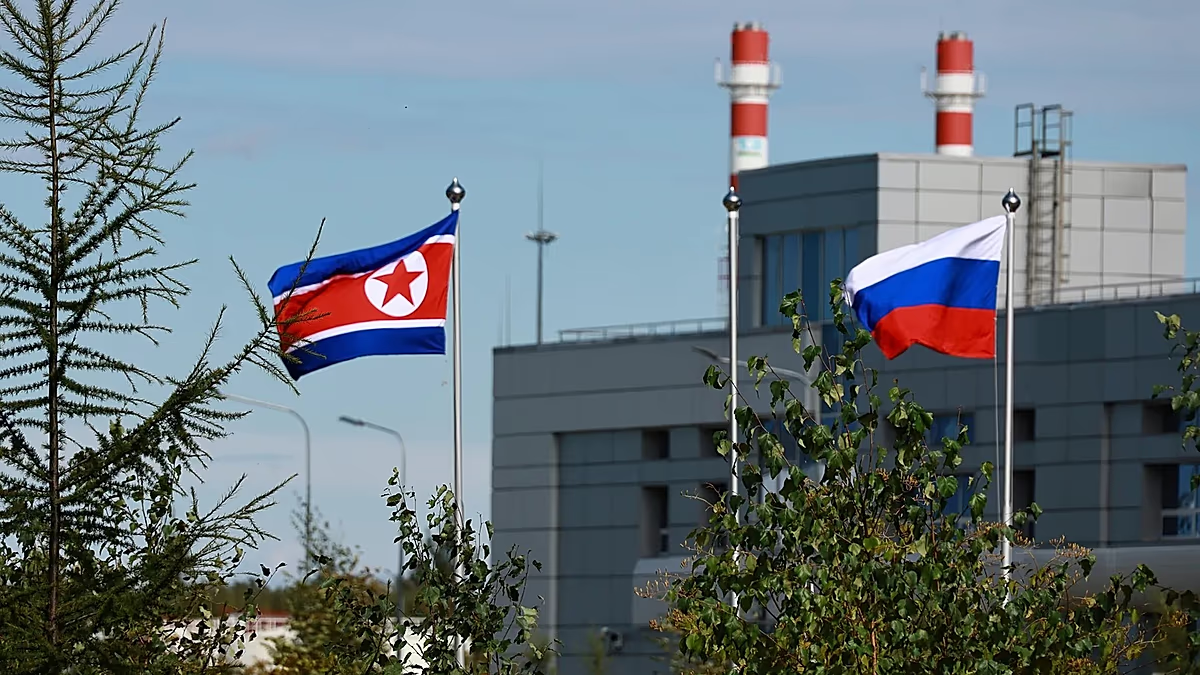
In a significant step that solidifies their growing partnership, Russia and North Korea held a ceremony this week to mark the completion of the first road bridge directly connecting the two nations. Scheduled to open for regular traffic this summer, the bridge spans the Tumen River, the natural border that has long separated the Russian Far East from the isolated North Korean state. Russian authorities hailed the project as far more than a mere infrastructure achievement, with the foreign ministry declaring it a “truly landmark stage” in bilateral relations. This physical link is a powerful symbol of the deepening ties between two countries that find themselves increasingly united by their status as targets of extensive Western sanctions and international isolation.
The timing and context of this bridge opening are impossible to ignore. It is the most visible manifestation of a dramatic and rapid alignment that has accelerated since Russia’s full-scale invasion of Ukraine in 2022. Isolated from the West, Moscow has actively sought to strengthen alliances with other nations facing similar pressures, with North Korea emerging as a key partner. This relationship was formally cemented in 2024 with the signing of a major defence treaty, which includes a clause obliging each nation to provide military assistance if the other is attacked. The partnership has proven to be more than symbolic; that same year, Pyongyang dispatched thousands of its troops to aid Russian forces in the Kursk region of Ukraine, marking a direct and consequential military collaboration.
Beyond the battlefield, this alliance is providing a critical economic lifeline, particularly for North Korea. For decades, Pyongyang’s economy has been crippled by a devastating combination of self-imposed isolation, immense investment in its military and nuclear programs, and punishing international sanctions. The result has been chronic shortages and humanitarian crises, from the famine of the 1990s to more recent extreme hunger exacerbated by the COVID-19 pandemic. With a nominal GDP estimated by South Korea at a mere $30 billion in 2024—a tiny fraction of the South’s thriving economy—the North is in desperate need of external support. Russian and Chinese trade, facilitated by projects like this new bridge, are now vital sources of sustenance, helping to revive commercial activity and alleviate some internal pressures.
The new bridge itself is a modest but strategically important piece of infrastructure. According to Russia’s transport ministry, it will have the capacity to handle up to 300 vehicles and nearly 3,000 people daily. While these numbers are not vast, they represent a quantum leap in connectivity for a border that has been largely closed and underdeveloped. Russian officials emphasize that the bridge will “develop trade, economic and humanitarian exchanges,” suggesting a vision for increased movement of goods and potentially even limited tourist or cultural delegations. For a hermit kingdom like North Korea, even this level of controlled opening to a powerful patron state represents a significant shift, offering a new channel for the inflow of resources and the outflow of labour or sanctioned materials.
This burgeoning axis has sent alarm bells ringing in neighbouring South Korea and among Western allies. Seoul recently issued a stark warning, noting that Russian and Chinese support is directly contributing to a revival of the North Korean economy, which in turn strengthens the regime’s stability and its ability to fund its military ambitions. The frequent exchange of high-level officials, including a recent visit by Russia’s interior minister to Pyongyang, underscores the depth and breadth of the collaboration, which now spans military, political, economic, and security spheres. Each handshake and signed agreement between Moscow and Pyongyang is viewed by their adversaries as a step toward a more entrenched and dangerous anti-Western bloc, challenging the existing world order.
Ultimately, the Tumen River bridge is a concrete symbol of a new and troubling geopolitical reality. It is a literal and figurative bridge between two pariah states, built on a foundation of shared antagonism toward the West and mutual need. For Russia, it represents a foothold in Northeast Asia and a source of military manpower and munitions. For North Korea, it is a crucial economic ventilator and a powerful security guarantee from a permanent member of the UN Security Council. As the first vehicles cross the bridge this summer, they will not merely be carrying cargo; they will be transporting the weight of a strengthened alliance that promises to reshape regional dynamics and pose enduring challenges to international peace and security for years to come.