

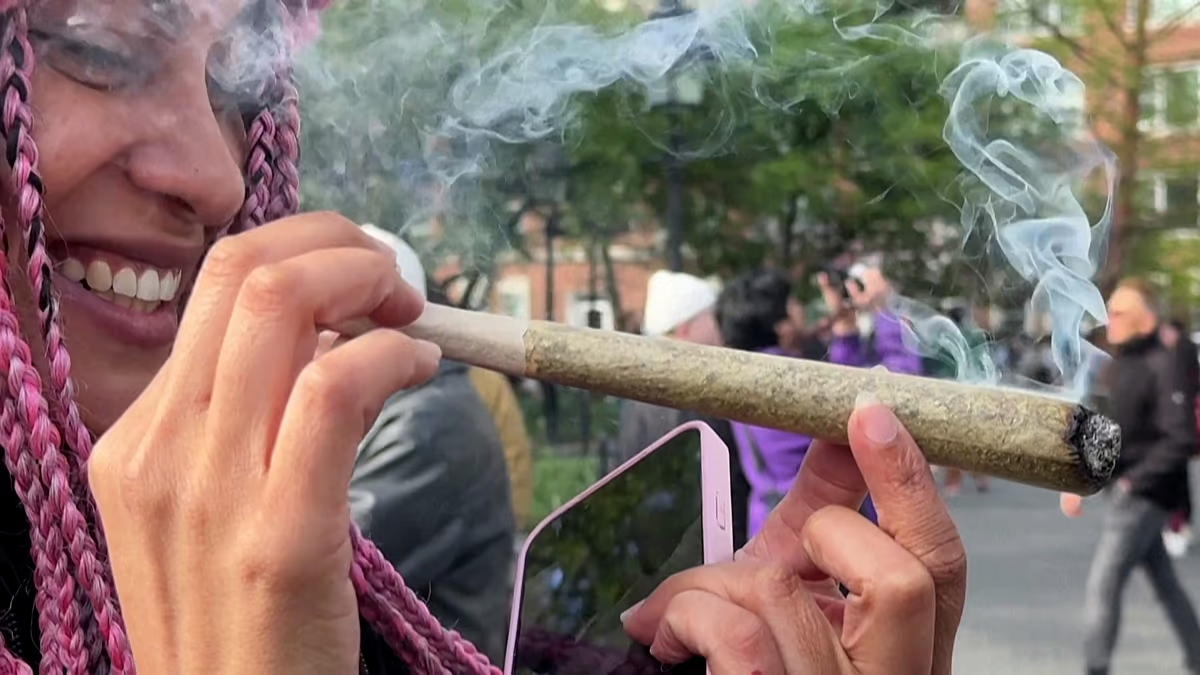
In New York City, April 20th—or “420”—has evolved beyond a simple date into a vibrant, unofficial holiday. A tradition once confined to hidden corners has found its public stage, most notably in the iconic Washington Square Park and the neighboring Tompkins Square Park in Manhattan. On this day, these spaces transform, filling with a distinct energy as smokers gather to mark the occasion with shared joints, booming music, and a contagious, street-party mood. The atmosphere is less a formal protest or political rally than a communal celebration of cannabis culture, a collective exhale into the spring air. One participant, Jackie Win, captured the spirit perfectly, likening it to “New Year’s basically, but for everyone that smokes,” highlighting how the day functions as a focal point for community and ritual within this particular segment of the city’s life. The very existence of these open, public gatherings speaks volumes about the rapid cultural shifts underway.
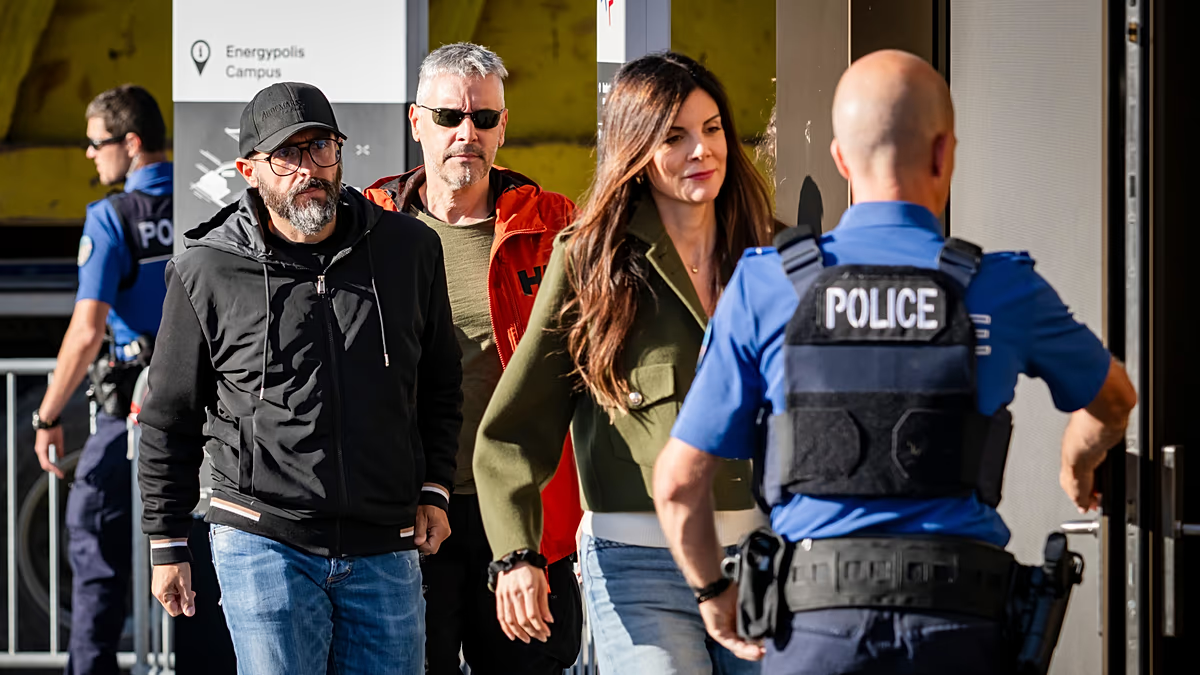
The scene, however, is not static. Reports from the 2026 observance noted a fluid migration between the two parks, a dance dictated by the presence of law enforcement. As police tightened access or increased their visibility in Washington Square Park, the celebratory crowd organically shifted eastward to Tompkins Square Park. This movement underscores a lingering tension between celebration and regulation. While the day is a testament to normalization, it also exists in a gray area of public policy. The parks are not officially sanctioned venues for the event, leading to an adaptive, almost spontaneous choreography by the attendees. This dance between the people and the police reflects the ongoing negotiation between established public order and a newly legitimized—but still regulated—social activity.
The backdrop for this annual ritual is a transformed legal landscape. Adult-use cannabis became legal in New York in 2021 for individuals 21 and over, following the passage of the Marijuana Regulation and Taxation Act. This legislation marked a seismic shift, moving cannabis from a prohibited substance to a regulated, taxable commodity. The law not only legalized possession and use but also laid the groundwork for a legal retail market, aiming to address past inequities in drug enforcement and create economic opportunities. The public gatherings on 420 are, in many ways, the cultural outpouring of this political change. They represent the open-air manifestation of a freedom that was, for decades, exercised only in private or under risk of penalty.
The normalization of public discourse around cannabis in New York City has been strikingly swift. Conversations about strains, consumption methods, and dispensary experiences now occur openly on subway platforms, in coffee shops, and in workplace lunchrooms—a stark contrast to the hushed, coded references of the past. The 420 gatherings amplify this normalcy, putting the culture on vivid, undeniable display. However, this cultural acceptance exists alongside a complex and sometimes confusing set of rules. State law prohibits smoking cannabis in locations where smoking tobacco is banned, which includes parks, beaches, playgrounds, and within a certain distance of school entrances. This creates a paradox where the substance is legal, but the most traditional method of consuming it—smoking—is restricted in many public spaces where people naturally congregate.
Therefore, the annual 420 ritual in New York’s parks is a powerful cultural symbol operating within a defined legal constraint. It demonstrates how far society has come in embracing cannabis, while simultaneously highlighting the practical boundaries that remain. The gatherings are a celebration of legal freedom, yet their location in public parks technically exists at the edges of that freedom. Participants are, in essence, celebrating a right they cannot fully exercise in that specific venue without potential complication. This juxtaposition makes the event philosophically rich: it is both a victory party for legalization and a living demonstration of its ongoing intricacies and limitations.
Ultimately, the 420 gatherings in New York City are more than just a party for smokers. They are a dynamic, urban phenomenon that encapsulates a moment of significant social transition. They show a community finding its voice and space in the wake of legal change, adapting to the remaining rules with a mobile, resilient spirit. The event stands as a cultural benchmark, measuring the distance between the prohibitionist past and the present reality of legal, but regulated, use. As the cannabis industry continues to mature and social attitudes further evolve, these annual park celebrations will likely remain a fascinating ground-level observatory—a place to witness the ongoing, human negotiation between law, culture, and community in the ever-changing life of the city.