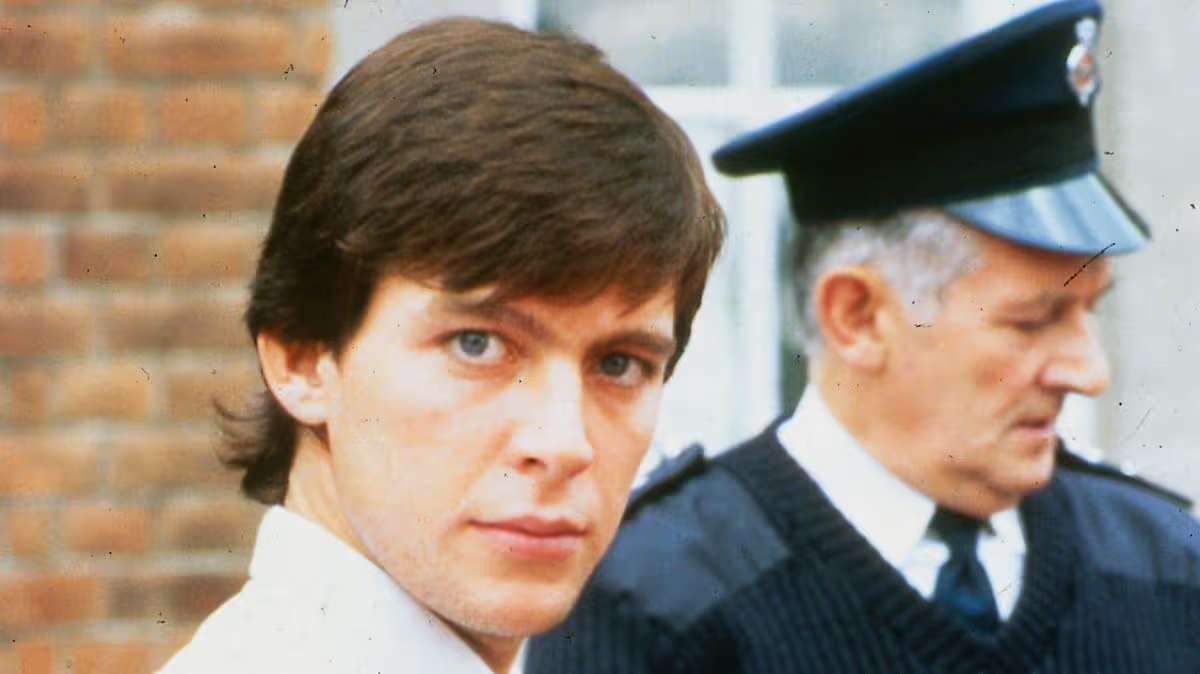




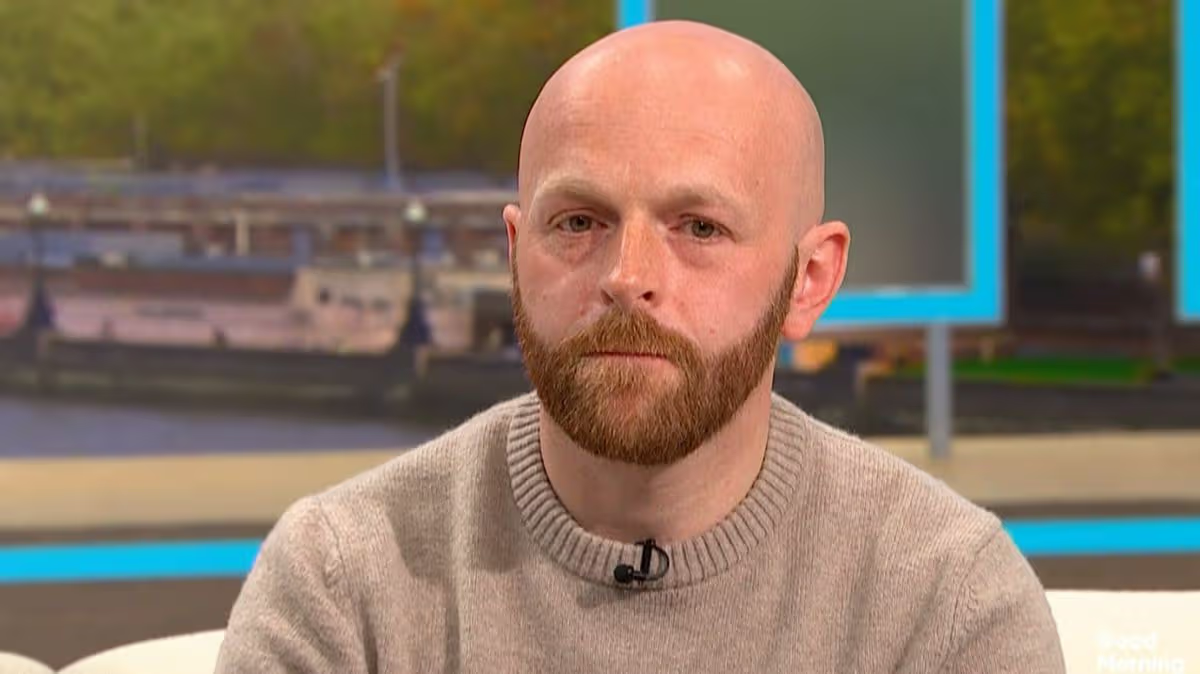
Sean Egan, a dedicated Morrisons employee of 29 years, finds himself unemployed and emotionally devastated after an encounter with a violent shoplifter. What began as an attempt to uphold his duties ended in his dismissal, a decision he describes as being “thrown under the bus for doing the right thing.” At 46, Egan had built his entire adult life around his career at the supermarket, starting behind the deli counter at just 17 years old. The incident in question occurred at the Aldridge store in the West Midlands, where a known career criminal, Daniel Kendall, entered with the intent to steal. Egan, recognizing Kendall from previous thefts, approached him calmly, following the company’s established “deter-and-not-detain” policy designed to de-escalate such situations.
The confrontation quickly turned violent and humiliating. Despite Egan’s attempts to follow protocol, Kendall became aggressive and spat directly in the employee’s face. In the ensuing altercation, Kendall managed to flee with two bottles of Jack Daniel’s whiskey, leaving Egan to deal with the physical and psychological aftermath. For Egan, a married father from Wolverhampton, this act of defiance was not about playing the hero but about protecting his colleagues, customers, and the store he had served for nearly three decades. He saw it as a basic duty, a stand against a brazen criminal who had targeted the business repeatedly.
Morrisons’ response was to terminate Egan’s employment, a move that has left him reeling. He feels the company failed to consider his long-standing loyalty and the extreme provocation he faced. “I dedicated my whole life to Morrisons,” he stated, highlighting the profound sense of betrayal. Since his dismissal, Egan has been diagnosed with depression, and the stability of his life has crumbled. He worries about providing for his family, paying his mortgage, and covering daily bills, all while grappling with the humiliation of being let go. In his eyes, he has been punished more severely than the criminal, noting, “I’ve been treated more harshly and unfairly than him because he’s not lost as much as I have.”
The shoplifter, Daniel Kendall, is a drug addict from Walsall with a long criminal record encompassing over 100 offences. For the Aldridge theft and the assault on Egan, he was later sentenced to 42 weeks in prison. His history includes petty thefts from other stores, painting a picture of a persistent offender. This contrast—between the employee who lost his livelihood and the criminal who received a finite prison sentence—has fueled public outrage. Social media has been alight with support for Egan, with many applauding his bravery and calling for Morrisons to reinstate him, arguing that he was unjustly punished for acting with integrity.
In its defense, Morrisons has emphasized its commitment to employee and customer safety above all else. A company spokesperson outlined that there are “very clear guidance, procedures and controls in place to protect our colleagues,” which must be strictly followed. The firm stated it does not ask employees to put themselves at risk and that its focus is on correct actions to maintain safety. While acknowledging the wider issue of shoplifting and violence in stores, the supermarket maintains that its procedures are designed to de-escalate situations calmly. From the corporate perspective, adherence to these protocols is non-negotiable, even in the face of understandable human reaction.
This story transcends a simple disciplinary case, touching on broader societal tensions. It highlights the difficult position frontline retail workers are placed in, caught between rising theft and aggression on one side and strict corporate policies on the other. Sean Egan’s experience raises urgent questions about how companies support long-serving staff in traumatic situations and whether zero-tolerance policies can sometimes fail to account for context and humanity. His fight is not just for his job, but for recognition that his three decades of service and his instinct to protect should have counted for more than a single, provoked moment in a hallway. The outcome of his case may well influence how other businesses balance policy with compassion for their most loyal employees.