

A political storm has erupted within the European Parliament, centering on a profoundly human tragedy: the murder of a young French man named Quentin Deranque. The controversy pits the institution’s leadership against several right-wing political groups, revealing deep tensions over how to mourn, memorialize, and, inevitably, politicize a personal loss. At the heart of the dispute is a simple, solemn gesture—a minute of silence—that has become a flashpoint for broader ideological battles within the European Union’s legislative body.
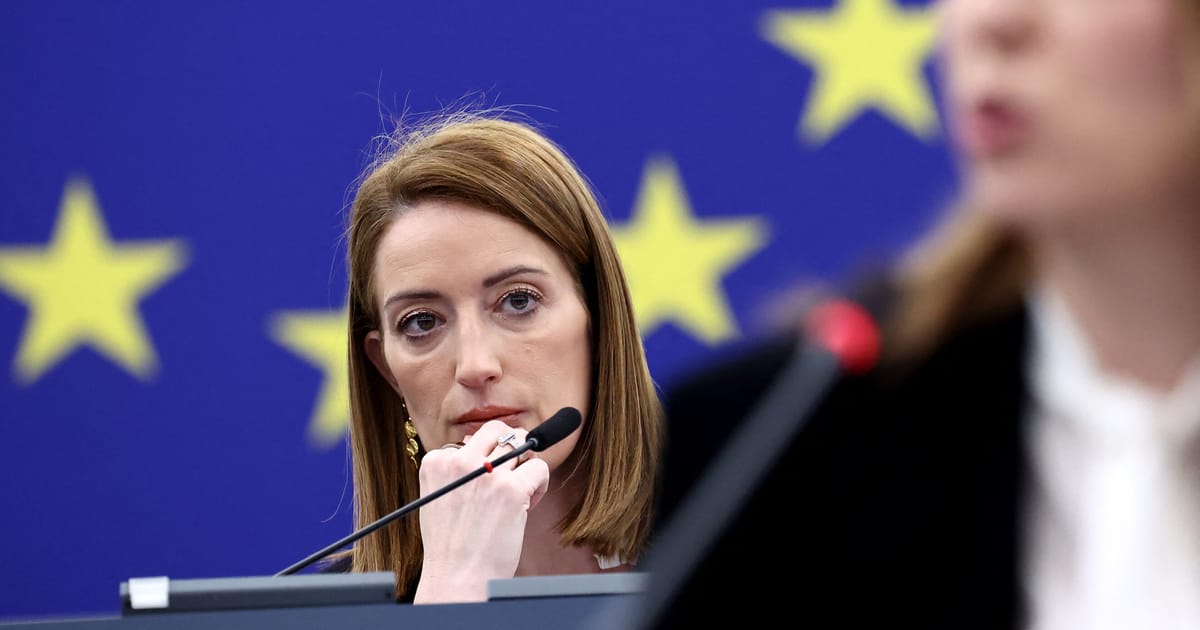
The conflict came to a head following public accusations from Jean-Paul Garraud, the head of the French National Rally delegation within the Parliament’s “Patriots” group. Taking to social media, Garraud condemned the actions of European Parliament President Roberta Metsola. He claimed that Metsola had promised a minute of silence in the chamber to honor Quentin Deranque, a promise he asserts was subsequently broken. This sentiment was echoed and amplified within the Parliament’s private corridors. René Aust, leader of the far-right “Europe of Sovereign Nations” group, confronted President Metsola directly during a closed-door meeting of political group leaders. According to sources present, Aust accused Metsola of reneging on an agreement to hold the commemoration, framing the refusal as a profound breach of respect.
The push for this official recognition was not an isolated request. It originated from a coalition of right-wing factions, including the European Conservatives and Reformists (ECR), the Patriots group, and Aust’s own Europe of Sovereign Nations (ESN). They first formally called for the minute of silence to be observed during an extraordinary plenary session held on February 27th. Their argument rested on the assertion that Deranque’s death had sent shockwaves far beyond France’s borders, resonating across Europe and thus meriting a formal acknowledgment from the continent’s premier democratic institution. For these groups, the commemoration was portrayed as a non-partisan act of basic human solidarity.
However, President Metsola’s reported rationale for declining the request introduces a critical and deeply personal dimension to the standoff. According to accounts from the same private meeting, Metsola informed René Aust that she had been in direct contact with Quentin Deranque’s grieving family. In these conversations, the family allegedly expressed a heartfelt plea: they did not want their son’s death to be used as a political tool. Metsola’s position, therefore, appears to be one of deference to the wishes of the bereaved, placing the family’s desire for privacy and dignity above the political demands of parliamentary groups. This framing shifts the debate from one of protocol to one of ethics and compassion.
The situation presents a complex dilemma that transcends typical political maneuvering. On one side, political groups see an opportunity—or perhaps a duty—to use the platform of the European Parliament to highlight a crime that they believe speaks to larger issues of public safety and security, themes central to their political identities. A formal minute of silence would be a powerful, visible symbol, lending institutional weight to their narrative. On the other side, the Parliament’s President is seemingly upholding a principle of respecting the direct wishes of the victims’ family, seeking to shield them from becoming unwilling participants in a charged political spectacle. It is a clash between public symbolism and private sorrow.
Ultimately, this dispute lays bare the difficult intersection where personal tragedy meets political machinery. While René Aust of the AfD has stated his group will continue to advocate for an “appropriate” commemoration, the episode raises poignant questions about who controls the narrative of grief within public institutions. The right-wing groups argue for collective, official mourning, while Metsola’s reported stance advocates for a quieter, more personal form of respect dictated by the family themselves. The outcome, beyond whether a minute of silence is eventually held, will signal how the European Parliament navigates its role as both a stage for political discourse and a body that must operate with fundamental human sensitivity. The memory of Quentin Deranque has become entangled in a struggle over symbolism, power, and the very right to grieve in peace.