



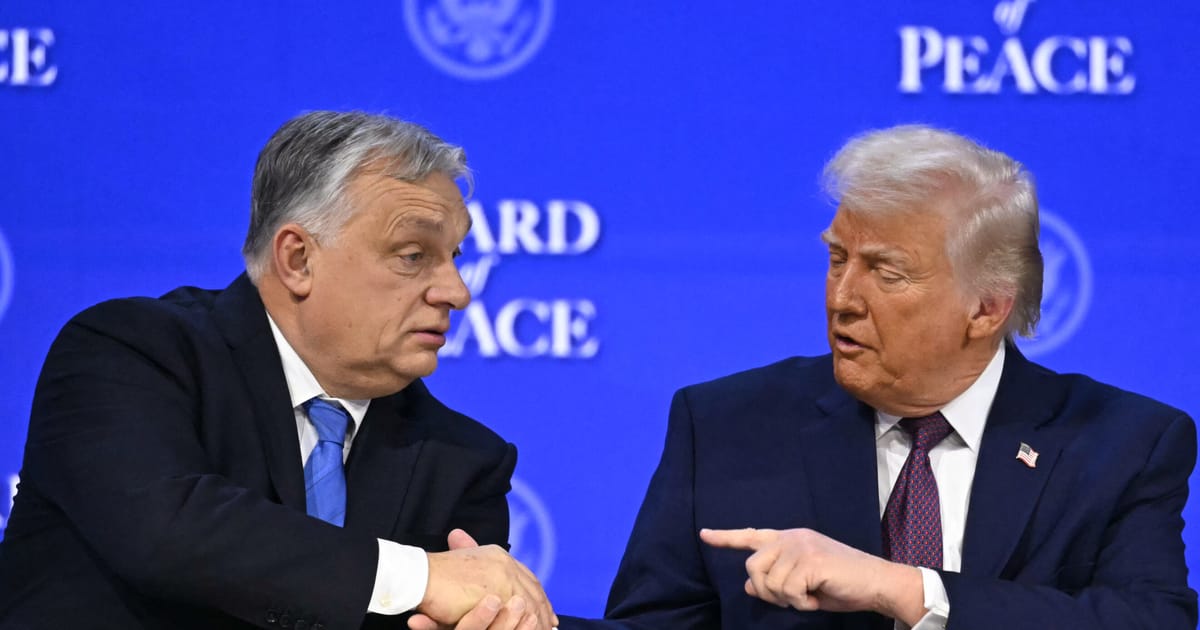
In a recent address to the Conservative Political Action Conference (CPAC) in Hungary, former U.S. President Donald Trump offered a robust and public endorsement of Hungarian Prime Minister Viktor Orbán. Delivering his remarks via video, Trump positioned Orbán as a model of strong national leadership, one who has demonstrated to the world the importance of steadfastly defending a nation’s borders, cultural heritage, sovereignty, and core values. This praise arrives amidst a complex geopolitical landscape in Europe, reflecting a meeting of ideologies between Trump’s “America First” platform and Orbán’s vision of “illiberal democracy.” The message was clear: Trump sees in Hungary a successful blueprint for conservative governance that prioritizes national identity and security above multilateral or globalist frameworks, a perspective he believes is urgently needed in the West.
A central pillar of Trump’s commendation focused on the issue of immigration. He lauded Hungary’s implementation of “strong borders,” a policy that has often placed the nation at odds with the European Union’s broader migration agreements. Trump urged that both Hungary and Europe as a whole must continue to “work very hard” to manage what he described as “a lot of problems” surrounding immigration, framing it as a challenge to sovereignty and social cohesion. By highlighting this policy area, Trump aligns himself with Orbán’s contentious border fences and strict immigration controls. This serves to reinforce a shared political narrative that frames border security not merely as an administrative task, but as a fundamental defense of national character and safety, a resonant theme among their respective conservative bases.
Beyond the rhetoric on borders, Trump extended his vision to a broader strategic alliance. He declared that Hungary and the United States, under his potential future leadership, are collaboratively “showing the way toward a revitalized West.” This revitalization, as he framed it, would involve concerted efforts on energy independence, suggesting a partnership aimed at reducing reliance on external suppliers and bolstering national economic security. This point connects domestic policy with international strategy, proposing a coalition of like-minded nations prioritizing self-sufficiency and traditional values over what they perceive as a faltering and overly bureaucratic liberal world order championed by other Western capitals.
Demonstrating the tangible political connections behind this rhetoric, plans are being made for U.S. Senator J.D. Vance, a prominent Trump ally and a key figure in the modern American conservative movement, to visit Budapest in April. This trip, confirmed by Hungarian Foreign Minister Peter Szijjarto, is strategically timed just before Hungary’s own elections, serving as a potent, visible show of international support for Orbán’s government. Vance’s planned presence signals a deepening of political ties between the factions led by Trump and Orbán, transcending mere words of praise to manifest as concrete political solidarity. It underscores a mutual interest in shaping a conservative international front ahead of critical electoral contests on both sides of the Atlantic.
The confluence of these events—the high-profile endorsement at CPAC, the shared agenda on immigration and energy, and the planned diplomatic visit—carries significant implications for the political dynamics within Hungary, the transatlantic relationship, and the global conservative movement. Orbán, often isolated within EU forums for his policies, gains a powerful external validator in Trump, which may bolster his domestic standing. Conversely, Trump and his allies solidify an alliance with a European leader who successfully champions a form of governance they seek to emulate. This partnership challenges the traditional post-Cold War Western consensus, advocating instead for a model where national sovereignty is paramount and cultural identity is actively defended against globalizing forces.
Ultimately, this unfolding political theater between Budapest and key figures in the American right is more than a simple exchange of compliments. It represents a concerted effort to redefine the principles of Western leadership and alliance in the 21st century. The mutual admiration between Trump and Orbán is founded on a shared political philosophy that favors strong executive authority, cultural conservatism, restrictive immigration policies, and a skeptical view of multilateral institutions. As both men eye future electoral victories—Trump in the U.S. presidential race and Orbán in his nation’s upcoming parliamentary elections—their alliance is poised to become an increasingly influential force in shaping the ideological battles that will define the future trajectory of the democratic world.