




A New Dawn in Hungary: Wiping Away Tears, Turning to Tasks
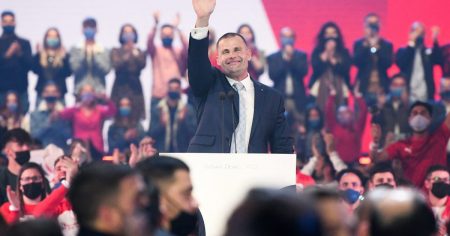
The emotional tension that gripped Hungary on election night finally broke, leaving in its wake a political landscape profoundly altered. For many, the results brought not just surprise, but a cathartic release of sentiment after years of a singular, dominant political narrative. While the air was thick with emotion, the prevailing mood among the victors was one of sobering realization. The celebration of Peter Magyar’s Tisza party was underscored by the immense weight of expectation now placed upon its shoulders. Their triumph signals a potent public desire for change, but it also bequeaths them a monumental challenge: to begin untangling over a decade of democratic erosion and recentralization of power under Viktor Orbán. The tears shed were not just of joy, but of the profound understanding that the hard work of rebuilding institutions, restoring checks and balances, and healing a divided society begins at dawn.
Soul-Searching for the Vanquished: Fidesz and Europe’s Far Right
Conversely, the camp of Fidesz, Orbán’s long-ruling party, was left to confront an unfamiliar and unsettling reality: defeat. This outcome sends shockwaves far beyond Budapest’s parliament, resonating through the corridors of far-right and nationalist movements across the European continent. For years, Orbán positioned himself as the standard-bearer of a conservative counter-revolution, a model for others to emulate. His loss forces a period of intense and necessary soul-searching. Analysts and insiders alike are now tasked with dissecting what went wrong in a campaign that once seemed invincible. Was it a failure of message, a miscalculation of public weariness, or the potent appeal of a unified opposition? The answers to these questions will not only redefine Fidesz’s future but could also necessitate a strategic rethink for allied parties in France, Italy, and elsewhere who saw Orbán’s Hungary as a proof of concept.
Deciphering the Result: A Transatlantic Perspective
To unpack the intricate layers of this electoral earthquake, insights from a diverse panel of experts are invaluable. POLITICO’s White House Correspondent, Eli Stokols, provides a crucial transatlantic lens, drawing parallels and contrasts with the American political scene. The question of what Hungary’s shift means for the broader “MAGA” movement and the global discourse on populism is suddenly urgent. Meanwhile, from Paris, Senior France Correspondent Clea Caulcutt can assess the ripple effects within the European Union’s core, where leaders have long struggled with how to address democratic concerns in Budapest. Adding essential local context is Balazs Kos, a Hungarian consultant and EU affairs expert. Together with host Sarah Wheaton, this conversation moves beyond the headlines, exploring whether this result marks a genuine pivot toward European reintegration or a more nuanced recalibration of Hungarian politics.
Inside the Fidesz Campaign: An Autopsy of Defeat
To understand the fall, one must examine the architecture of the former fortress. Frank Furedi of MCC Brussels, a think-tank with links to Orbán’s government, offers an internal perspective on the campaign’s failures. This analysis is particularly revealing, as it comes from within the broader ideological ecosystem that supported Fidesz. Furedi suggests that the campaign may have ultimately been undone by its own past success, perhaps having lost touch with the evolving daily concerns of citizens after so long in power. The messaging that once galvanized support—framed around national sovereignty, cultural identity, and opposition to EU bureaucracy—may have finally been met by a stronger desire for accountability, transparency, and practical governance. This insider viewpoint underscores that the loss was not merely a tactical error but potentially a sign of deeper strategic exhaustion.
The Road Ahead and the Voice of the Listener
The discussion does not exist in a vacuum; it is part of a living, breathing democratic conversation. The invitation extended to listeners—to send questions or comments via WhatsApp—emphasizes that the meaning of this election is still being shaped by public interpretation and engagement. This open channel transforms the analysis from a lecture into a dialogue, acknowledging that the citizens who powered this political shift have a vital stake in dissecting its consequences. Their queries might range from the practicalities of coalition-building in Budapest to the implications for Hungary’s stance on Ukraine, making the ongoing conversation as dynamic as the election night itself.
A Continent at a Crossroads
Ultimately, Hungary’s election is more than a national story. It is a pivotal chapter in Europe’s ongoing struggle to define itself. The result challenges the assumed inevitability of democratic decline and demonstrates that electoral politics can still deliver dramatic course corrections. For the European Union, it opens a door to a potentially more cooperative relationship with a member state long seen as a rebel. For Washington and observers of global politics, it serves as a compelling case study in the resilience of democratic aspirations. As the tears of election night dry, the clear-eyed work of governance begins in Hungary, while across the continent, politicians of all stripes are carefully studying the map, realizing that the political terrain has just moved beneath their feet.