


The German Government’s Crisis of Confidence
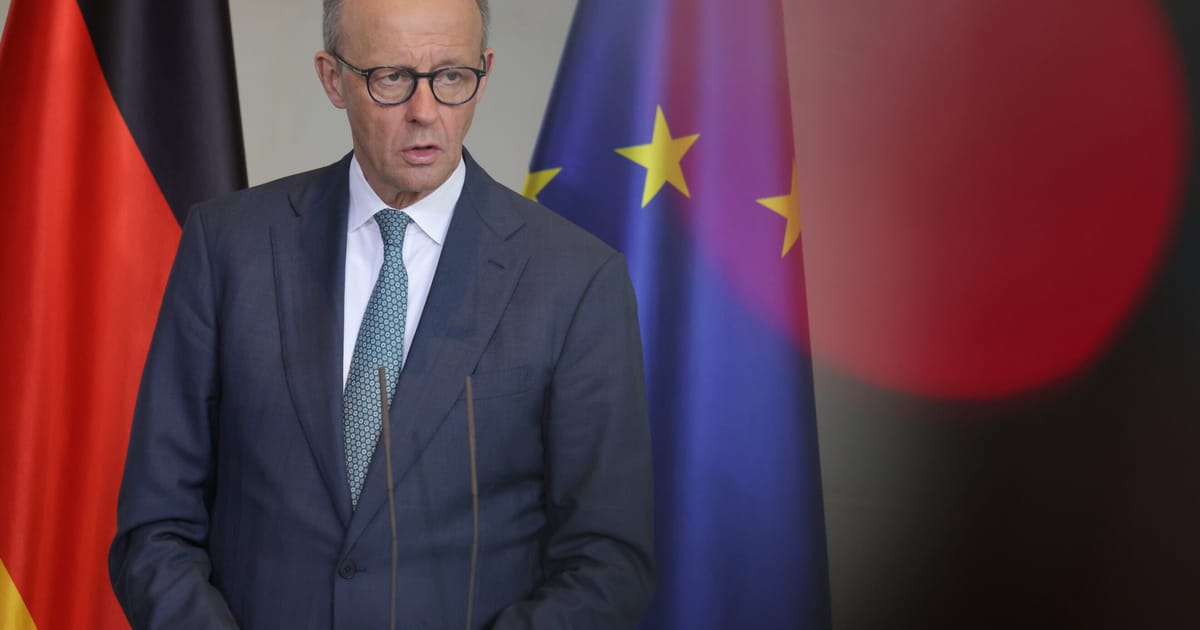
Germany, Europe’s traditional economic powerhouse and political anchor, finds itself in a state of profound political turmoil. The government, led by Chancellor Friedrich Merz, is grappling with a crisis of public confidence so severe that its favorability ratings have plummeted to dire levels. This dissatisfaction stems not from a single catastrophic event, but from a growing perception that the administration is defined by a series of missteps and internal fractures. The coalition, meant to provide stable leadership, is instead showing signs of strain, as key policy initiatives spark backlash not only from the public but from within its own ranks. This internal discord weakens the government’s ability to present a united front and effectively address the nation’s challenges, leaving citizens increasingly disillusioned with their leadership.
A Hardline Migration Strategy Sparks Backlash
Central to this discontent is Chancellor Merz’s controversial and increasingly hardline approach to migration. A former businessman who entered politics with a technocratic image, Merz has pivoted sharply to embrace stringent policies aimed at curtailing immigration. His recent proposal suggesting that up to 80 percent of Syrian refugees should leave Germany has triggered significant backlash, even from allies within his own Christian Democratic Union (CDU) coalition. Further fueling the controversy are efforts to negotiate deportation agreements with the Taliban in Afghanistan and the imposition of tighter border controls. These moves have been widely criticized by humanitarian organizations, legal experts, and a portion of the electorate, who view them as ethically questionable and practically fraught. This strategy, intended to appeal to voters concerned about immigration, has instead highlighted divisions and raised questions about the government’s moral compass and operational competence.
Stalled Economic Promises Compound the Problem
Merz’s difficulties are not confined to social policy. His core promise to voters was an economic revival. He ascended to power championing a grand vision to modernize Germany and kickstart growth through a ambitious €500 billion spending plan. Yet, the reality has fallen woefully short of the promise. Key economic reforms have moved at a glacial pace, bogged down by bureaucracy and coalition negotiations. The tangible result for many Germans is not renewed prosperity but growing uncertainty. Unemployment has climbed to 6.6 percent, marking the highest level in over a decade. For a nation proud of its economic resilience, this figure is a stark and worrying indicator. The chancellor’s background in business, once seen as an asset, now ironically underscores the gap between his promises of efficient, dynamic governance and the slow, disappointing outcomes actually delivered.
Political Consequences: Electoral Decline and the Rise of the Far-Right
The political consequences of this widespread discontent are already manifesting in stark electoral terms. The CDU suffered a stinging defeat in the crucial regional elections in Baden-Württemberg in early March, a traditional stronghold. On the national stage, the polling picture is even more alarming for the established center. The far-right Alternative for Germany (AfD) is now neck-and-neck with Merz’s conservatives in national polls, a scenario that would have been unthinkable a few years ago. This surge of the AfD is the most direct and dangerous symptom of the mainstream government’s failing appeal. As traditional parties falter, disaffected voters are turning to more radical alternatives, destabilizing Germany’s long-standing political equilibrium and posing a fundamental threat to the country’s democratic center.
A Coalition in Mutual Decline: The SPD’s Parallel Crisis
Within this bleak landscape, the only faint consolation for Chancellor Merz might be that his party is not alone in its decline; the entire governing coalition is crumbling. The center-left Social Democratic Party (SPD), the CDU’s partner in government, is facing a parallel, and in some respects deeper, crisis. A mere 13 percent of Germans currently approve of the SPD, and its co-leader, Vice Chancellor and Finance Minister Lars Klingbeil, enjoys the support of only 18 percent. The party’s decay was vividly illustrated in the Baden-Württemberg election, where it garnered just 5.5 percent of the vote, and in Rhineland-Palatinate, where it was finally defeated after 35 consecutive years in power. This mutual weakening of both major coalition partners creates a feedback loop of instability—each party’s failures erode public trust, which in turn undermines the other, leaving the entire government structure feeble and lacking authoritative legitimacy.
An Uncertain Future: Eastern Tests and the Search for Stability
Looking ahead, the polling numbers bode badly for an immediate recovery. Two key regional elections loom in Eastern Germany, where the AfD is currently leading in the polls. This region, with its distinct economic and social history, could become the next flashpoint demonstrating the mainstream parties’ retreat. The pressure on Chancellor Merz is now immense and twofold: he must somehow steady a government that appears to have already lost the confidence of Germany’s electorate, and he must confront the alarming rise of a far-right opponent that threatens the very foundations of the political system. The task is to rebuild trust from a deeply skeptical populace while managing intense internal coalition tensions. As Germany navigates this period of vulnerability, the stability of one of Europe’s core nations hangs in the balance, with its leadership searching for a path forward from a profound crisis of confidence.