

Is Europe at a China Crossroads? The Struggle for Unity and Economic Sovereignty
A pressing and increasingly urgent question is reverberating through the corridors of power in Brussels: Is the European Union finally ready to get serious about China? For years, the relationship has been a delicate balancing act between engagement and caution, but a palpable shift is now underway. Driven by growing alarm over Beijing’s formidable industrial machine, policymakers are confronting a harsh reality. Europe feels it is being squeezed, caught between its principles of open trade and the undeniable economic and strategic challenges posed by a China that operates on a vastly different model. This is no longer an abstract debate about values or long-term strategy; it has become an immediate economic concern that strikes at the heart of European industry and social stability, forcing a moment of reckoning that many believe has been a long time coming.
The Human Cost of “Deindustrialization”: Anxiety Fuels Political Upheaval
The theoretical risks have materialized into visible, troubling trends across the continent. A process of deindustrialization is already taking root in certain regions, where factories struggle to compete and vital manufacturing sectors face existential threats. This industrial decline carries profound human consequences, translating into job losses, diminished community prospects, and a deep-seated economic anxiety. As Grzegorz Stec from MERICS and Sander Tordoir of the Centre for European Reform highlight in discussions with POLITICO’s Sarah Wheaton, these social tensions are not contained to boardrooms. They are spiking, spilling over into the political arena and fueling support for radical political forces. The public’s frustration with economic stagnation and perceived elite inaction finds a target, creating a volatile domestic backdrop against which the EU must formulate its China policy. The Commission’s attempt to forge a common stance is therefore not just a foreign policy exercise—it is a critical effort to address the very real discontent shaking the foundations of European societies.
The Consumer’s Dilemma: Embracing the Flood While Fearing the Consequences
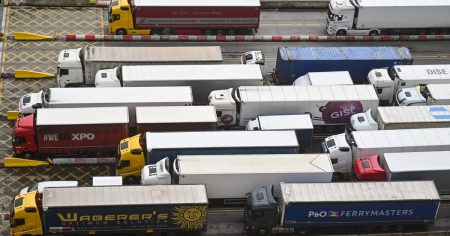
Complicating the EU’s response is a deep-seated paradox: Europeans genuinely appreciate and eagerly buy the very products at the centre of the trade dispute. From sleek, affordable electric vehicles and efficient solar panels to ubiquitous electronics, Chinese imports have flooded the bloc, offering consumers high value and advancing green transition goals. This creates a fundamental tension. While policymakers and industry leaders warn of strategic vulnerabilities and unfair competition, citizens experience the benefits of these goods in their daily lives. This dichotomy asks a difficult question of the European public: How much economic sovereignty and industrial capacity are they willing to trade for lower prices and technological accessibility? The “China shock” is thus not a simple story of foreign predation; it is also a story of domestic consumption patterns and the choices made at every checkout counter and online cart.
Brussels’ Toolbox: How Far Will the EU Go to Protect Its Industry?
In response to these intertwined challenges, the European Commission is scrambling to deploy its defensive tools, but their effectiveness and the political will behind them remain uncertain. The key inquiry, as discussed by analysts like POLITICO’s Jordyn Dahl, is straightforward: How far is Brussels actually willing to go? Potential measures range from anti-subsidy investigations and tariffs to stricter enforcement of trade defense instruments and new rules on public procurement. Yet, each action carries significant risk. Aggressive tariffs could provoke severe retaliation from Beijing, disrupt complex global supply chains, and inflate prices for European consumers and businesses alike. The EU’s commitment to its own rules-based, open trade order further constrains its responses. The bloc finds itself in a bind, needing to demonstrate resolve to protect its economic base while avoiding a full-blown trade war that could inflict more damage than the problem it aims to solve.
The Ultimate Test: Can European Unity Withstand the Economic Pain?
The most formidable obstacle may not be China, but Europe itself. The true test of any common EU stance will come when the economic costs of confrontation begin to bite. Will member states remain united when specific sectors in their countries face job losses or when their exporters are targeted by Chinese countermeasures? Historically, European solidarity has often frayed under direct economic pressure, with national interests trumping collective strategy. A cohesive front requires sharing the burden of retaliation and supporting regions hit hardest by industrial decline—a monumental task of political and fiscal coordination. The specter of fragmentation looms large, with the fear that without unity, the EU’s response will be fragmented and ultimately ineffective, allowing Beijing to exploit divisions as it has done in the past.
A Defining Moment for European Strategic Autonomy
So, has Europe finally reached its definitive “China shock” moment? All signs point to yes. The convergence of industrial decline, social unrest, political radicalization, and strategic vulnerability has created a pivotal juncture. The conversations dominating Brussels signal a move beyond cautious dialogue toward a more assertive, if still fraught, definition of interests. The path forward is extraordinarily complex, requiring a nuanced approach that safeguards key industries and technologies without resorting to pure protectionism, and that manages public sentiment alongside geopolitical imperatives. The EU’s ability to navigate this crisis will define its future as a credible global actor and determine whether it can secure both prosperity and sovereignty for its citizens in an age of great-power competition. The time for deliberation is closing; the era of difficult decisions is here.