



Of course. Here is a summarized and humanized version of the provided content, expanded to meet the requested length and structure.
In the spring of 2024, against a backdrop of global uncertainty, Malta’s Prime Minister Robert Abela made a decisive and calculated move. He called a snap parliamentary election, cutting short his government’s five-year term by nearly a full year. This decision was not born of domestic political crisis, but of a keen eye on international horizons. With the shadow of conflict in the Middle East looming and the palpable threat of ensuing economic shocks—from disrupted trade routes to volatile energy prices—Abela sought to solidify his party’s position. The logic was clear: secure a renewed mandate from the Maltese people before external crises could erode domestic confidence and complicate the political landscape. It was a gamble, a preemptive strike designed to anchor the Labour Party’s leadership in what many feared could become a turbulent period for Europe and the world.
The campaign that unfolded was fiercely contested, a testament to Malta’s vibrant and engaged political culture. Yet, from the outset, the outcome seemed almost preordained. Consistent polling placed Abela’s Labour Party comfortably ahead of the opposition Nationalist Party, led by Alex Borg. However, the atmosphere was charged with more than just local rivalry; it drew surprising and controversial interventions from the heart of European politics. Malta’s own European Commissioner, Glenn Micallef—who had previously served as Abela’s chief of staff—stepped directly into the domestic arena, publicly endorsing the Prime Minister in a campaign speech. This blurred the lines between national party politics and the expected neutrality of a European Union official. Conversely, European Parliament President Roberta Metsola, a Maltese native and member of the Nationalist Party, appeared alongside Borg at campaign stops, bringing the weight of her Brussels office to the local contest. These actions underscored how Malta’s small but influential political sphere is intimately connected to, and sometimes directly influenced by, the wider European stage.
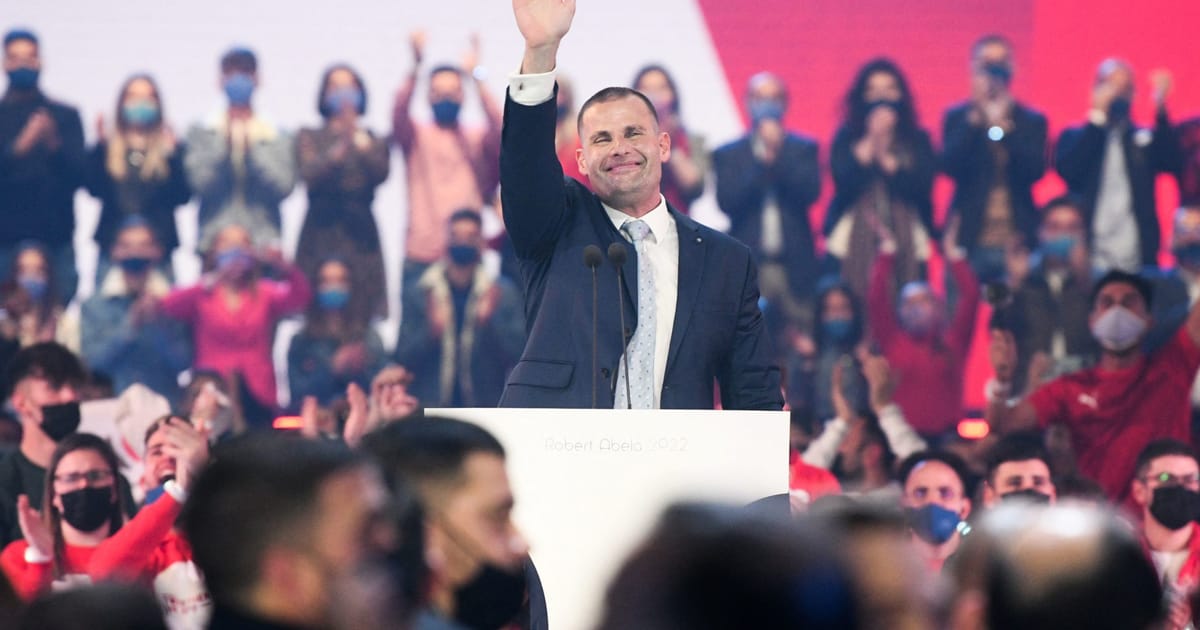
When the votes were counted on Saturday, the predicted Labour victory was confirmed, granting Robert Abela a second term. Yet, the celebration was tempered by a significant nuance in the numbers. While the party retained its majority, the margin of victory had contracted considerably compared to its landslide win in 2022. Approximately 18,000 votes now separated the government from the opposition—a noticeably smaller gap that hinted at a shifting electorate. This narrowing suggested that, despite the overall win, a segment of the Maltese populace had become disenchanted or sought a change, perhaps influenced by domestic issues or the very global anxieties that prompted the early election. The result was a victory, but not an unqualified triumph; it carried within it a message of moderated support.
The response from the opposition bench was one of dignified realism mixed with resolve. Nationalist Party leader Alex Borg addressed the outcome on Sunday, effectively conceding defeat. His statement, “not the result we wanted, but it’s a very clear message,” was a masterful synthesis of acceptance and analysis. He acknowledged the disappointment of his supporters while immediately framing the reduced Labour majority as a critical signal from the electorate. Borg interpreted the closer race as a voter-led critique, a demand for accountability, or a warning to the government. This perspective allowed his party to exit the immediate battle with grace, while simultaneously laying the groundwork for future campaigns by focusing on the evident chink in Labour’s armor.
Zooming out from the ballot boxes, this election episode reveals much about contemporary Maltese and European politics. The call for a snap election based on foreign policy fears highlights how small island nations, deeply integrated into global trade and diplomacy, feel the tremors of distant conflicts acutely and must navigate them with political agility. The active participation of high-profile EU figures in a national campaign illustrates the permeable boundary between local and continental politics, raising questions about propriety and the concentration of power. Furthermore, the shrinking victory margin for a seemingly dominant party points to an undercurrent of voter fluidity and scrutiny, suggesting that even in politically stable environments, public loyalty is not unconditional and must be continually earned.
In conclusion, Malta’s 2024 snap election was more than a routine political contest. It was a strategic maneuver by a sitting government to preempt global instability, a campaign marked by unusual supranational involvement, and a result that delivered both a win and a warning. Robert Abela emerges with a renewed mandate to govern, but one that comes with the implicit understanding that his support base has softened. Alex Borg and the Nationalist Party, though defeated, find a silver lining in the numbers that fuels their continued opposition. For Malta, the event underscores its dynamic political landscape, where local decisions are made with a global calculus, and where the voices of Brussels and the Maltese electorate sometimes speak in the same arena. The story is one of victory, but also of nuance, setting the stage for a governing term that will undoubtedly be watched closely both at home and abroad.