

Summary and Humanization of Planned London Underground Strikes
For six hundred words, here is a human-centered summary of the planned London Underground strikes, focusing on the human and practical implications behind the headlines.
Paragraph 1: The Impending Disruption
London’s rhythm is set to be severely disrupted next week, as Underground drivers from the RMT union plan two full 24-hour strikes. This industrial action, scheduled for Tuesday, June 2nd, and Thursday, June 4th, threatens to bring the city’s circulatory system to a near-standstill on those days, with significant knock-on effects likely during the following mornings. While some previously planned strikes were called off after last-minute talks, these upcoming dates currently stand, casting a long shadow over the week ahead for millions of commuters, businesses, and visitors. The uncertainty itself is a burden, forcing everyone to make contingency plans while holding onto a slim hope that a resolution might yet be found at the eleventh hour.
Paragraph26901: The Heart of the Dispute
At the core of this conflict is a fundamental disagreement over work-life balance and safety. Transport for London (TfL) has proposed new voluntary working patterns that would allow drivers to condense a standard five-day workload into four longer days, effectively offering a four-day week in exchange for extended daily shifts. TfL leadership insists this is a positive, flexible option that would grant more consecutive days off without cutting pay or forcing anyone into the arrangement. The RMT union, however, sees it very differently. They argue this is a “fake four-day week” that compresses five days of fatigue into four, raising serious concerns about driver exhaustion and the subsequent risks to passenger safety. This isn’t a simple case of management versus labour; even the unions are divided. The train drivers’ union ASLEF has accepted the deal, praising it for giving members “35 more days off each year,” which highlights the complex and subjective nature of the negotiations.
Paragraph 3: The Ripple Effect on London’s Life
The impact of a Tube strike extends far beyond inconvenient commutes. It strikes at the economic and social heart of the capital. Analysts estimate that similar strikes in April cost the economy directly between £130 million and £250 million in lost productivity, as workers struggled to reach their offices. But the deeper wound is inflicted on the city’s vibrancy. Hospitality and retail sectors, still recovering from past challenges, brace for devastating drops in footfall—up to 40% for pubs and restaurants, according to industry bodies. This means quieter high streets, emptier cafes, and lost income for countless small businesses. The strike becomes a story of the cafe owner watching empty chairs, the shop assistant with no customers, and the delivery rider navigating gridlocked streets, illustrating how industrial action in one sector sends shockwaves through the entire community.
Paragraph 4: Navigating the Strike Days – What to Expect
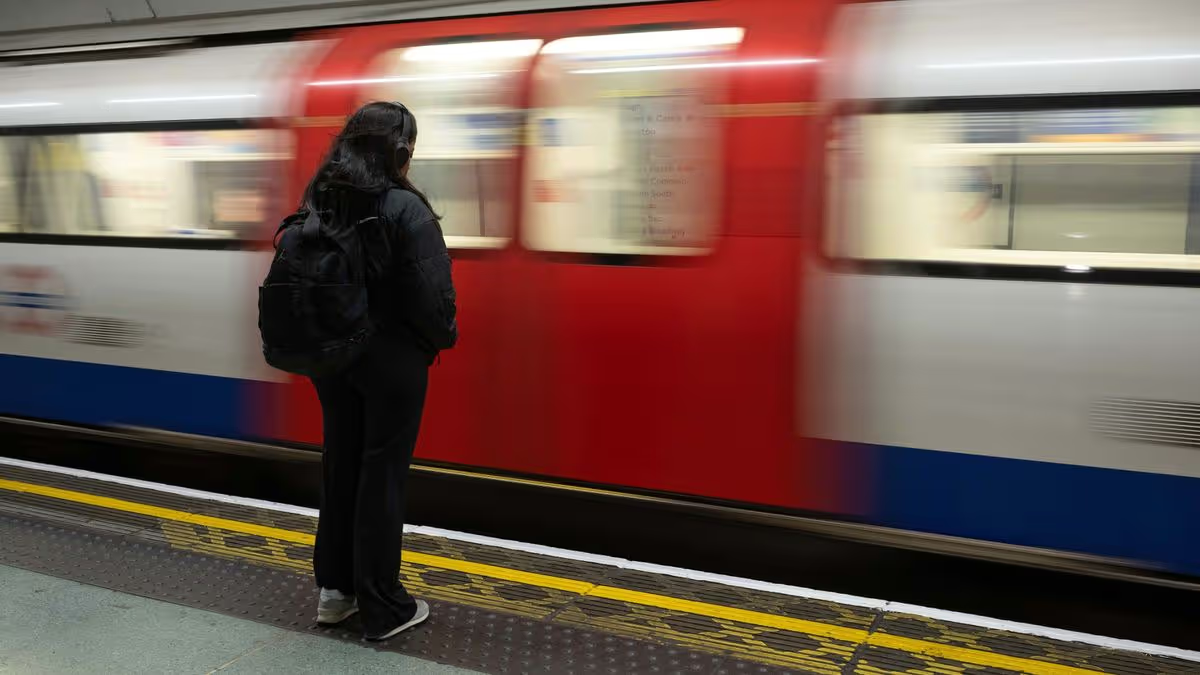
For those who must travel, the message is to plan meticulously and expect difficulty. Services will begin later and finish much earlier, with all journeys needing to be completed by 9:00 PM on strike days. The Circle and Piccadilly lines will not run at all, and major sections of the Central and Metropolitan lines will be closed. While other lines like the Jubilee, Northern, and Victoria are slated to operate, they will run a reduced, irregular service and will be exceptionally crowded. The entire network will be under severe strain, and even a nominal “service” does not mean a reliable or comfortable journey. The advice from TfL is unambiguous: avoid travel on the Underground if you possibly can.
Paragraph 5: Exploring Alternative Routes
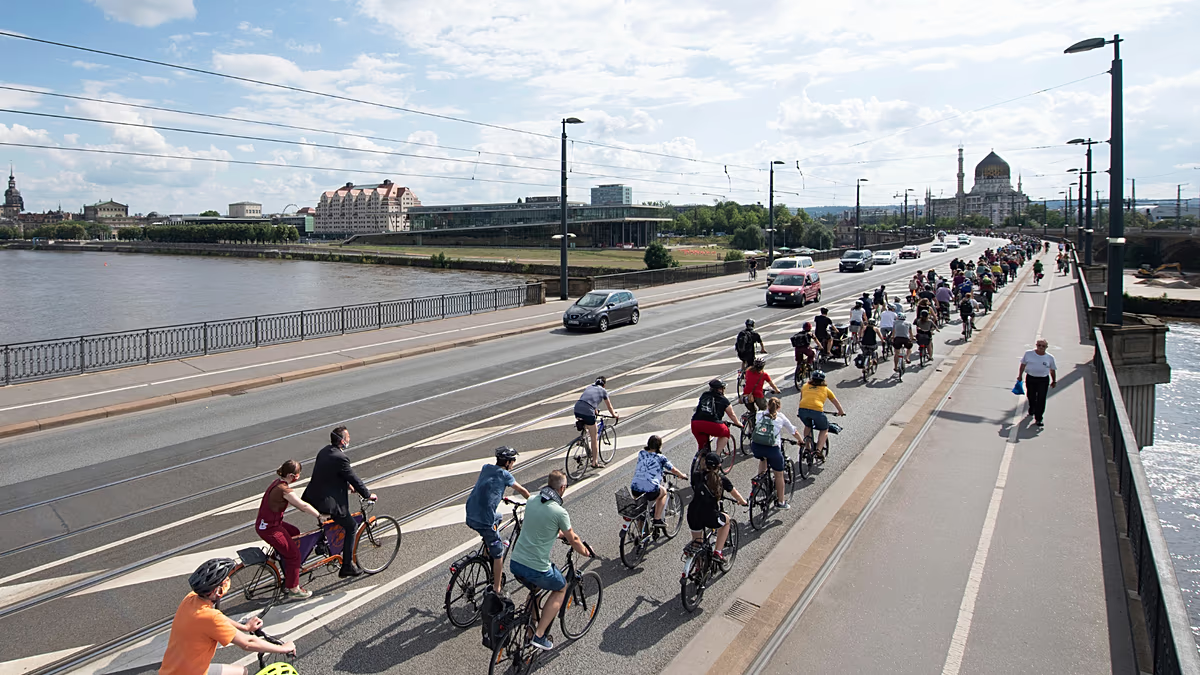
Thankfully, London has other transport layers, though they will be under immense pressure. All London Overground lines, the Docklands Light Railway (DLR), the Elizabeth line, trams, and buses will operate. They present the primary alternative but will be overwhelmingly busy—think crowded platforms and wait-and-see delays. Cycling, whether on personal bikes or hired e-bikes and scooters, saw a major surge during the last strikes and will again be a popular, if weather-dependent, choice. For any essential trip, using the TfL journey planner before setting out is non-negotiable. It will provide the real-time picture of which alternative routes are least congested, though patience will be the most important travel accessory of all.
Paragraph 6: Reaching Major Hubs and Looking Ahead
For those with critical journeys to national rail terminals or Eurostar services, extra planning is crucial. Major stations like Paddington (served by the Elizabeth line) and King’s Cross St. Pancras (served by Thameslink) will have alternative rail access, though services will be busy. Stations like Victoria and Euston will be more challenging, potentially requiring bus journeys or walks from nearby accessible stops, necessitating a significant buffer in travel time. As London prepares for this challenging week, there is a glimmer of hope that this could be the last such disruption for a while, as the RMT has not announced further dates beyond these. For now, however, the city must brace itself, demonstrate its renowned resilience, and hope that constructive dialogue can finally bridge the gap between the promise of flexible working and the paramount priority of safety.