


In the quiet coastal town of Aberystwyth, Wales, the North family’s world was irrevocably changed by a single phone call. Olivia North, a vibrant 21-year-old media and communications student at Goldsmiths, University of London, was living a dream adventure on her gap year in India. After becoming disenchanted with university routine, she had worked tirelessly for six months to fund a solo journey, immersing herself in the rich tapestry of Indian culture. Her trip was nearly complete, with her return flight home just days away, when tragedy struck on a road in Goa. In May, after a concerning silence, her father, Nic, received the devastating news: Olivia had been involved in a catastrophic scooter accident. After frantically calling hospitals across the region, he learned his daughter was fighting for her life with severe brain injuries, having been rushed to a hospital in southern Goa.
The medical diagnosis was harrowing. A doctor informed Nic that Olivia had collided with another scooter at high speed and, critically, was not wearing a helmet. She suffered a subdural hematoma—a serious bleed on the brain—along with bruising and intrusion. Subsequent MRI scans revealed profound damage to the left temporal lobe, the area crucial for memory, and her cerebellum, which governs balance and orientation. Rushing to her side with his youngest daughter, Nic found Olivia alive but profoundly altered. While she recognized her immediate family, her memory was shattered. She mistook her older brother for an uncle and, most heartbreakingly, had no recollection of her beloved dog, Raj, or his passing just months prior. The vibrant young woman who once enjoyed horse riding and representing her country in cricket as a teenager could not remember these fundamental parts of herself.
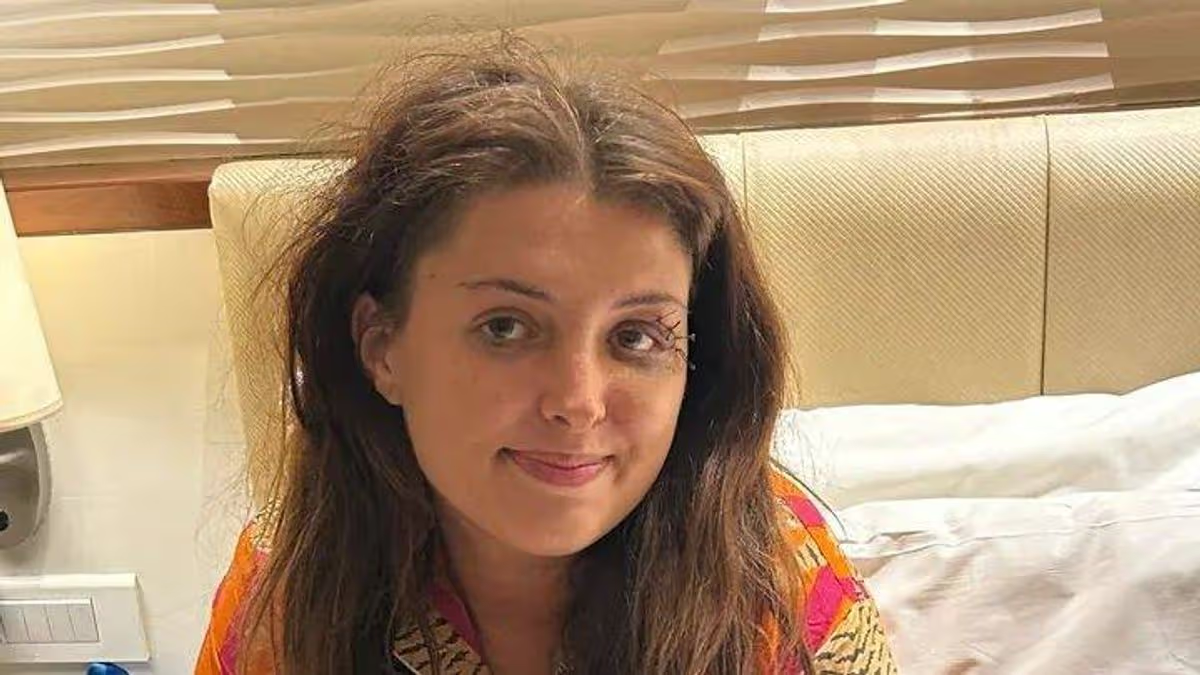
Olivia’s journey to recovery is now a fraught and uncertain path, complicated by their location far from home. After being discharged from the initial hospital “within minutes” of her family’s arrival due to overwhelming patient volume—despite still having a brain bleed—the family secured a hotel room near a private hospital. Here, Olivia receives regular assessments and scans as she battles her severe injuries, which also include a facial wound that nearly cost her an eye, plus fractures in her wrist and lower arm. Currently, she sleeps about 20 hours each day, has no memory of the crash or the days leading up to it, and can only walk very short distances. Compounding the medical crisis is the stark reality that she cannot safely fly home; the change in cabin pressure poses a serious risk to her type of brain injury, leaving her stranded in India indefinitely.
The financial burden on the North family has been immense and rapidly escalating. In the brutal twist of the accident, Olivia’s decision not to wear a helmet—a choice her father admits he cannot comprehend—invalidated her travel insurance. In just three weeks, the family has spent over £7,000 on emergency flights, extended hotel stays, private medical care, food, and local travel. With no clear timeline for Olivia’s medical stability to allow for a safe, medically-assisted repatriation, they face what they describe as “a deepening financial hole,” aware that costs will continue to mount daily. Their entire focus is on Olivia’s care, yet the stress of this unforeseen financial abyss looms over every decision and hope for her recovery.
Amidst this turmoil, a small measure of clarity emerged about the accident itself. According to a police officer’s examination, Olivia was riding within the speed limit. It is believed that in the darkness, her scooter hit a pothole, causing her to lose control. This detail offers little solace, however, as the family grapples with the irreversible consequences. Their lives are now divided between vigil at Olivia’s side, managing complex medical consultations, and navigating the daunting practicalities of a long-term crisis in a foreign country. The dream gap year has become a nightmare of survival, resilience, and waiting.
In response to this overwhelming situation, Nic North has launched a GoFundMe campaign, a humble appeal for help to shoulder the extraordinary costs that have avalanched upon them. The fundraiser stands as a testament to a family’s love and determination to bring their daughter home, but also as a stark reminder of how quickly life can change. As Olivia continues her fragile recovery one day at a time in a Goan hotel room, surrounded by her devoted family, their story is one of profound vulnerability and human endurance, a plea for community support in the face of an ordeal no family should ever have to endure alone.