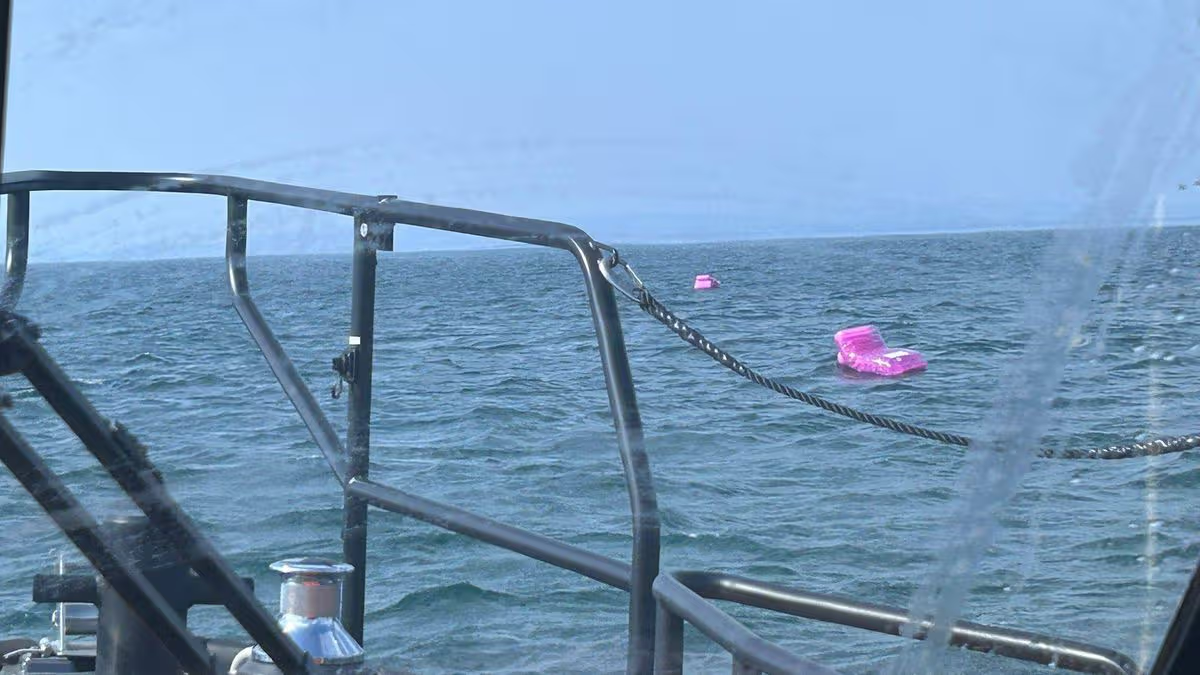



On a seemingly ordinary Thursday afternoon, the rugged northwest coast of Fuerteventura became the stage for a tragic and frantic rescue attempt that would ultimately end in loss. On May 30th, 2026, emergency calls flooded into the Canary Islands’ 112 service shortly after 5:30 p.m., reporting two swimmers in grave difficulty in the waters off Playa del Águila. This remote and beautiful spot, also known as Playa de La Escalera, is a secluded enclave of orange-gold sand and turquoise sea, accessible only by a steep, 130-step staircase carved into dramatic volcanic cliffs. Its wild, untouched nature is part of its allure, but on this day, that very isolation underscored the peril. With no lifeguards, no facilities, and a shoreline that vanishes entirely at high tide, the beach offers no quarter for those caught in trouble.
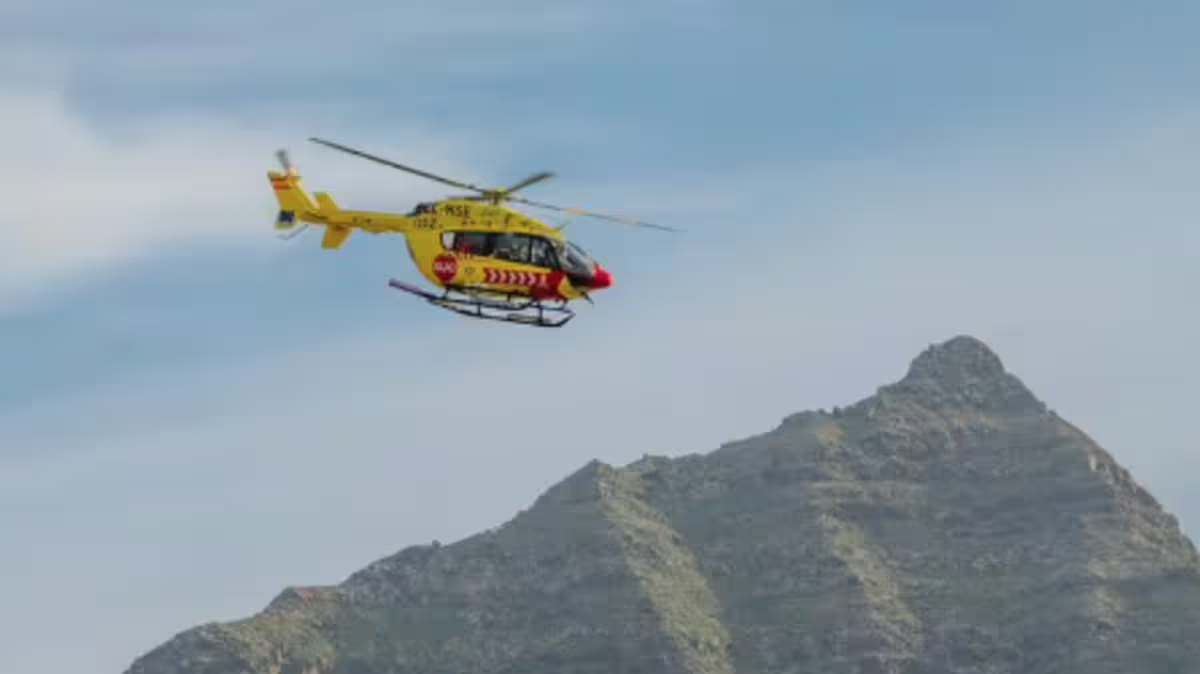
The response was immediate and comprehensive, a testament to the coordinated efforts of local emergency services. Lifeguards from the La Oliva beach service, maritime rescue teams, Civil Protection volunteers, local police, and firefighters all converged on the scene. The critical aerial element was provided by the Canary Islands Emergency and Rescue Group (GES), whose helicopter raced to the coordinates. Scanning the churning water, the crew successfully located one of the swimmers. In a dramatic and technically challenging manoeuvre, the man was winched from the sea, a moment of hope in the midst of the crisis. However, that hope swiftly turned to urgent medical alarm. Once inside the aircraft, rescue crews discovered the British national was in full cardiac arrest, prompting them to immediately begin cardiopulmonary resuscitation as they rushed towards a designated landing site.
Upon landing, a concerted medical battle for his life commenced on the ground. The helicopter’s medical crew was joined by waiting paramedics and staff from a nearby local health centre, all working in a desperate, coordinated effort to resuscitate him. Despite their exhaustive attempts, the damage was too severe. The man was tragically pronounced dead at the scene, his life lost following the very rescue that had pulled him from the water. In a poignant contrast, the second swimmer involved in the incident managed to reach the shore without direct assistance from the helicopter. This individual was treated on the beach by paramedics for any injuries or shock sustained but, after assessment, declined further hospitalisation, choosing instead to remain at the scene that had so quickly turned from a place of recreation to one of tragedy.
The incident casts a sobering light on the powerful and deceptive nature of such pristine, wild locations. Playa del Águila, for all its breathtaking beauty, is a beach that commands respect and extreme caution. The Atlantic waters here can be unpredictable, with strong currents and sudden changes in conditions. The beach’s complete submersion at high tide, leaving swimmers against sheer cliffs with no retreat, adds a significant layer of danger. The absence of lifeguards or any immediate safety infrastructure means that swimmers are entirely responsible for their own safety, and any emergency becomes a complex logistical challenge, reliant on the swift mobilisation of resources from distant towns. This tragic event serves as a painful reminder that natural beauty often coexists with inherent risk.
In the aftermath, the local authorities have moved to investigate the full circumstances surrounding the death. The Civil Guard has opened an inquiry and is preparing an official report, a standard procedure in such incidents, which will seek to document the timeline of events and the response. Meanwhile, the British Foreign, Commonwealth & Development Office has been notified and is likely providing consular assistance to the man’s family, helping them navigate the difficult process abroad. The community in La Oliva and the wider network of rescue personnel, who train for such moments but are never immune to their human cost, are left to reflect on a mission where every protocol was followed, every effort made, yet the outcome was still one of profound sorrow.
Ultimately, this story is one of a holiday tragically cut short, a family shattered by loss from thousands of miles away, and a stark warning etched against a backdrop of stunning scenery. It highlights the bravery and coordination of emergency services who perform high-stakes rescues in challenging environments daily. It also underscores a crucial message for all who seek out the world’s untouched shores: to vigilantly assess conditions, acknowledge personal limits, and never underestimate the raw power of the sea. The memory of this afternoon at Playa de La Escalera will linger, a sombre footnote to the beach’s wild charm, reminding us that nature’s most beautiful canvases can sometimes be its most unforgiving.