


A Joyful Milestone and Its Unspoken Context
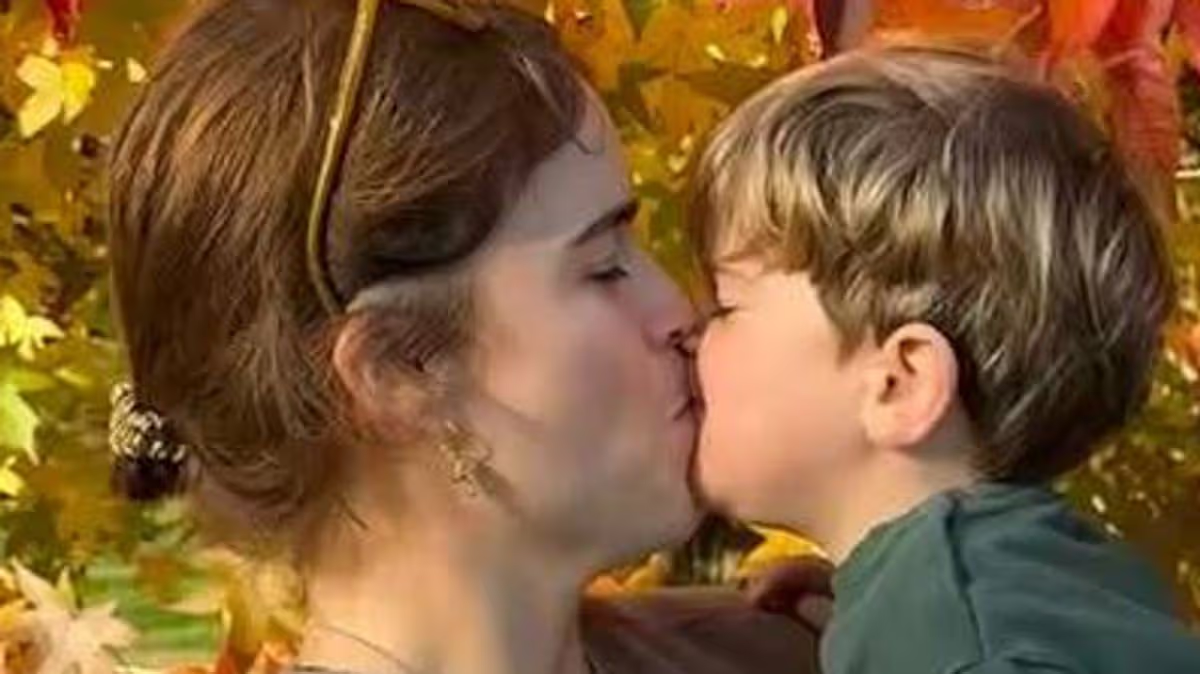
On a day meant for simple, familial joy, Princess Eugenie marked her youngest son Ernest’s third birthday with a heartfelt social media tribute. Sharing a series of tender photographs, she painted a portrait of a vibrant little boy: captured mid-laughter as his mother kissed his cheek, kicking a football with determination, and walking hand-in-hand with his older brother, August. In her caption, she affectionately dubbed him her “tiger loving, hat wearing, constantly hugging, fearless golden boy,” whose “deep voice and infectious smile” light up every room. The images radiated the universal warmth of a mother’s love and the uncomplicated happiness of childhood, as hundreds of well-wishers flooded the comments with birthday greetings for the young royal.
However, the notable absence of two figures from this intimate digital album did not go unnoticed. Eugenie’s parents, the Duke of York and Sarah, Duchess of York, were neither pictured nor mentioned in the birthday commemorations. This omission extends beyond a single post, forming a pattern observed over recent months. The princess and her sister, Beatrice, were also absent from the traditional royal Easter Sunday gathering at Windsor, an absence agreed upon with King Charles III. These conscious choices unfold against a backdrop of profound and relentless scandal, creating a complex family dynamic where private celebrations inevitably carry public weight.
The shadow looming over the York family is long and dark, centred on the Duke’s association with the convicted paedophile and financier Jeffrey Epstein. Stripped of his military affiliations and royal patronages and forced to relinquish his ‘His Royal Highness’ style, Prince Andrew faces ongoing legal and reputational turmoil. Recent developments have seen Metropolitan Police detectives, already investigating potential misconduct in public office related to his Epstein links, confirm they will also consider allegations of sexual misconduct as part of that inquiry. Andrew has consistently denied any wrongdoing. Meanwhile, the Duchess has faced scrutiny of her own, with released Epstein documents suggesting she brought a then-teenage Beatrice and Eugenie to visit the financier in New York shortly after his release from prison for child sex offences—a visit reportedly arranged for the daughters to thank him for his hospitality.
This enduring controversy has placed Beatrice and Eugenie in an extraordinarily difficult position, navigating their loyalty as daughters with their roles as working members of the wider royal family and, now, as mothers building their own families’ futures. Their strategic distance from their parents’ public engagements appears to be a carefully managed effort to protect their young children from the maelstrom and to maintain a semblance of normalcy. The decision for Buckingham Palace itself to announce Eugenie’s current pregnancy—a rare move for a non-senior royal—is widely interpreted as a powerful gesture of institutional support, reinforcing her standing within the family fold during a personally tumultuous time.
Amidst this adult strife, the focus on Ernest’s birthday and the upcoming new arrival represents a deliberate pivot toward hope and continuity. The young boy, now 14th in line to the throne, and his brother August, 13th, are blissfully unaware of the complexities of their lineage. The family’s recent announcement that Eugenie and her husband, Jack Brooksbank, are expecting their third child this summer was met with declared delight from the King and palpable excitement from the soon-to-be older brothers. A charming photograph showed August and Ernest holding a baby scan image, a symbol of pure familial anticipation. This new baby, who will be 15th in line to the throne, represents another branch of growth on the family tree, a new great-grandchild for the late Queen Elizabeth II, and a fresh beginning.
Thus, Princess Eugenie’s birthday tribute to her “fearless golden boy” serves as a poignant microcosm of her current reality: a bold assertion of normal maternal joy and a celebration of childhood’s innocence, consciously framed separately from the profound challenges facing her parents. It underscores a mother’s primary instinct to protect and celebrate her children, building a wall of love and normalcy around them. While the absence of the Duke and Duchess speaks volumes about the ongoing strains, the focused celebration on Ernest, August, and the coming baby highlights a family determined to look forward, building its future on the foundations of immediate love rather than the burdens of inherited scandal.