

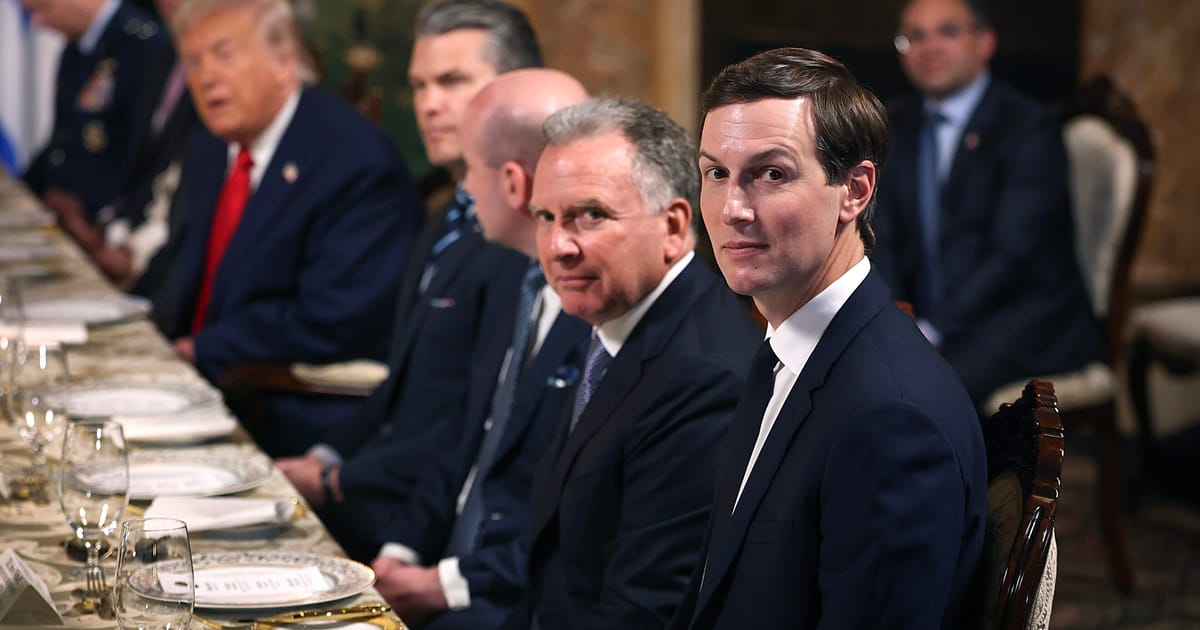
In the complex and often opaque world of international diplomacy, the path to ending Russia’s war in Ukraine appears increasingly fraught with behind-the-scenes maneuvering and competing narratives. Recent reports have highlighted a potential new channel of informal negotiation, one that bypasses traditional statecraft. According to Ukrainian military intelligence chief Kyrylo Budanov, a group of influential figures with close ties to former U.S. President Donald Trump—specifically, real estate developer Michael Witkoff and Trump’s son-in-law, Jared Kushner—are considering a trip to Ukraine. The purpose of such a visit would presumably be to discuss potential frameworks for peace. The White House has remained notably silent on Budanov’s claims, neither confirming nor denying the speculation. Meanwhile, Bloomberg news agency, citing an unnamed U.S. official, reported that such a trip is indeed under discussion but has not been finalized. This development underscores the growing influence of private citizens and political actors from previous administrations in attempting to shape solutions to one of the world’s most pressing geopolitical crises, even as the current Biden administration officially leads foreign policy.
The context for these informal overtures is a landscape of intense pressure on Ukrainian leadership. In a sobering interview with Reuters in late March, President Volodymyr Zelenskyy revealed that he has faced significant pressure from Donald Trump to agree to a deal that would end the war. According to Zelenskyy, the proposed terms—communicated through various channels—could require Ukraine to cede sovereign territory, specifically the entirety of the eastern Donbas region, to Russia. Zelenskyy stated explicitly that Washington had linked its offer of future security guarantees for Ukraine to this major territorial concession. This allegation, if true, represents a profound shift in the publicly stated U.S. position, which has consistently championed Ukraine’s territorial integrity and sovereignty within its internationally recognized borders. For a nation fighting an existential war, the suggestion that its primary backer might be pushing for territorial dismemberment as the price for peace is politically and morally devastating.
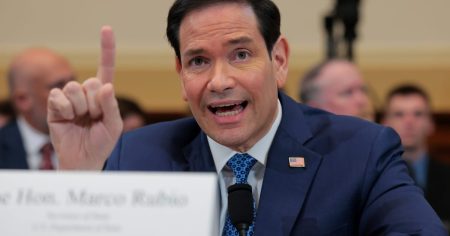
This grave accusation, however, was met with a swift and blunt rebuttal from a key figure in U.S. foreign policy. Secretary of State Marco Rubio, speaking just days after Zelenskyy’s interview was published, categorically denied the Ukrainian president’s claims. In strong language, Rubio labeled Zelenskyy’s assertion “a lie.” He expressed disappointment that the Ukrainian leader would make such a statement, insisting “he knows that’s not true and that’s not what he was told.” This public contradiction between two allied leaders highlights a deep and troubling disconnect. It raises critical questions: Is there a hidden, more coercive layer to U.S. diplomacy that contradicts its public assurances? Or is Zelenskyy’s narrative a strategic effort to galvanize continued Western support by highlighting the dire alternatives? This public clash exposes the immense strain the war has placed on the Ukraine-U.S. alliance and the fragile trust that underpins it.
Further complicating the picture are reports of a detailed U.S. peace proposal from the previous year, which adds a layer of credibility to Zelenskyy’s concerns. While not officially confirmed in its entirety by the U.S. government, sources indicate that a contentious 28-point plan was presented to both Kyiv and Moscow. A central and highly controversial element of this reported plan was indeed the cession of the Donbas region to Russian control. Furthermore, the plan allegedly stipulated that Ukraine would hold national elections within a mere 100 days of a ceasefire. For Ukraine, such a condition is deeply problematic, as holding free and fair elections under the current conditions—with millions of citizens displaced, under occupation, or fighting at the front—would be virtually impossible and could legitimize Russian territorial gains. The emergence of these details suggests that while Rubio may be technically correct that no current formal stipulation exists, the idea of trading territory for security guarantees has undeniably circulated at high levels, creating a perception of pressure that Ukraine feels acutely.
Amidst this diplomatic friction, President Zelenskyy faces another, potentially more devastating threat to Ukraine’s survival: the risk of being overshadowed. In a separate interview with the Associated Press, the Ukrainian president voiced his profound anxiety that a widening war in the Middle East, specifically a sustained U.S. and Israeli conflict with Iran, would irrevocably divert international attention and, more critically, military resources away from Ukraine. “We have to recognize that we are not the priority for today,” Zelenskyy stated with stark realism. “That’s why I am afraid a long [Middle East] war will give us less support.” This fear is not unfounded; global attention spans and defense industrial capacities are finite. A major new conflict in the Middle East could slow the delivery of essential artillery shells, air defense missiles, and other matériel to Ukraine, directly impacting its ability to hold the line against a larger Russian force. Zelenskyy’s comment reflects the precarious position of a nation whose fate is tied not only to its own courage but to the sustained focus of a often-distracted world.
In conclusion, the current moment presents a multifaceted crisis for Ukraine. On one front, it is grappling with unsettling diplomatic signals, including informal talks spearheaded by Trump allies and conflicting accounts of pressure to concede territory, all of which sow uncertainty and strategic peril. On another, it confronts the looming prospect of geopolitical eclipse as new global flashpoints demand Western resources. The combined effect is a chilling scenario where Ukraine’s path to victory—or even a just and sustainable peace—narrows. The public denial from Secretary Rubio attempts to maintain a unified front, but the underlying tensions and reported proposals reveal the brutal pragmatism that often surfaces in protracted wars. For Ukraine, the struggle is no longer solely on the battlefields of Donbas; it is equally a fight to maintain its position as a global priority and to ensure that any future negotiations preserve its fundamental existence as a sovereign, independent state. The coming months will test not only Ukrainian resilience but also the depth and consistency of the international community’s commitment.