


A Historic Turning Point for Hungary
In a stunning political upheaval, Hungary stands at the dawn of a new chapter. Viktor Orbán, a figure who has defined and dominated the nation’s political landscape for over a decade, has been decisively defeated in the general election. This marks nothing short of the end of an era. His party’s grip on power has been broken, and in a remarkable shift, Péter Magyar is poised not only to become the next prime minister but to command a supermajority in parliament. The sheer scale of this victory suggests a deep and widespread desire for fundamental change among the Hungarian electorate. For years, Orbán’s leadership was seen by many as an impregnable fortress, making this electoral outcome profoundly significant. The atmosphere across the country—in both bustling urban centers and quiet villages—is electric with a sense of historic transformation, as citizens collectively exhale after a long period of intense political polarization.
Voices from the Ground: A Nation’s Pulse
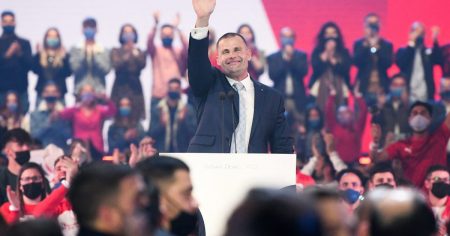
To understand the gravity of this moment, one must listen to the voices emerging from the heart of the action. In Budapest, at the victorious Tisza party’s watch event, the mood was jubilant and emotional. Journalist Max Griera, present at the celebration, described scenes of genuine euphoria—a release of long-held hopes for a democratic renewal. The energy was not just about winning; it was a cathartic moment for many who felt their voices had been sidelined. Meanwhile, foreign affairs analyst Jamie Dettmer, also reporting from the capital, provided a crucial external perspective, framing the election not just as a domestic event but as a pivotal moment for Europe. These on-the-ground insights reveal a society eager to reconcile and rebuild after years marked by division.
The Orbán Legacy: Democratic Erosion and Isolation
The conversation inevitably turns to the legacy Péter Magyar inherits. For over fourteen years, under Orbán, Hungary’s political system experienced significant democratic backsliding. Critics, both at home and abroad, accused the government of undermining judicial independence, press freedom, and civic space—a model often labeled as “illiberal democracy.” In European circles, Budapest became synonymous with obstructionism, frequently clashing with Brussels over rule-of-law issues, migration policies, and values. Most critically, Orbán’s overtly pro-Russian foreign policy stance, especially in the context of the war in Ukraine, created a deep rift with the European Union and NATO allies. This period left Hungary increasingly isolated and its international relationships severely fractured, presenting a formidable set of challenges for any incoming leader.
Magyar’s Mandate: A Path Toward Reconciliation
Péter Magyar now steps into this complex legacy with a clear and powerful mandate. His resounding victory signals a public yearning for a different course. The central expectation is that his leadership will initiate a tangible process of domestic democratic restoration. This could involve rolling back legislative changes that centralized power, reinforcing institutional checks and balances, and fostering a climate of greater societal openness. However, Magyar’s most immediate and visible test will be on the international stage. The diplomatic task of mending Hungary’s strained relationship with Brussels will be monumental. It will require not only symbolic overtures but concrete policy shifts, likely beginning with a realignment of foreign policy to demonstrate solidarity with European and transatlantic partners, thereby ending years of contentious blockade and discord.
A European and Personal Crossroads
This transition in Budapest is far more than a simple change of government; it represents a critical juncture for the entire European project. A Hungary re-engaged with the EU’s core principles would strengthen the bloc’s unity, particularly in facing shared external challenges. It offers a chance to heal one of the Union’s most persistent internal rifts. On a deeply human level, this moment asks every Hungarian, and those watching abroad, to reflect: What does this change mean for my family, my community, and my future? It invites citizens to move beyond the rhetoric of campaigns and consider the practical realities of rebuilding trust—both within the nation and across its borders.
Your Voice in the Story
As history unfolds, its true narrative is woven from countless individual experiences. Whether you cast a ballot, watched anxiously from afar, or have followed Hungary’s journey with keen interest, your perspective is a vital part of this story. We invite you to share your reflections on this historic result. How do you feel about this new political dawn? What are your hopes or concerns for Hungary’s path forward? You can send your thoughts via WhatsApp to +32 491 05 06 29. In a moment defined by change, your voice contributes to a fuller understanding of what this new era might truly hold.