

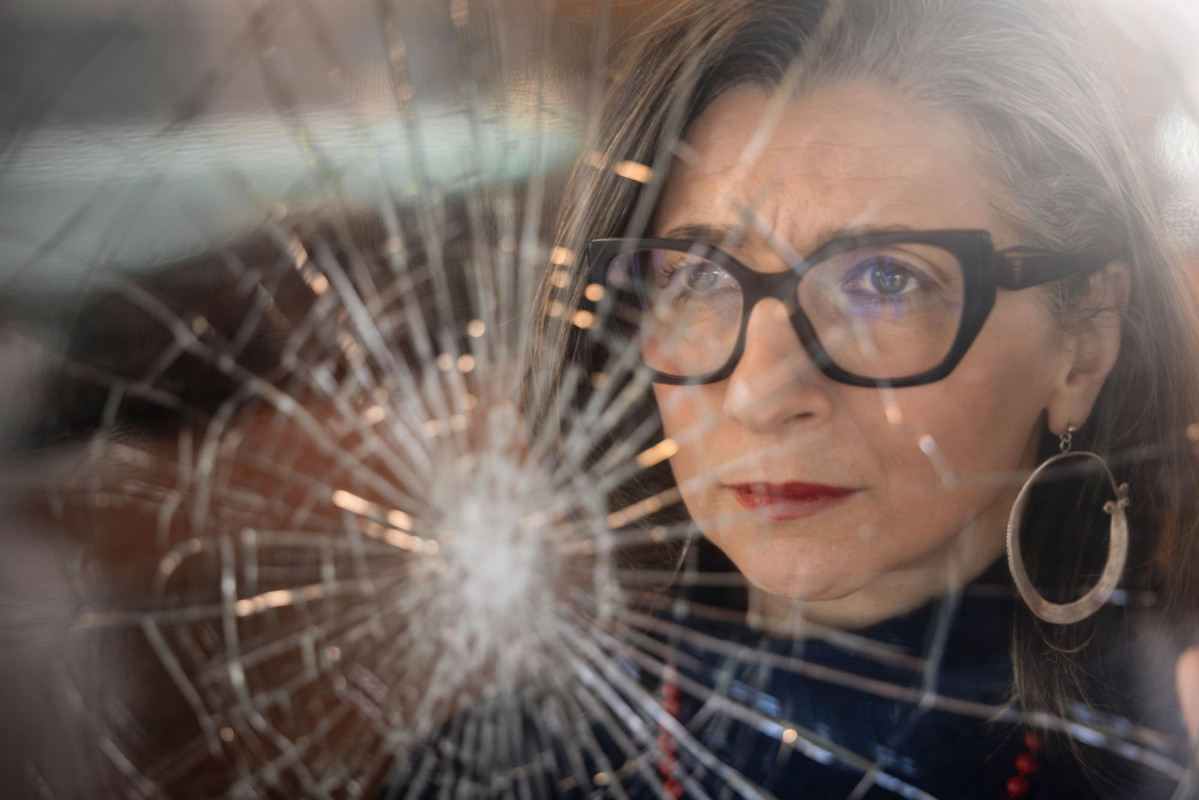
Francesca Albanese, the United Nations Special Rapporteur on the situation of human rights in the Palestinian territories, stands at the center of a fierce international storm. She perceives herself as the target of a coordinated campaign to silence her criticism of Israel’s military actions in Gaza, a perception intensified by the forceful diplomatic responses from the United States and several European nations. This pressure has been extraordinary; one former State Department diplomat, speaking anonymously to discuss policy frankly, noted that the targeting of a U.N. official in this manner was unprecedented in their long career and potentially violated U.S. freedom of speech laws. For Albanese, this intense scrutiny is not merely professional disagreement but an attempt to stifle essential scrutiny of civilian suffering in Gaza, a view bolstered by statements of support from dozens of progressive Jewish groups.
A central pillar of the campaign against her revolves around accusations of antisemitism. Advocacy organizations, most prominently the Geneva-based UN Watch and the Anti-Defamation League in New York, have meticulously cataloged her statements, arguing they cross the line into hatred and prejudice. They accuse her of delegitimizing Israel, diminishing the Holocaust, and perpetuating harmful tropes. Key pieces of evidence include a 2014 Facebook post where she used the term “Jewish lobby,” which she has since called “infelicitous, analytically inaccurate and unintendedly offensive,” and her 2022 comment that Palestinians “have a right to resist this occupation.” Critics also point to her characterization of the October 7th attacks as being carried out “in reaction to Israel’s oppression” rather than primarily as an act of antisemitism.
When confronted with these allegations, Albanese offers a firm and prepared rebuttal. She draws a clear distinction between criticizing the state of Israel and hatred toward Jewish people. “The religion Israel professes cannot be used as an excuse to murder or torture children, right?” she argues. “And the legitimate fight against antisemitism cannot be weaponized against those who ask for justice for those children.” She cites detailed accounts from Gazan hospital workers alleging that Israeli soldiers have targeted children, emphasizing that her focus is on documenting and ending contemporary violations. For her, the weaponization of antisemitism accusations is a tactical move to deflect from the realities on the ground in Gaza and to whitewash alleged crimes.
The conflict escalated dramatically following an event in February 2025. Speaking at an Al Jazeera forum, Albanese denounced a global system of oppression that enables violence and undermines accountability worldwide. Although the full context of her remarks showed she was speaking broadly about power structures, a video edited and posted by UN Watch’s executive director, Hillel Neuer, spliced her comments to suggest she was specifically targeting Israel. Neuer defended the edit as a legitimate condensation, asserting that audiences understood her meaning, but the truncated clip ignited a political firestorm. It quickly reached European capitals, leading French Foreign Minister Jean-Noël Barrot to condemn her “outrageous and reprehensible remarks” and call for her resignation, a demand echoed by Germany, Italy, Austria, and the Czech Republic.
In response, a group of Albanese’s fellow U.N. special rapporteurs defended her, criticizing the attacks as “rooted in disinformation.” Notably, the French foreign ministry’s subsequent rebuttal closely mirrored a dossier of her statements compiled by the ADL, underscoring the coordinated nature of the opposition. Despite the high-level political pressure, Albanese’s position is ultimately protected by the U.N. Human Rights Council, where she retains sufficient support among developing nations to withstand any formal removal vote. This institutional safeguard allows her to continue her work, but the controversy has profoundly shaped the public narrative around her mandate.
Ultimately, Albanese frames the entire controversy within a broader, historical pattern. She views the attacks as a “well-worn playbook” used to discredit critics of Israel, as documented by various academic studies and reports. While she affirms her commitment to combating antisemitism and preserving the memory of the Holocaust, she insists, “I do not think this is the time to center our attention on the Israelis, their sensitivity only, and those who support them.” For her, the immediate moral imperative is the plight of Palestinian civilians. Her provocations, fueled by this conviction, ensure that she remains one of the most polarizing figures in the international debate over Gaza, simultaneously condemned as a purveyor of prejudice and hailed as a courageous defender of human rights.