



The High-Stakes Merseyside Derby: Impartiality, Pressure, and Local Pride
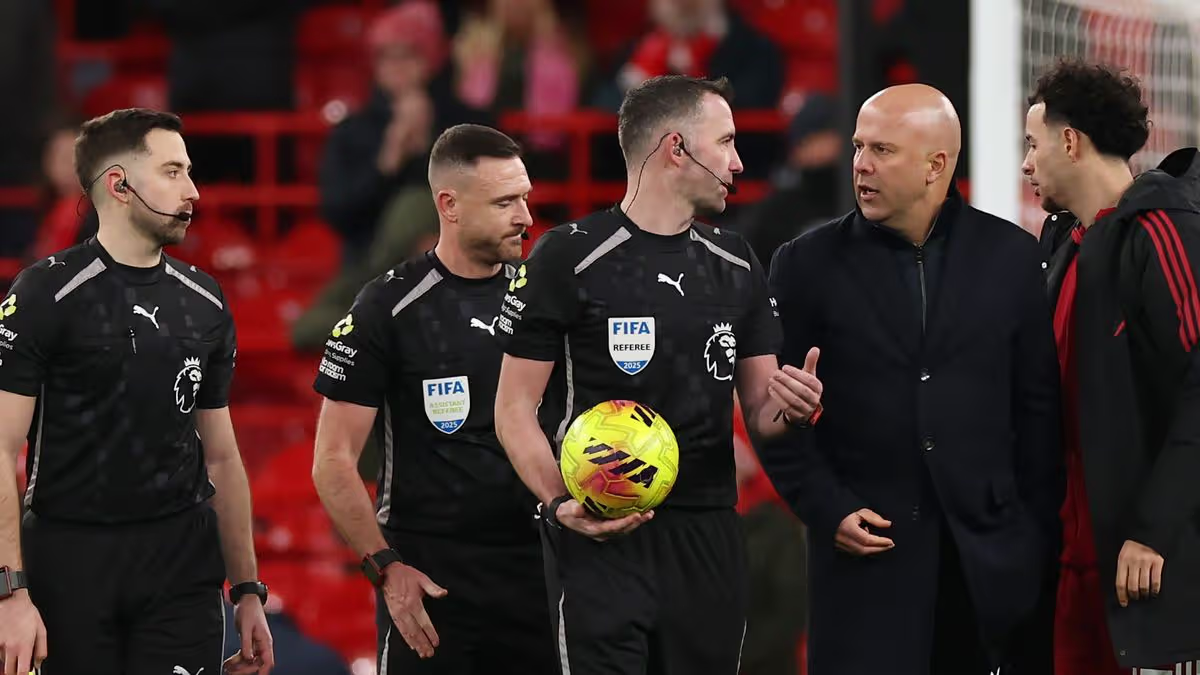
In the charged atmosphere of English football, where local rivalries define histories and seasons, the Premier League has taken a clear step to uphold the integrity of one of its most iconic fixtures. Ahead of Sunday’s Merseyside derby between Everton and Liverpool at Goodison Park, three match officials have been ruled out due to the league’s strict conflict-of-interest protocols. Referees Peter Bankes (from Merseyside), Rob Jones (from the Wirral), and Jarred Gillett (a declared Liverpool supporter) will not be involved, as regulations mandate that officials declare any club affiliations to ensure they are not assigned to matches involving teams with which they have personal or geographical ties. This deliberate safeguarding of impartiality underscores the significance of the derby, where every decision is scrutinized under the intense glare of local passion. Instead, the duty falls to Chris Kavanagh, a referee from Greater Manchester who supports non-league Droylsden, theoretically offering a neutral perspective for a contest that is both emotionally and strategically pivotal.
Liverpool’s Quest for Redemption After a Season of Disappointment
For Liverpool, this match arrives as a crucial point of refocus after a week of profound disappointment. Their midweek exit from the Champions League, sealed by a 2-0 defeat to Paris Saint-Germain at Anfield resulting in a 4-0 aggregate loss, has confirmed a trophyless season under manager Arne Slot. The dream of European glory evaporated, leaving the squad to channel all remaining energy into securing a place in next season’s premier competition. Currently sitting fifth in the Premier League, with the expanded format allowing for five English clubs to qualify, Liverpool’s primary objective is now to solidify their standing and hold off the chasing pack. The psychological shift from chasing continental silverware to battling for a top-five finish is stark, and the derby offers an immediate, fiery opportunity to galvanize their campaign and demonstrate resilience.
Everton’s Resurgence Under Moyes and the Dream of Closing the Gap
One of those direct challengers is, remarkably, their historic rivals. Everton, under the steady guidance of David Moyes, are in strong form, positioned eighth but only five points behind Liverpool. With three wins in their last five league games—including a resounding 3-0 victory over Chelsea—the Toffees are sensing a rare opportunity to not only claim local bragging rights but to dramatically tighten the race for European qualification. A win on Sunday would cut the gap to just two points and potentially lift Everton to sixth, reigniting a dream that has lingered for two decades. It was Moyes himself who last guided Everton to the brink of the Champions League in 2005, when a fourth-place finish was thwarted in the qualifying rounds. Now, 21 years later, a derby victory could be a symbolic and practical step toward reclaiming that ambition.
The Recent History of Dominance and the Rare Spark of Hope
Recent history, however, weighs heavily in Liverpool’s favor. The Reds have dominated this fixture for years, winning six of the last nine encounters. Everton’s only victory in the past five years arrived in April 2024—a 2-0 win that was also Jurgen Klopp’s final Merseyside derby, a result that effectively ended Liverpool’s title hopes that season. The most recent meeting at Anfield in September saw Liverpool prevail 2-1. This context makes Sunday’s match not just a battle for points, but a psychological test for Everton: can they translate their current momentum into overcoming a longstanding pattern of derby disappointment? For Liverpool, it is about reaffirming their superiority and channeling their frustration into a performance that stifles Everton’s resurgence.
Tactical Absences and the Weight of the Occasion
The match carries significant tactical considerations as well. Liverpool will be forced to cope without forward Hugo Ekitike, ruled out until 2027 due to a severe Achilles injury—a devastating long-term blow for the player. However, the recent return of Alexander Isak from his own lengthy lay-off offers some attacking relief. For Everton, the confidence derived from their recent performances, including that emphatic win over Chelsea, suggests they are not to be approached as mere underdogs. With so much at stake—Liverpool fighting to climb potentially into fourth place, depending on other results, and Everton aiming to leap into the European conversation—this derby is shaping up to be one of the most consequential in recent memory. It transcends local pride; it is a direct showdown with implications for the future trajectory of both clubs.
A Fixture That Captures the Heart of the Game
Ultimately, the Merseyside derby encapsulates the essence of football: deep-rooted rivalry, administrative measures to protect fairness, the pendulum swing of fortune between clubs, and the high-stakes drama of a league campaign. The Premier League’s proactive exclusion of referees with local ties emphasizes just how potent this fixture is. As Liverpool seek redemption from a painful European exit and Everton chase a dream that has lingered for generations, Goodison Park will host a conflict that is both intensely personal and broadly strategic. In a sport often defined by moments, Sunday promises a chapter that will resonate far beyond the final whistle, impacting pride, points, and the pursuit of glory for the remainder of the season.