


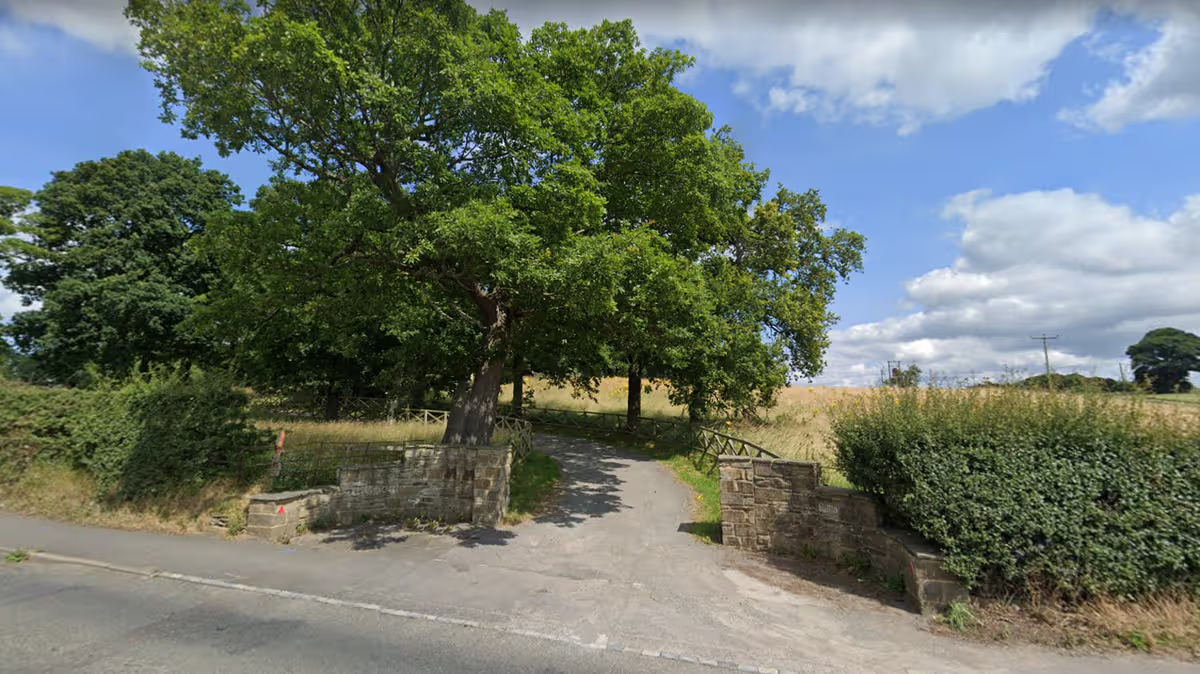
In the quiet, rolling landscape of County Durham, where new communities are slowly rising from the earth, a normal workday turned to horror. A 17-year-old boy, who should be looking forward to the boundless possibilities of adulthood, is now clinging to life in a hospital bed. His story is not one of statistics or breaking news alerts, but of a young life violently interrupted. While laboring at a housing development known as Sniperley Park, a massive concrete pipe—an inert piece of infrastructure meant to form the veins of a new neighborhood—became an instrument of catastrophe. It fell, and with it came crushing force upon the teenager, inflicting devastating injuries to his head and neck. In an instant, the noise of construction was replaced by the sirens of emergency response, as colleagues and paramedics fought to save a boy from a workplace turned perilous.
This incident slices through the impersonal narrative of economic growth and housing shortages, forcing us to confront a deeply human tragedy. He is not just a “17-year-old boy” in a news report; he is someone’s son, perhaps a brother, a friend with dreams and a future he was diligently working to build. The site, operated by national housebuilder Bellway, represents progress and new beginnings for future homeowners, but for this young worker and his family, it has become a place of unimaginable trauma. Their world has now narrowed to the sterile confines of a hospital’s critical care unit, defined by the agonizing wait between heartbeats on a monitor, where hope battles against the severity of his injuries. This is the profound, quiet human cost that exists behind every flashing news headline.
As authorities from the police and the Health and Safety Executive (HSE) begin their meticulous investigation, the fundamental questions loom large and urgent. How could such a catastrophic failure occur on a regulated construction site? What were the specific circumstances that led to the pipe’s movement? Were all proper protocols for the handling of such heavy materials being followed to the letter, especially with a young worker present? The answers to these questions are crucial, not for assigning blame in a vacuum, but for ensuring that such a nightmare is never repeated. Every safety procedure exists because of lessons learned from past suffering; this incident now becomes a stark, painful case study from which new lessons must be drawn and enforced without compromise.
The tragedy also casts a sobering light on the presence of young workers in high-risk industries like construction. While apprenticeships and vocational training are vital pathways, this event is a harrowing reminder of the immense responsibility companies bear for their youngest and often most inexperienced team members. It demands a reflection on the adequacy of supervision, the depth of training, and the creation of a culture where safety is an uncompromising value, not a box to be ticked. A workplace must be an environment of mentorship and growth, not of hidden, mortal danger. Protecting the next generation of tradespeople is a duty that extends far beyond providing a paycheck.
For the local community in Durham and across the wider public, this is a moment of collective pause. The entrance to that building site, now a silent marker of the accident, represents a rupture in the ordinary. It reminds us that the homes we live in and the communities we build are the products of human labor—labor that carries inherent risk. This young man’s fight is a call to all of us to value the workers behind our structures, to advocate relentlessly for their safety, and to hold accountable those entrusted with their well-being. Our collective concern must translate into a sustained demand for the highest standards, where no family has to endure such a phone call.
As this remains a developing story, the digital age ensures updates will flow, but we must ensure the human essence at its core is not lost. Beyond the timelines and corporate statements, a family is living a parent’s worst fear. A circle of friends is holding its breath. Colleagues are grappling with the trauma of what they witnessed. Let the summary of this event be not just a record of an industrial accident, but a poignant reminder of the fragility of life and the profound responsibility we all share in safeguarding one another. The true measure of our response will be found in the actions taken to prevent another young person from meeting such a fate, ensuring that our places of work become sanctuaries of security, not landscapes of loss.