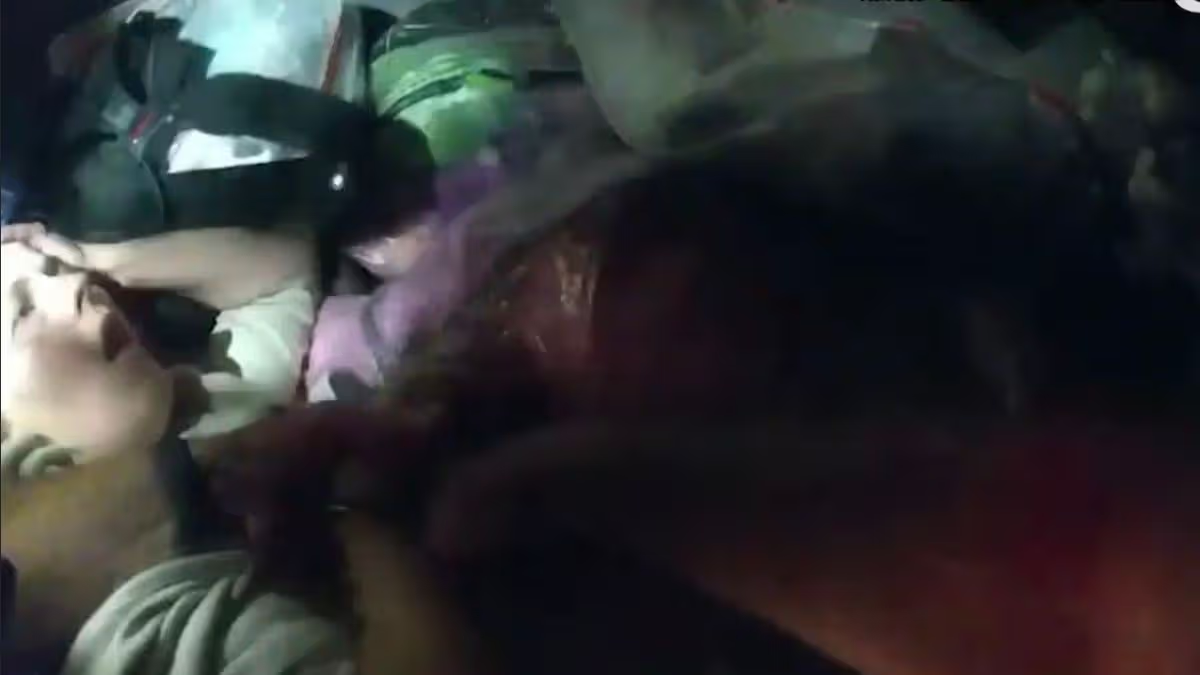




The tragic death of 14-month-old Noah Sibanda in December 2022 represents a profound and devastating breach of trust, where the very place entrusted with his care became the site of his final, desperate struggle. On a routine day at Fairytales Day Nursery in Dudley, nursery worker Kimberley Cookson, then aged 20, engaged in a series of shockingly unsafe practices to force the toddler to sleep. CCTV footage, later described by investigators as both pivotal and harrowing, showed that Noah was “clearly not tired” and was actively “thrashing around.” Undeterred, Cookson tightly wrapped him in a blanket, placed him face down on a cushion, and put another blanket over his head. During his morning nap, he managed to wriggle free and slide onto the floor, a clear sign of distress and an inherent danger that went unheeded. Merely thirty minutes after waking, he was subjected to the same perilous routine, placed face down inside a tepee. As he continued to resist, Cookson compounded the danger by leaning over him, using her leg to restrain his small body for a full seven minutes while patting him, before leaving him utterly unattended and helpless in this dangerous position.
For two agonizing hours, no staff member physically checked on Noah. When they finally did, they discovered the unresponsive infant. Despite desperate efforts, Noah was pronounced dead in hospital in the early hours of the following morning, having suffocated under the weight of negligent and reckless restraint. At Wolverhampton Crown Court, the prosecution outlined how Noah had been placed in an “exceptionally dangerous” position, a direct result of Cookson’s actions which amounted to gross negligence manslaughter, to which she pleaded guilty. She was subsequently sentenced to three years and four months in prison. However, the court case revealed that this was not a tragic, isolated error by a single individual, but rather a symptom of systemic failure nurtured within the nursery’s walls.
The investigation, led by Detective Inspector Carla Thompson of West Midlands Police, uncovered a culture of widespread “unsafe sleeping practices” that endangered multiple children in the nursery, not just Noah. The distressing CCTV footage served as undeniable proof of a routine and accepted method of childcare at Fairytales, where tightly wrapping infants, placing them face down, and covering their heads was standard procedure to enforce nap times. This revelation pointed the finger of blame beyond Cookson, toward the very management and ownership of the nursery. Fairytales Day Nursery Limited was found guilty of corporate manslaughter and health and safety failures, receiving a fine of £240,000 and substantial costs. Deborah Latewood, the 55-year-old nursery director and owner, admitted failing in her overarching duty of care, claiming ignorance of the dangerous practices, and received a six-month suspended sentence.
For Noah’s family, particularly his mother Masi Sibanda, the legal outcomes are a hollow acknowledgement of a loss that has shattered their world. In a victim impact statement read to the court, she gave voice to an anguish that is every parent’s nightmare realized. She described her son as a confident, kind, gentle, and patient child, whose life was extinguished by those paid to nurture it. “Behind closed doors, they were playing Russian Roulette with our children,” she stated, capturing the horrifying gamble inherent in the nursery’s routines. Her words, “My guilt comes from knowing I handed him over to people who killed him,” speak to a betrayal so deep it transforms fundamental trust into enduring trauma. Her poignant confession, “Since his death, there has not been a single day I haven’t regretted being alive when he is not,” underscores a grief that is both all-consuming and inextricably linked to a sense of culpability that the convicted parties must now bear.
This case forces a sobering reflection on the infrastructures of trust that underpin our society. Parents place their most precious beings into institutional care out of necessity and with a fundamental belief in professional standards and basic human compassion. The failure at Fairytales Day Nursery was multilayered: it was the immediate, physical act of a single worker; it was the managerial neglect that allowed lethal practices to become normalized; and it was a corporate ethos that prioritized quiet conformity over infant safety and well-being. The fact that unsafe practices were observed for “a lot of children in the room” indicates a environment where distress signals were either invisible to, or willfully ignored by, multiple staff members, suggesting a profound erosion of duty and empathy.
Ultimately, the story of Noah Sibanda is a stark, heartbreaking lesson in accountability and the sacred responsibility of care. While the sentences and fines mark a legal conclusion, they cannot measure the value of a life lost or restore a family’s shattered peace. This tragedy must serve as a brutal catalyst for rigorous scrutiny and reform within the childcare industry, reinforcing that protocols for safe sleep are non-negotiable safeguards, not inconveniences. It stands as a permanent reminder that vigilance, compassion, and an unwavering commitment to a child’s dignity and safety are the absolute minimum standards required in any setting tasked with nurturing the vulnerable. Noah’s memory now irrevocably underscores the truth that within the walls of any nursery, there should be no room for anything less than the utmost care and protection.