




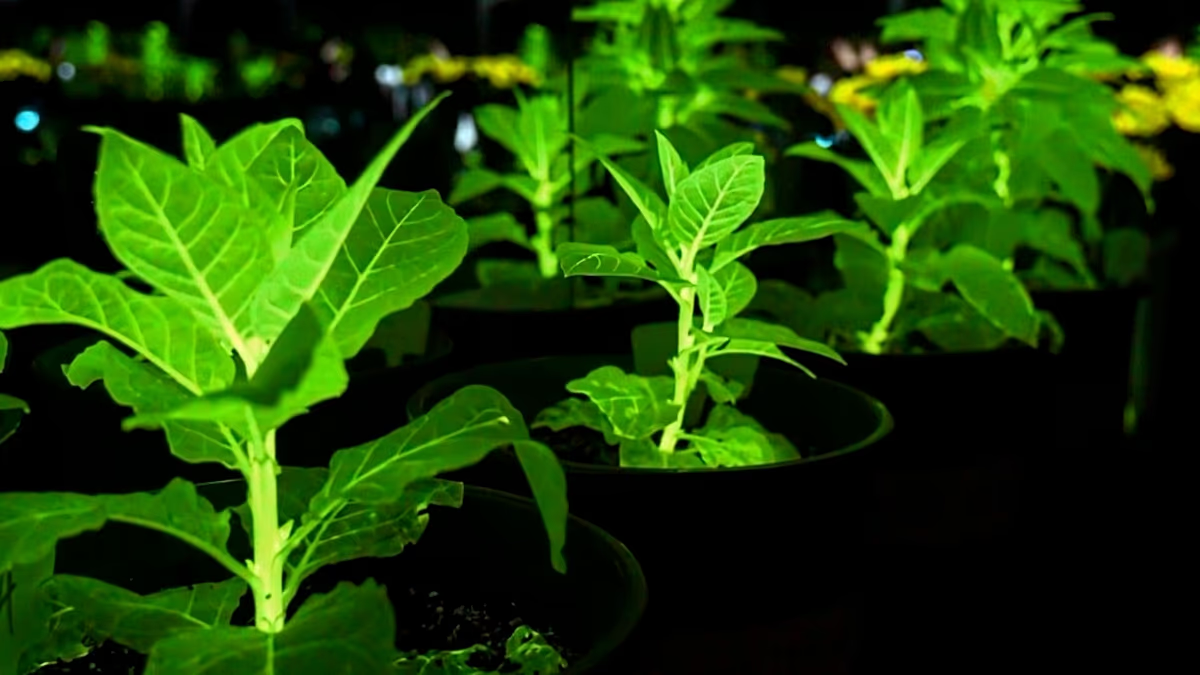
In February 2026, Chinese scientists unveiled a captivating scientific achievement that sounds like it belongs to the pages of a fantasy novel: plants that naturally glow in the dark. More than twenty species, including orchids, sunflowers, and chrysanthemums, have been successfully engineered to emit a soft, ethereal light after sunset. This breakthrough, developed by biotechnologists using advanced gene-editing tools, represents a fusion of childhood wonder and cutting-edge science. The technology works by transferring the very genes that allow fireflies and certain luminous fungi to produce light directly into the DNA of plant cells. The result is a living organism that can shine without any external power source, a concept recently demonstrated to the public at the prestigious Zhongguancun Forum in China, where attendees could examine the glowing flora firsthand.
The inspiration for this luminous innovation has deeply personal roots, stemming from the childhood memories of Dr. Li Renhan, the founder of Magicpen Bio and a key figure behind the project. Growing up in the countryside, Dr. Li recalled evenings spent in his grandfather’s bamboo grove, where fireflies would alight on his arms in the darkness. This early fascination with natural light later merged with his academic work in genetic editing, sparking a question: could the magical glow of those fireflies be gifted to plants? “We wanted to transfer genes from animals, like those of fireflies, into plants, so they could also glow at night,” Dr. Li explained. He envisions transforming landscapes, speaking of creating valleys filled with radiant plants to bring the enchanting world of films like Avatar into reality.
Beyond the sheer spectacle, this technology promises profound practical and sustainable benefits, particularly for urban design and energy consumption. Dr. Li emphasizes that these bioluminescent plants could serve as a novel, eco-friendly lighting solution for public spaces. “Beyond tourism, we could also use them in urban parks without the need for electricity,” he said, describing the system as highly efficient and low-carbon. Unlike conventional streetlamps or decorative lights, these plants require only water and nutrients to function, offering illumination while simultaneously saving energy and reducing carbon emissions. This integration of nature and utility could redefine nighttime environments, creating softly lit parks and pathways that are both beautiful and gentle on the planet.
The potential applications extend into the thriving domains of cultural tourism and the “nighttime economy.” Imagine botanical gardens, theme parks, or scenic valleys where the after-dark experience is transformed by the natural glow of the flora itself, eliminating the need for intrusive, energy-intensive light installations. Such attractions could offer a unique draw for visitors, creating immersive experiences that feel both futuristic and deeply connected to the natural world. Dr. Li’s company is specifically dedicated to channeling this biotechnology into these sectors, seeing it as a way to enhance leisure and economic activity after sunset in a sustainable manner that captivates the public imagination.
It is important to recognize that this glowing flora is not an isolated marvel but part of a broader, revolutionary wave of genetic editing advancements with far-reaching implications. The same foundational techniques used to create these plants are already accelerating progress in medicine and agriculture. In medical research, scientists are using similar methods to tag and observe disease progression at a cellular level, which speeds up drug discovery and the development of treatments for complex conditions. Meanwhile, in the critical field of agriculture, researchers have successfully edited genes in rice to create new strains resistant to multiple pests, a development that strengthens the foundation for global food security in the face of climate change and growing populations.
In summary, the development of glowing plants is a luminous symbol of how biotechnology can blend aesthetic wonder with tangible utility. Born from a nostalgic memory of fireflies, it has grown into a project with the potential to light our cities sustainably, boost tourism, and inspire the public. Furthermore, it sits at the intersection of a larger scientific movement where genetic editing is proving to be a powerful tool for addressing some of humanity’s most pressing challenges in health, food, and environmental sustainability. This innovation reminds us that the future may not only be brighter but could literally grow from the ground up, illuminated by the gentle, living light of nature itself, intelligently guided by human ingenuity.