


Paragraph 1
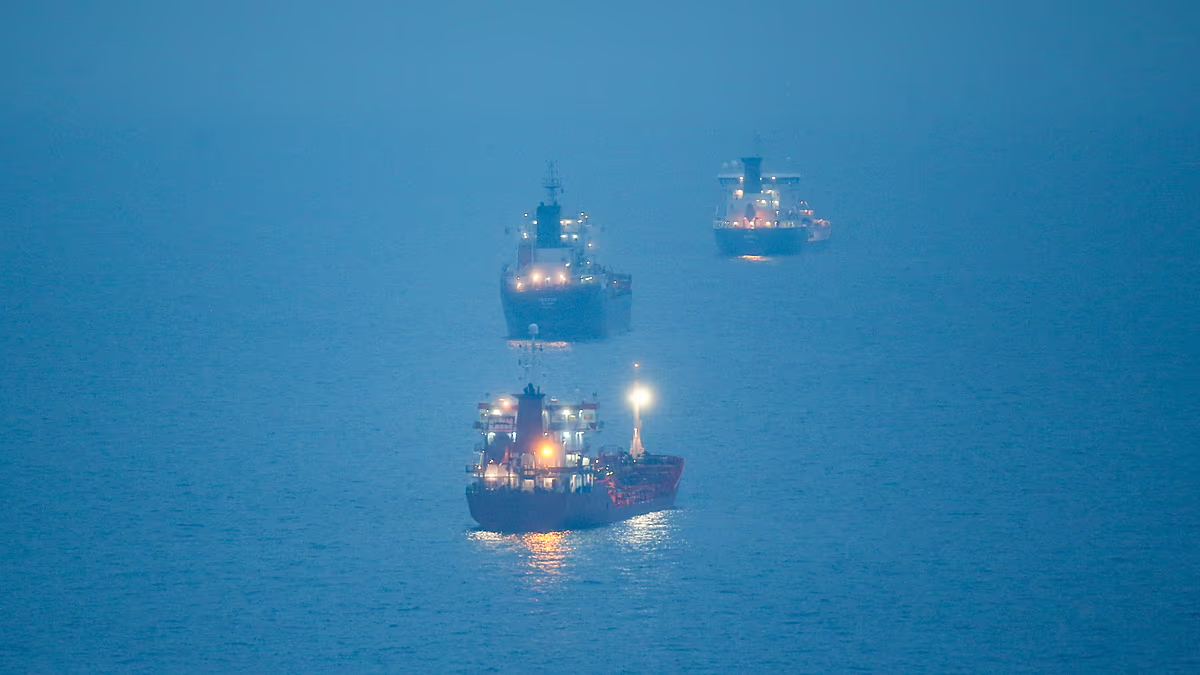
A fragile optimism in global diplomacy and markets was pierced by a stark warning from Iran on Saturday, threatening to once again close the vital Strait of Hormuz to international shipping. This threat emerged mere hours after Tehran had declared the strategic waterway reopened, a gesture tied to a newly implemented ceasefire in Lebanon. The rationale, according to Iranian officials, was a direct response to the ongoing U.S. naval blockade of Iranian ports. Parliamentary Speaker Mohammad Bagher Ghalibaf explicitly stated that if the American blockade continued, the strait “will not remain open,” framing future passage as something requiring Iranian authorization. This dramatic escalation in rhetoric cast an immediate shadow over what had been, just a day prior, a surge of hopeful sentiment driven by the potential for a broader U.S.-Iran peace deal.
Paragraph 2
That earlier optimism had been fueled significantly by comments from U.S. President Donald Trump, who told reporters that a comprehensive agreement was “very close” and made the striking claim that Iran had agreed to hand over its stockpile of enriched uranium—a core demand in long-standing nuclear negotiations. Financial markets had reacted swiftly to the positive signals; oil prices fell and stocks rose as traders anticipated a peaceful resolution to regional tensions that could secure the flow of energy. However, Iran swiftly and firmly denied Trump’s claim about its uranium, insisting the material was “not going anywhere.” This public contradiction on a fundamental issue revealed the deep-seated mistrust and conflicting narratives that continued to plague the negotiations, even amidst the ceasefire.
Paragraph 3
The U.S. military posture underscored the persistent tensions. U.S. Central Command reported that its forces had, since the blockade began, already directed 21 ships to turn away from Iranian ports. An accompanying image of a guided-missile destroyer patrolling the Arabian Sea served as a visual reminder of the tangible military pressure being applied. Iranian Foreign Ministry spokesman Esmaeil Baqaei condemned this naval blockade as “a violation of the ceasefire” itself—a two-week truce ostensibly designed to foster diplomacy—and promised an “appropriate response.” The situation presented a dangerous paradox: a ceasefire meant to enable talks was being challenged by the very military measures one side insisted were necessary leverage.
Paragraph 4
Amidst this discord, the role of mediator Pakistan came into focus. Pakistani leadership, which had facilitated historic direct talks between U.S. and Iranian envoys in Islamabad, urged both sides to finalize a lasting agreement. President Trump publicly praised Pakistan’s efforts and even suggested he would consider flying there to sign a deal, raising hopes for a diplomatic breakthrough. Yet, his statements were laced with contradiction and conditionality. While expressing that a deal looked “very good for everybody” with “no sticking points at all,” he simultaneously vowed on Saturday to maintain the naval blockade indefinitely if a peace deal were not reached, though he left open the possibility of extending the expiring ceasefire.
Paragraph 5
The immediate human impact of these high-stakes maneuvers was most visible in Lebanon. The start of the ten-day ceasefire there, a condition Iran had demanded as part of any larger agreement, allowed displaced families to begin returning to their bomb-damaged homes in south Beirut and southern towns. For civilians like Amani Atrash, the moment was charged with emotion, described as “pride and victory,” and a fervent hope that the pause in fighting would hold. However, the underlying conflict remained unresolved. Israeli Prime Minister Benjamin Netanyahu warned, “We have not yet finished the job,” citing the dismantling of Hezbollah as a key objective. Hezbollah, in turn, warned it remained on high alert, ready to respond to any Israeli violation.
Paragraph 6
Thus, the landscape at the weekend was one of fragile and precarious gains, vulnerable to miscalculation or hardened positions. The reopening of the Strait of Hormuz and the Lebanon ceasefire represented tangible, if tentative, steps toward de-escalation, directly impacting global oil markets and war-weary civilians. Yet, the underlying dynamics—the U.S. naval blockade, Iran’s retaliatory threat to close the world’s most critical oil chokepoint, the unresolved nuclear issue, and the simmering Israel-Hezbollah conflict—all posed severe risks to the fragile progress. The path forward hung in the balance, dependent on whether diplomatic channels could transform a temporary truce into a durable peace before the cycle of threat and counter-threat spiraled into renewed confrontation.