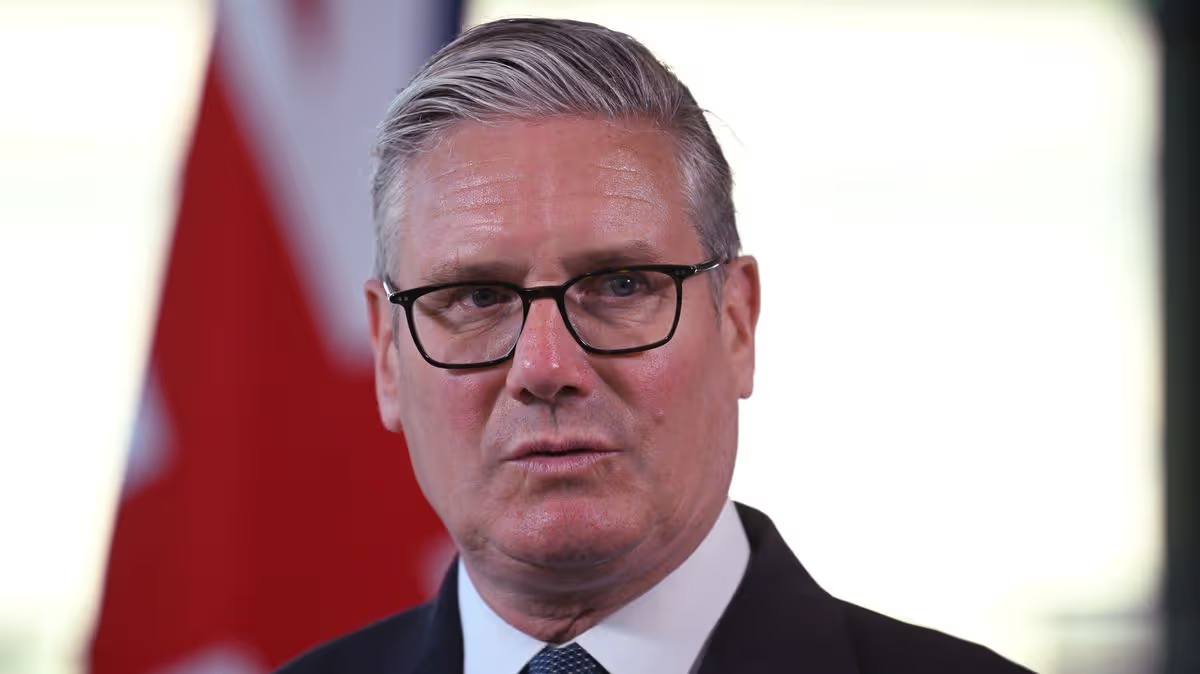


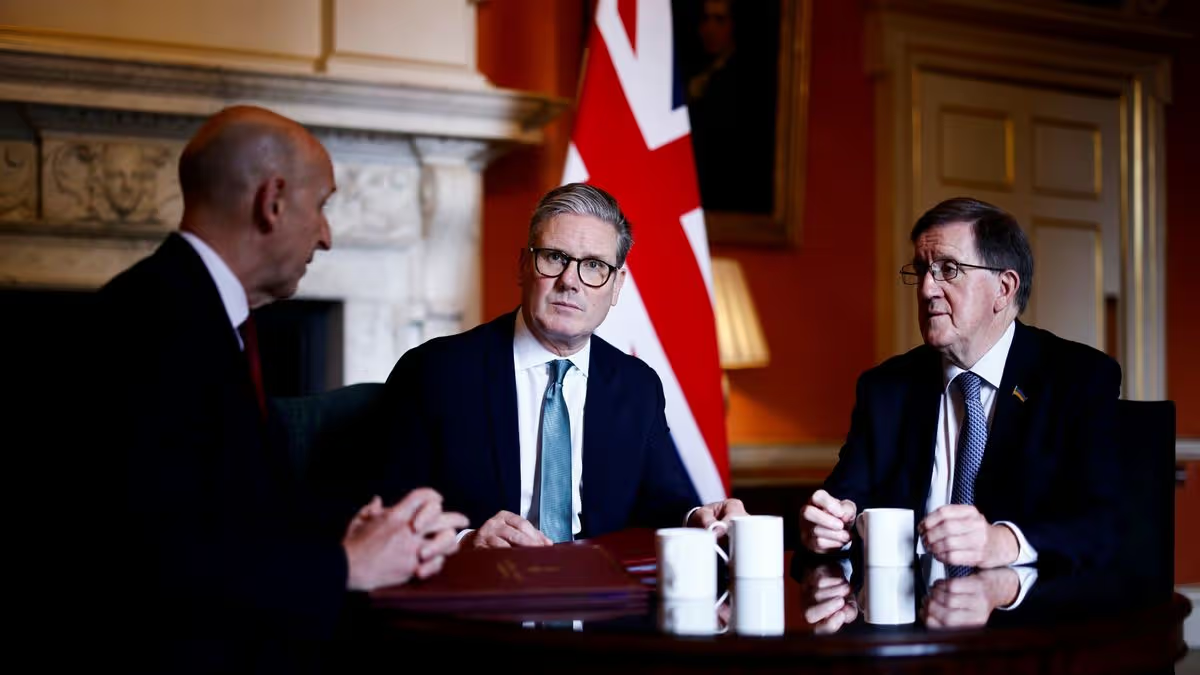
In a significant display of international resolve, the United Kingdom has committed to leading a wide-ranging military mission to safeguard the vital Strait of Hormuz, a crucial artery for global energy supplies. This announcement, detailed by UK Ambassador to the US Sir Christian Turner, follows a major diplomatic gathering in Paris involving nearly 50 nations. The coalition aims to present a united front, ensuring that no tolls or restrictions can be imposed on this essential shipping lane in the future. The move comes as a direct and practical response to recent instability, seamlessly following Iran’s welcome announcement that it has fully reopened the strait to commercial traffic after a prolonged closure during regional hostilities. The mission, co-led by the UK and France and supported by approximately twelve committed nations so far, represents a concerted effort to transition from fragile ceasefire to sustained security, reassuring the global shipping industry that freedom of navigation will be robustly defended.
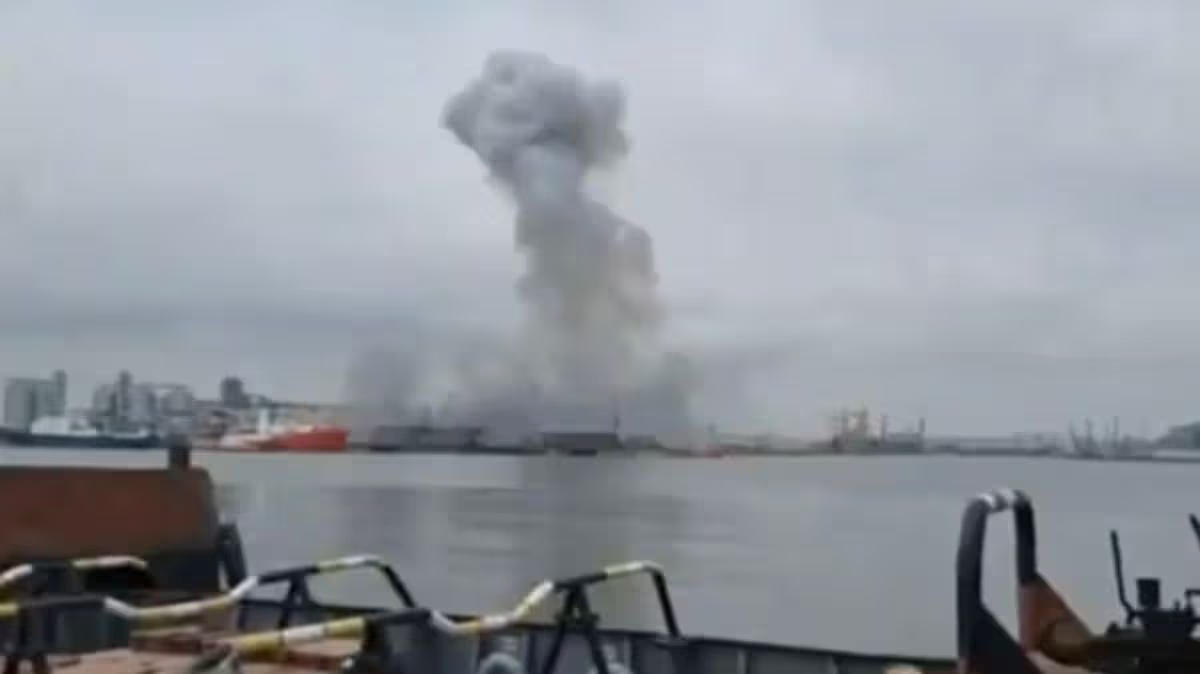
This commitment involves a substantial and multifaceted military contribution from Britain, a pledge made amidst ongoing domestic debates about the condition and funding of the nation’s armed forces. The mission’s defensive focus will include protecting merchant vessels from threats and conducting critical mine clearance operations as soon as conditions on the ground permit. This proactive planning underscores a determination to learn from recent history, where the closure of the strait by Iran during the US-Israeli bombing campaign drove energy prices higher worldwide, impacting economies and consumers across the globe. By marshaling international capabilities under a clear command structure, the coalition seeks to create a lasting deterrent, ensuring that one-fifth of the world’s oil and gas supplies can flow without disruption. A dedicated military planning conference scheduled for the following week will finalize the details of the UK’s specific role and the operation’s broader framework.
The geopolitical context of this initiative is complex, highlighted by the immediate dismissal of the effort by US President Donald Trump, who seized the news to reiterate his criticisms of NATO as “useless.” Ambassador Turner was quick to clarify the mission’s distinct nature, emphasizing that while NATO was an observer at the Paris talks, this is an independent, multinational coalition specifically tailored to the strategic challenges of the Strait of Hormuz. He deftly acknowledged President Trump’s role in pushing for increased defense spending among European allies, a point of “burden sharing” long debated across the Atlantic. However, Turner also firmly defended the enduring value of the NATO alliance itself, describing it as the most successful defensive pact in history, which has safeguarded transatlantic security for over 75 years. This diplomatic balancing act illustrates the nuanced reality of modern security partnerships, where bespoke coalitions can operate alongside, and in support of, broader treaty organizations.
The urgency of this mission stems from the stark economic realities tied to the Strait of Hormuz. Its brief closure demonstrated how quickly regional conflict can reverberate through global markets, threatening energy security and economic stability far beyond the Middle East. The diverse coalition assembled in Paris—including key economic powers from Asia and Europe—sends a powerful signal to Iran that attempts to weaponize this chokepoint will be met with overwhelming international opposition. The collective message is unequivocal: the strait is an international conduit, not a territorial lever. By moving swiftly to establish a protective mission in the wake of the ceasefire, the UK, France, and their partners aim to solidify the current truce into a more permanent condition of security, giving commercial shippers the confidence to resume normal operations without fear of coercion or attack.
This decisive international action unfolds against a fragile backdrop of temporary ceasefires between the US and Iran and between Israel and Lebanon. The mission, therefore, is not merely a military undertaking but a crucial stabilizing political gesture, designed to create the security conditions necessary for diplomacy to take deeper root. It represents a pragmatic and “practically orientated” approach, turning the consensus of nearly fifty nations into tangible, on-the-water protection. For the British government, leading this effort is a statement of strategic intent and a commitment to global order, even as it navigates pointed criticisms about defense preparedness at home. The hope is that this demonstration of collective will will deter future aggression and allow the vital economic lifeline of the Hormuz strait to remain exactly that: open, free, and secure for all lawful maritime traffic.
In conclusion, the UK’s pledge to spearhead this defensive Gulf mission marks a critical step in securing global trade routes in a volatile region. By translating broad diplomatic consensus into actionable military planning with key allies, the coalition aims to prevent the Strait of Hormuz from becoming a perpetual flashpoint. While political divisions over alliance politics continue, the operational focus remains clear: to ensure that the welcome reopening of the strait is made permanent, safeguarding the flow of energy that powers the world economy. The success of this endeavor will depend on sustained international cooperation and the tangible capabilities brought to bear, with Britain positioning itself firmly at the center of this effort to uphold the principles of freedom of navigation and international law.