



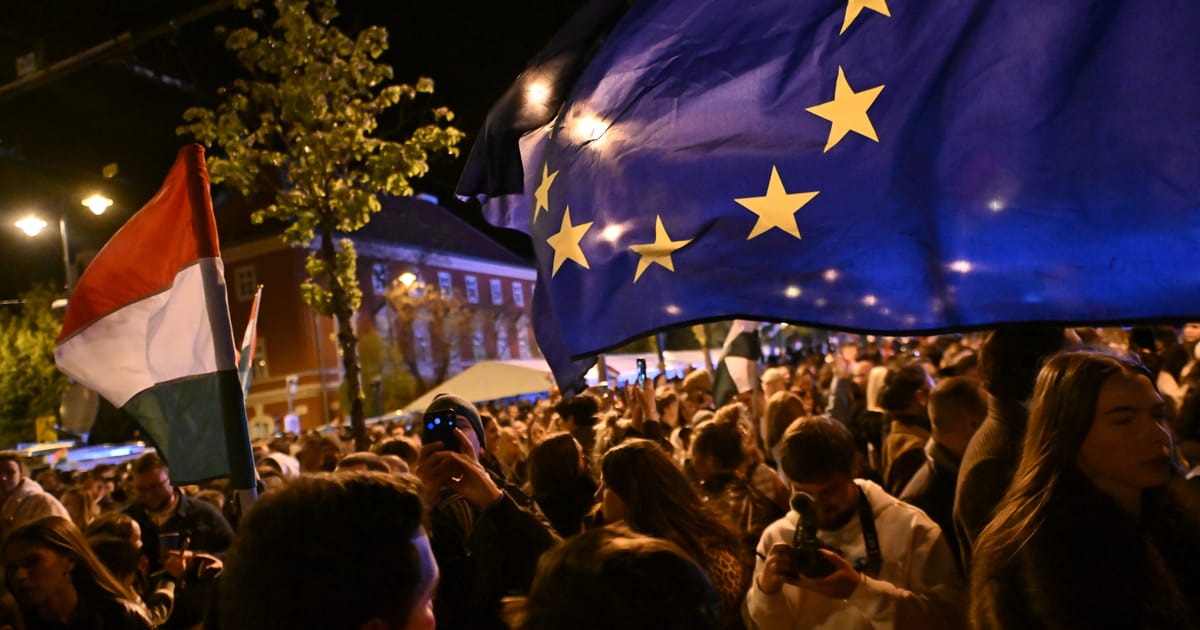
The recent political transformation in Hungary, culminating in the electoral defeat of long-standing Prime Minister Viktor Orbán, has sent shockwaves through the corridors of power in Europe and beyond. For sixteen years, Orbán’s self-proclaimed “illiberal democracy” had positioned Hungary as a persistent internal skeptic and contrarian voice within the European Union, often clashing with Brussels on fundamental issues from migration and judicial independence to foreign policy. His unexpected loss, therefore, represents more than a simple change of government; it is a profound geopolitical and ideological pivot point for the continent. The immediate and starkly divided reactions from global figures underscore just how significant this moment is perceived to be, symbolizing a potential recommitment to core European values for some, and a concerning loss of national sovereignty for others. This event does not exist in a vacuum but is viewed as part of a broader struggle for the soul of the West, making the Hungarian people’s choice a subject of intense international scrutiny and commentary.
From the perspective of the European Union’s leadership, Orbán’s departure is seen as removing a major obstacle to collective action, particularly regarding the bloc’s unwavering support for Ukraine. Former European Council President Charles Michel gave voice to this sentiment with palpable relief, stating that with Orbán “out of the way, there’s no reason anymore to wait” on the EU’s proposed massive €90 billion loan package for Kyiv. Michel characterized Hungary’s recent role as “disturbing,” highlighting the friction it caused not only within EU consensus-building but also in transatlantic relations with the United States. This view was warmly echoed by European Commission President Ursula von der Leyen, who framed the election result as a clear and decisive choice of continental affiliation with her succinct declaration: “Hungary has chosen Europe.” For these leaders, the outcome promises a more harmonious and decisive European Union, one better equipped to stand united against external threats and to reinforce its foundational principles of democracy and the rule of law from within.
The most resonant endorsement of this democratic interpretation came from across the Atlantic, from former U.S. President Barack Obama. He celebrated the Hungarian election as a “victory for democracy, not just in Europe but around the world,” explicitly drawing a parallel to the 2023 victory of Prime Minister Donald Tusk in Poland, which also unseated a populist right-wing government. In doing so, Obama placed Hungary’s result within a hopeful narrative of democratic renewal and resilience, suggesting a potential rolling back of the illiberal tide that has risen in parts of the West. His tribute to “the resilience and determination of the Hungarian people” served as a powerful moral affirmation, framing the event as a timeless struggle for “fairness, equality and the rule of law.” This perspective elevates the domestic political shift to a global symbolic gesture, offering a counter-narrative to authoritarianism and providing inspiration for democratic advocates everywhere.
However, this triumphant narrative is fiercely contested by voices on the populist right, who see Orbán’s defeat not as a victory for freedom, but as its surrender to unelected bureaucrats and globalist forces. France’s far-right leader Marine Le Pen issued a stark warning, praising Orbán’s lengthy rule and directly challenging the euphoria expressed by EU officials. She argued that the “satisfaction expressed by the European Commission… should concern Hungarians about the persistence of this freedom so dearly defended for years.” In Le Pen’s view, Brussels’ overreach is the true threat, and Orbán was a valiant defender of national sovereignty and traditional values against a homogenizing, supranational elite. This sentiment found a more conspiratorial and amplified expression in the reaction of billionaire Elon Musk, who responded to a post by liberal investor Alex Soros by alleging that “Soros Organization has taken over Hungary.” This comment, though brief, taps into a deep well of far-right mythology and illustrates how quickly the event was weaponized to fuel narratives of globalist capture and stolen sovereignty, revealing the stark ideological divide that the Hungarian election has laid bare.
Beneath this cacophony of international commentary lies the complex reality of the Hungarian electorate itself. The voters who brought about this change were driven by a multitude of local and personal concerns that transcend the grand geopolitical frameworks imposed by outside observers. While support for Ukraine and relations with the EU were significant factors, especially for urban and educated voters, the election was also a referendum on years of domestic controversies: allegations of systemic corruption, economic pressures like inflation, strains on the healthcare and education systems, and a perceived erosion of democratic checks and balances. The resilience praised by Obama was not an abstract love for democracy but a concrete frustration that built over time, channeled through political mobilization and a united opposition. The Hungarian people’s decision was a nuanced one, rooted in the lived experience of Orbán’s tenure, and it deserves to be understood as a sovereign choice made for the nation’s future, rather than merely a piece in a global ideological puzzle.
As the dust settles, the true meaning of Hungary’s political shift will be determined not by the reactions of foreign leaders or billionaires, but by the actions of its new government and the continued engagement of its citizens. The international responses—from the hopeful democratic solidarity of Obama and von der Leyen to the defiant nationalism of Le Pen and the conspiratorial framing of Musk—reveal that Hungary has become a potent symbol in a wider global contest of ideas. For the European Union, the path to implementing its Ukraine aid and deepening integration may now be smoother, but it must also thoughtfully engage with the legitimate concerns about sovereignty and identity that Orbán’s politics amplified, lest they fuel a future backlash. Ultimately, this moment serves as a powerful reminder that democracy remains a dynamic and fragile enterprise. The Hungarian people have seized an opportunity to alter their country’s trajectory; the world now watches to see whether this change will foster genuine renewal at home and a more coherent, principled voice for their nation within the community of Europe.