


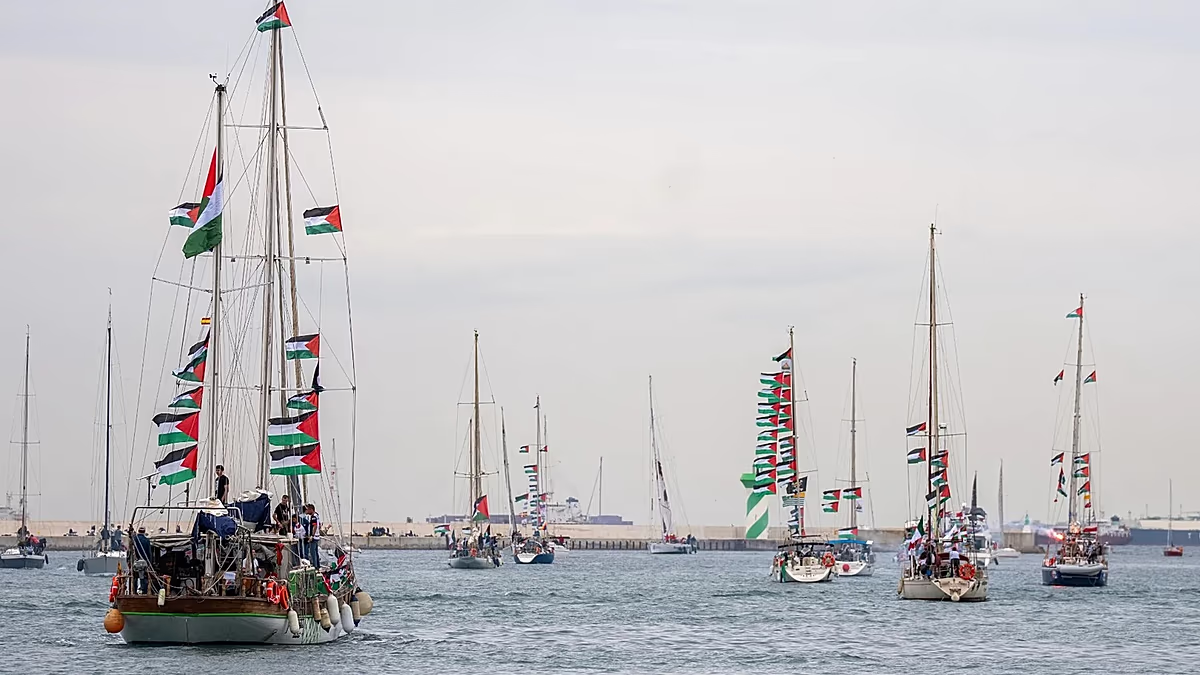
In a powerful act of solidarity, a diverse coalition of civilians has taken to the sea, determined to pierce the isolation of Gaza. On a recent Wednesday, dozens of boats, laden with activists and symbolic humanitarian aid, departed from Barcelona’s port. This departure marked the beginning of what organizers call the Global Sumud Flotilla—”sumud” being an Arabic term for steadfastness—a mission projected to grow into a fleet of over 70 vessels carrying more than a thousand participants from across the globe. Campaigners describe it as the largest civilian-led mobilization of its kind, conceived as a direct, peaceful challenge to Israel’s actions in the Palestinian territory. While adverse weather had delayed their initial April departure, the resolve of the participants remained unshaken, with the remaining boats set to join from other Mediterranean ports as the flotilla sails eastward, forging a maritime path of protest toward a besieged coast.
The motivation driving this ambitious voyage is a profound frustration with international political failure and a refusal to accept helplessness. “We sail because governments have failed,” stated Saif Abukeshek, a Palestinian activist on the flotilla’s steering committee, during a symbolic send-off. His words cut to the core of the mission’s philosophy: a belief that civil society must act where diplomacy has stalled. Abukeshek rejected the notion of a passive global community, declaring, “They want a society that feels helpless, that cannot act, that cannot mobilise. We refuse to be that society.” This sentiment is shared by supporting organizations like Greenpeace Spain and the migrant rescue group Open Arms, which have committed their larger vessels to the cause. Eva Saldaña of Greenpeace Spain framed the mission in fundamental terms: “We sail because the people of Gaza have a right to exist and to breathe and to thrive on their land.”
This latest flotilla sails toward a reality of devastation and profound human suffering that has persisted well beyond the headlines of active conflict. While a tense ceasefire halted the most intense fighting six months ago, Gaza remains shattered. According to its Health Ministry, over 700 Palestinians have been killed in the months since that truce. For the enclave’s two million residents, life is defined by scarcity amid ruins, with severe shortages of food, medicine, and basic supplies. Aid trickles in through a single, Israeli-controlled crossing, a flow activists decry as grievously insufficient. The broader context is a 17-year blockade, jointly enforced by Israel and Egypt since Hamas took control in 2007. Israel maintains the blockade is a necessary security measure to prevent arms smuggling, while critics and human rights groups condemn it as a form of collective punishment that has crippled Gaza’s economy and trapped its civilian population.
The journey is not without precedent or peril, as past efforts have met with forceful interdiction by Israeli authorities. Less than a year ago, a similar flotilla, which included high-profile participants like Swedish activist Greta Thunberg, was intercepted before reaching Gaza. One boat managed to cross into Gaza’s territorial waters but was ultimately seized; participants were arrested, detained, and deported. Some reported abuse during detention—allegations Israel denied. At the time, onboard cameras live-streamed the confrontations at sea, galvanizing global attention and protests. However, that focus has since fragmented, diverted by other regional crises, including the recent conflagration between Iran and Israel. The current flotilla’s organizers explicitly hope to recapture the world’s gaze and return it to the enduring humanitarian emergency in Gaza, which they fear is being forgotten amid shifting geopolitical headlines.
The catastrophe they seek to highlight is of a staggering scale. The Gaza Health Ministry reports that more than 70,000 Palestinians have been killed since the war erupted with the Hamas-led attack on southern Israel on October 7, 2023—an assault that killed approximately 1,200 people and saw 251 taken hostage. The subsequent Israeli military campaign has left Gaza’s infrastructure in ruins. The flotilla thus sails as a moving protest against this vast loss of life and the ongoing blockade, carrying not just material aid but a message of unwavering witness. It represents a civilian plea for a just and lasting political solution—one that addresses the need to disarm militant groups, end the rule of Hamas, oversee reconstruction, and ultimately ensure the security and dignity of all civilians, Israeli and Palestinian alike.
As the boats cut through the Mediterranean waves, they carry a dual cargo: the tangible hope of solidarity and the heavy weight of a protracted crisis. The activists onboard are under no illusion about the likely outcome; they anticipate another confrontation with the Israeli navy. Yet, by voluntarily facing that risk, they aim to dramatize the blockade’s constricting reality and challenge what they see as the world’s complacency. Their voyage is a testament to the stubborn human spirit of sumud, a peaceful, international effort to say that the people of Gaza are not alone and must not be abandoned. Whether they reach the shore or are stopped at sea, their larger goal is to ensure that the plight of Palestinians struggling to survive among the rubble remains anchored firmly in the global conscience.