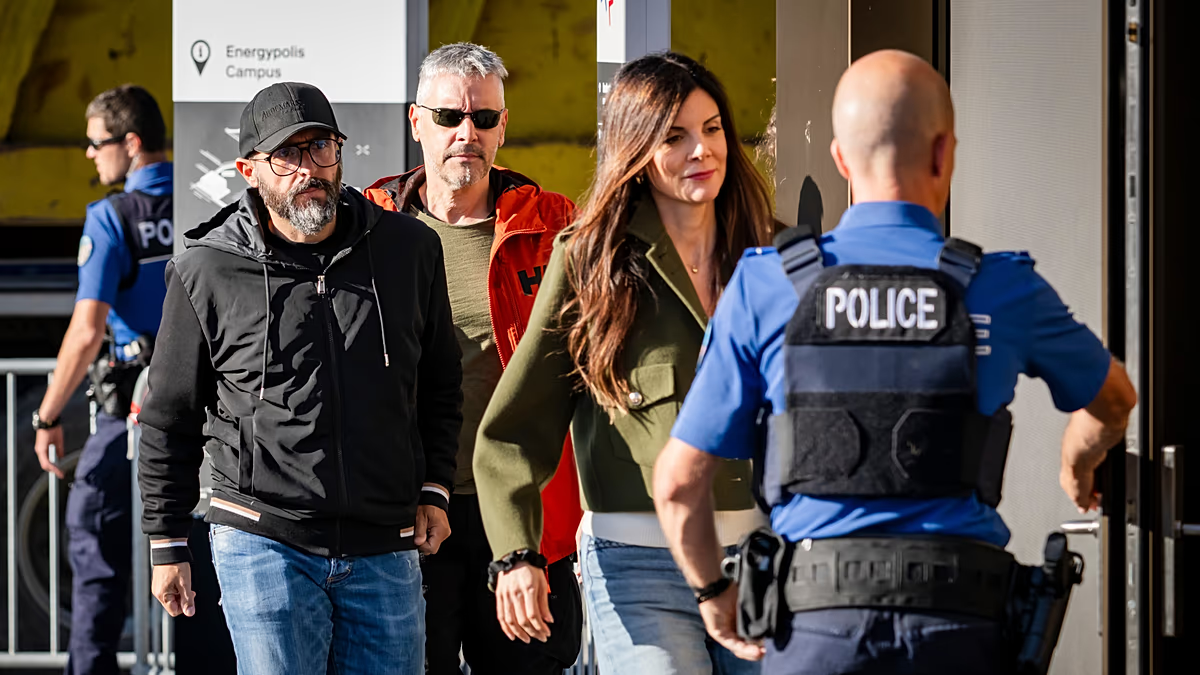
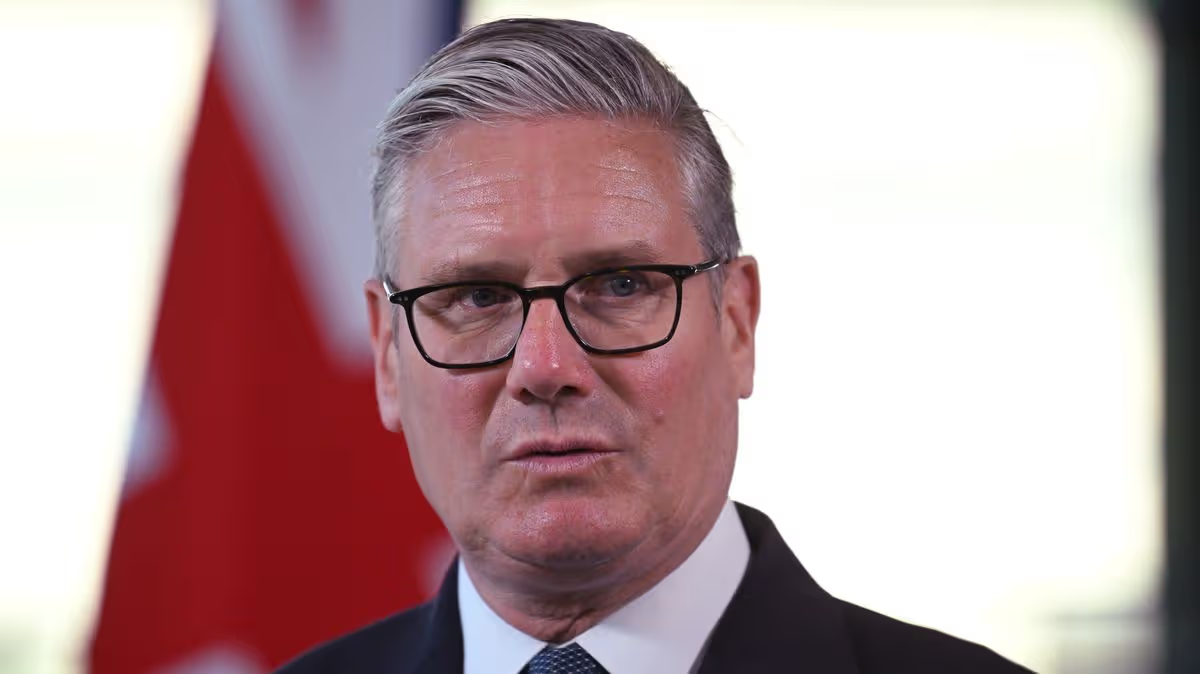


In a significant development in a major Philippine corruption scandal, a former congressman who fled the country has been apprehended in Europe. President Ferdinand Marcos announced that Elizaldy Co was detained in the Czech Republic after attempting to cross into Germany. According to the President’s statements on social media, Co was denied entry at the German border and subsequently returned to Czech authorities, where he is now being held. This detention marks a pivotal moment in a sprawling case that has shaken public trust and highlighted the profound human cost of graft in a nation perpetually vulnerable to natural disasters.
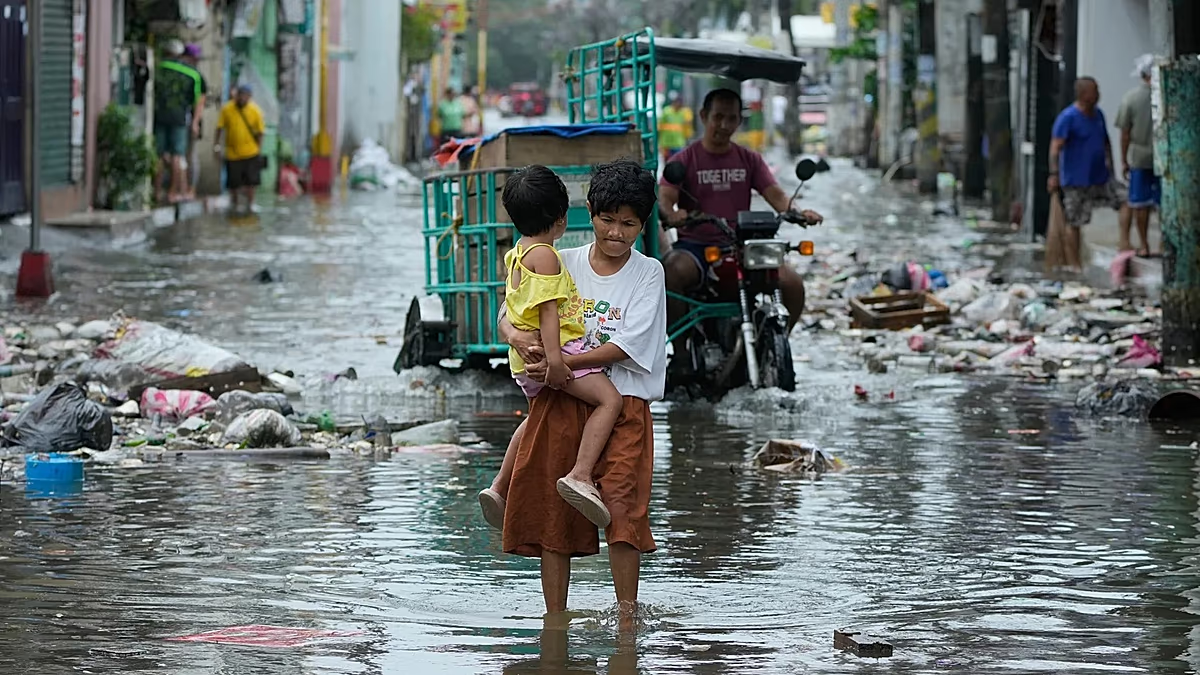
The scandal itself centres on flood control projects, a matter of life and death in the storm-battered Philippine archipelago, which experiences hundreds of floods annually. Investigations have revealed a breathtaking scale of alleged corruption, with nearly 10,000 projects worth over 545 billion pesos (approximately €7.6 billion) coming under scrutiny since President Marcos took office in mid-2022. Shockingly, many of these vital public works were found to be substandard, grossly overpriced, or simply never constructed at all. Former Finance Secretary Ralph Recto suggested that up to 118.5 billion pesos (about €1.7 billion) may have been lost to corruption in just over a year, funds that were desperately needed to protect communities from catastrophic flooding.
Elizaldy Co was formally charged in November alongside various public works officials and construction firm owners, accused of violating anti-graft laws related to a project in the central Philippines. As pressure mounted, he resigned from the House of Representatives in September and later vanished, only to surface in a series of online videos. In a dramatic twist, Co claimed that President Marcos was the true mastermind behind the corruption scheme—an allegation the President has consistently and forcefully denied. In response, the Philippine government cancelled Co’s passport in December, effectively stranding him internationally and setting the stage for his eventual detention.
President Marcos has stated that Manila is now in “close coordination” with Czech officials to secure Co’s return. However, this process is complicated by the absence of an extradition treaty between the Philippines and the Czech Republic, leaving the legal pathway for his repatriation unclear. The President has expressed his intent to bring Co back “at the soonest possible time,” framing the arrest as a victory for accountability. This stance is part of his broader effort to distance himself from the scandal, noting that it was he who originally brought the corruption allegations to national attention, even as the special commission he formed to investigate the matter was later disbanded.
The human impact of this corruption has fueled profound public anger. The revelation of the squandered billions, juxtaposed with reports of the suspects’ lavish lifestyles—including fleets of expensive European cars—sparked massive anti-corruption protests across the nation. For millions of Filipinos who live in poverty and bear the brunt of climate-fueled typhoons and floods, the scandal is a visceral betrayal. It represents not just abstract financial theft, but the literal erosion of their safety, their homes, and their livelihoods. The emotional response underscores a deep-seated demand for justice in a country where the powerful have often operated with impunity.
As Elizaldy Co sits in custody abroad, the case remains a potent symbol of the ongoing struggle against systemic corruption in the Philippines. Officials have pledged that the charges against him are merely the “first of many,” suggesting other senators and congressmen implicated could still face prosecution. The world now watches to see if his arrest will be a true turning point, leading to the recovery of stolen funds and the imprisonment of those responsible, or if it will become an isolated event in a long history of unmet promises. For the Filipino people, the outcome will determine whether this scandal ends as another chapter of impunity or becomes a genuine catalyst for reform and resilience.