


A New Chapter for Hungary and Europe
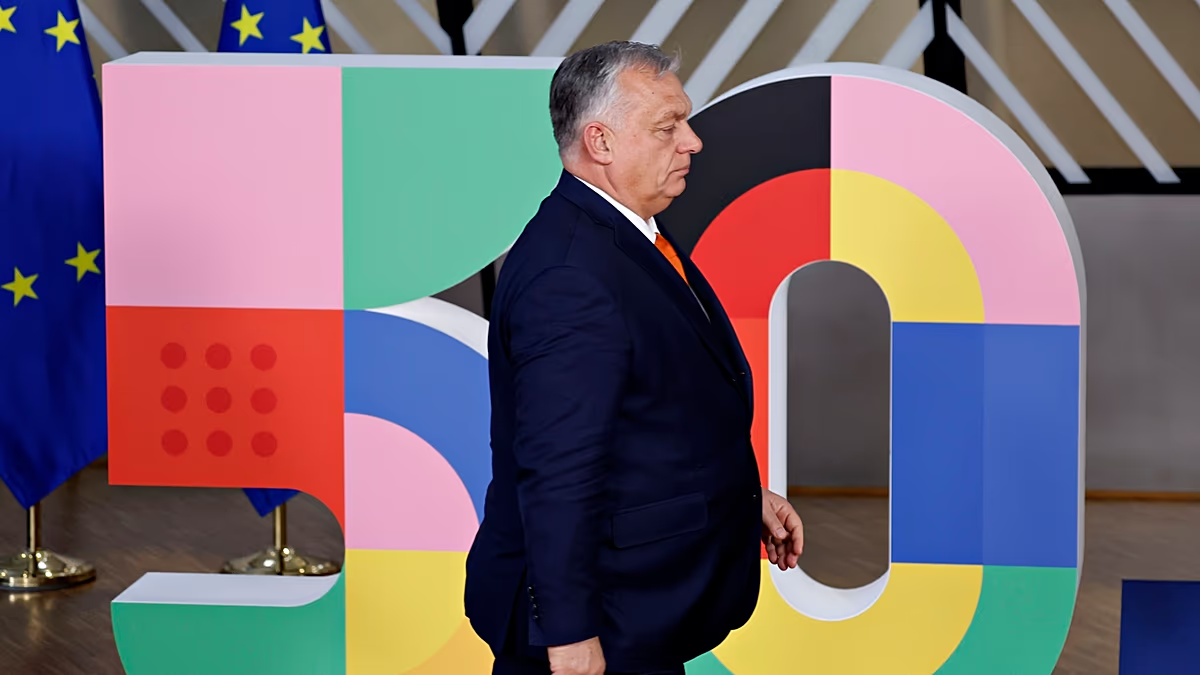
The European Union is poised for a significant transformation as its political landscape undergoes a profound shift. The era of Viktor Orbán, Hungary’s longest-serving prime minister and a perennial disruptor within the bloc, has come to an abrupt close following a decisive electoral defeat. After 16 years of consolidating power, often at the expense of democratic norms, Orbán will be succeeded by Péter Magyar, leader of the Tisza party. This change represents more than a simple domestic political transition; it signals a potential recalibration of power dynamics across the entire European Union. For over a decade, Orbán’s Hungary became synonymous with obstruction, using its veto power not as a rare safeguard but as a frequent tool of political leverage, often to the intense frustration of fellow member states.
The Weight of the Orbán Legacy
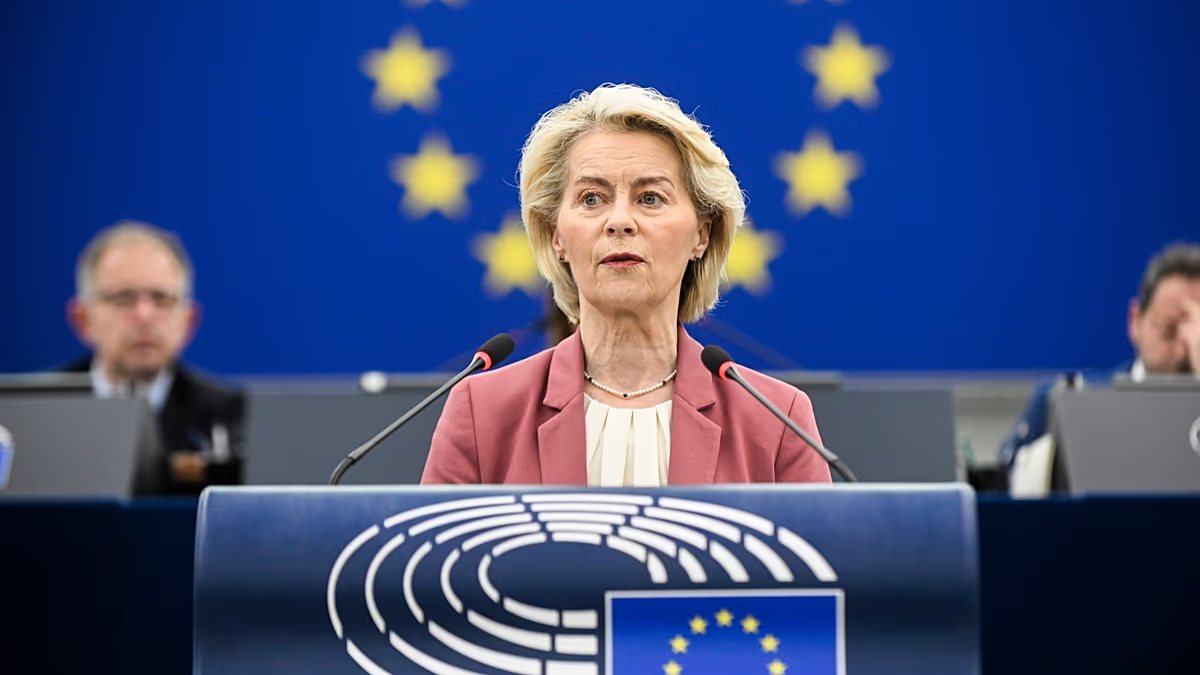
Orbán’s tenure was marked by a style of governance that frequently placed Budapest at odds with Brussels. His approach to EU diplomacy was characterized by what critics called “transactional” and “bad faith” vetoes, stalling decisions on issues ranging from foreign policy to financial aid. This strategy reached a tipping point with revelations that his government had briefed Russian officials on confidential EU matters, leading some to label Hungary a “Trojan Horse” within the alliance. The collective exasperation explains the palpable sense of relief and enthusiastic congratulations that greeted Magyar’s victory from leaders like Ursula von der Leyen and Emmanuel Macron, who spoke of Hungary returning to the “heart of Europe.” Notably, Orbán himself received scant attention in the post-election messages, underscoring his isolated position.
Cautious Hope in Brussels
Within the corridors of Brussels, the reaction to Orbán’s departure is one of cautious optimism. Diplomats and officials acknowledge the deep structural changes Orbán enacted—eroding judicial independence, reshaping media landscapes, and fostering close ties with Moscow—which will not be undone overnight. Some express wariness given Magyar’s own political origins within Orbán’s Fidesz party before his 2024 defection. However, the overarching sentiment is hope for a more collaborative relationship. The primary expectation is that the era of “acrimonious, time-consuming blockages” will end, allowing the EU to function more cohesively. As one EU official put it, there is relief to see a government “that has actively sabotaged the EU for years” leave the stage.
Magyar’s Promises and Immediate Challenges
Prime Minister-elect Magyar has moved quickly to signal a new direction, promising a “constructive” and “critical but willing to debate” stance. In his first major address, he addressed one of Orbán’s most contentious acts: the veto on a €90 billion EU loan for Ukraine. Magyar indicated he would not revisit the hard-won December agreement, though he confirmed Hungary would retain its negotiated opt-out from joint borrowing due to domestic financial strains. This pragmatic position was welcomed in Brussels, which is eager to unblock not only the Ukrainian loan but also stalled sanctions on Russia and military aid for Kyiv. Magyar’s immediate task is to translate these early signals into action, restoring functional ties between Budapest and Brussels.
Realigning in Europe’s Political Constellation
Beyond managing specific vetoes, Magyar’s most pressing mission is to reintegrate Hungary into the EU’s mainstream political dialogue. Orbán had increasingly operated from the sidelines, even being asked to leave a room during a critical 2023 summit to break a deadlock—an unprecedented moment in EU history. Magyar’s pledge to be “at the table” represents a 180-degree turn. His affiliation with the centre-right European People’s Party (EPP), the dominant force in the European Council, grants him a natural advantage Orbán lacked as a member of the far-right, Eurosceptic Patriots for Europe. Analysts like Nicolai von Ondarza suggest Magyar may follow a path similar to Poland’s Donald Tusk: dropping confrontational vetoes on key issues like Ukraine while focusing domestically on dismantling corruption and reforming state institutions.
A Changed Dynamic and Enduring Questions
Hungary’s shift will resonate across the bloc, particularly for leaders like Slovakia’s Robert Fico, who has been Orbán’s closest ally in espousing sceptical positions on Ukraine. Without his Hungarian counterpart, Fico’s capacity for disruption may be weakened, though the threat of the veto remains a tool for any member state. The post-Orbán era has ignited a broader institutional debate, championed by von der Leyen, on moving toward qualified majority voting in foreign policy to prevent future “systemic blockages.” While the departure of its most prolific obstructionist offers the EU a chance for smoother governance, the bloc continues to face monumental challenges that require unity. The hope in Brussels is that with Hungary back at the table, a more collaborative and decisive chapter for Europe can begin.