

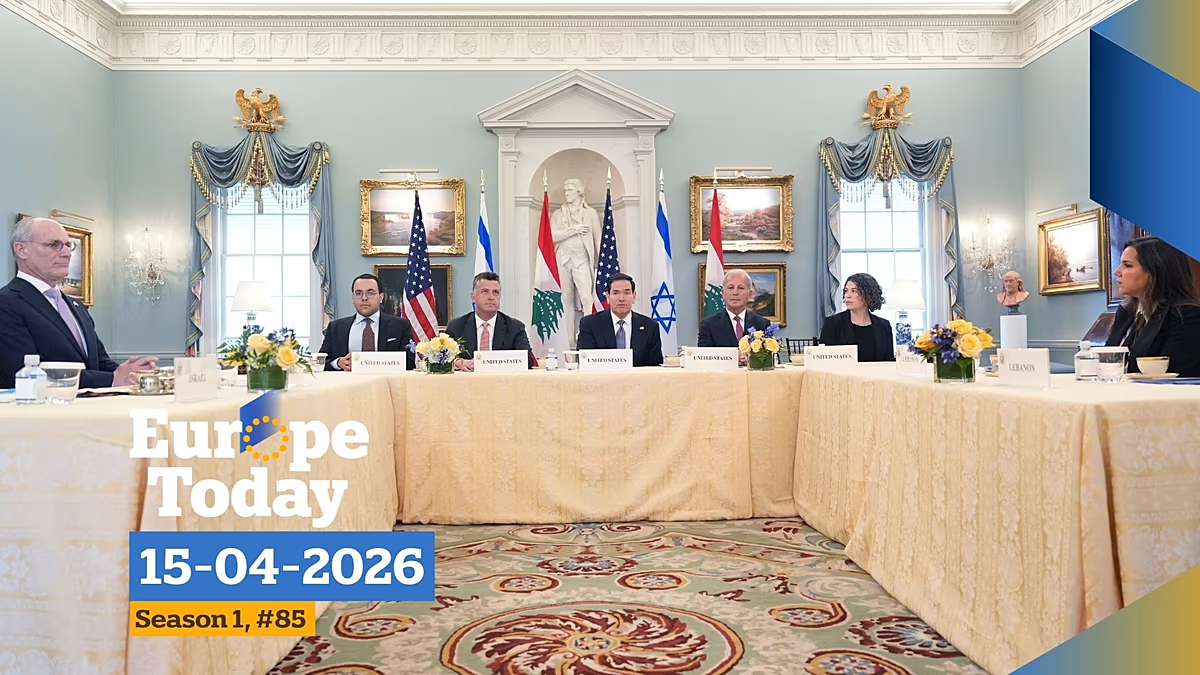
The geopolitical landscape of Europe and its neighbors remains in a state of intense flux, shaped by conflicts on its eastern flank and rising tensions to the south. Our coverage begins with a critical diplomatic effort unfolding in Washington, where high-stakes talks between Israeli and Lebanese officials are attempting to forge a path away from the brink of a wider war. The specter of a full-scale conflict between Israel and Hezbollah in southern Lebanon looms large, threatening catastrophic consequences for both nations and regional stability. As Euronews’ Stefan Grobe reports, these negotiations, while fraught with complexity, represent a fragile but essential channel to de-escalate daily cross-border exchanges of fire. The involvement of the United States as a mediator underscores the international concern that a new front could erupt, further destabilizing a region already reeling from the conflict in Gaza. The question remains whether political will can overcome deep-seated hostilities to secure a sustainable, diplomatic solution.
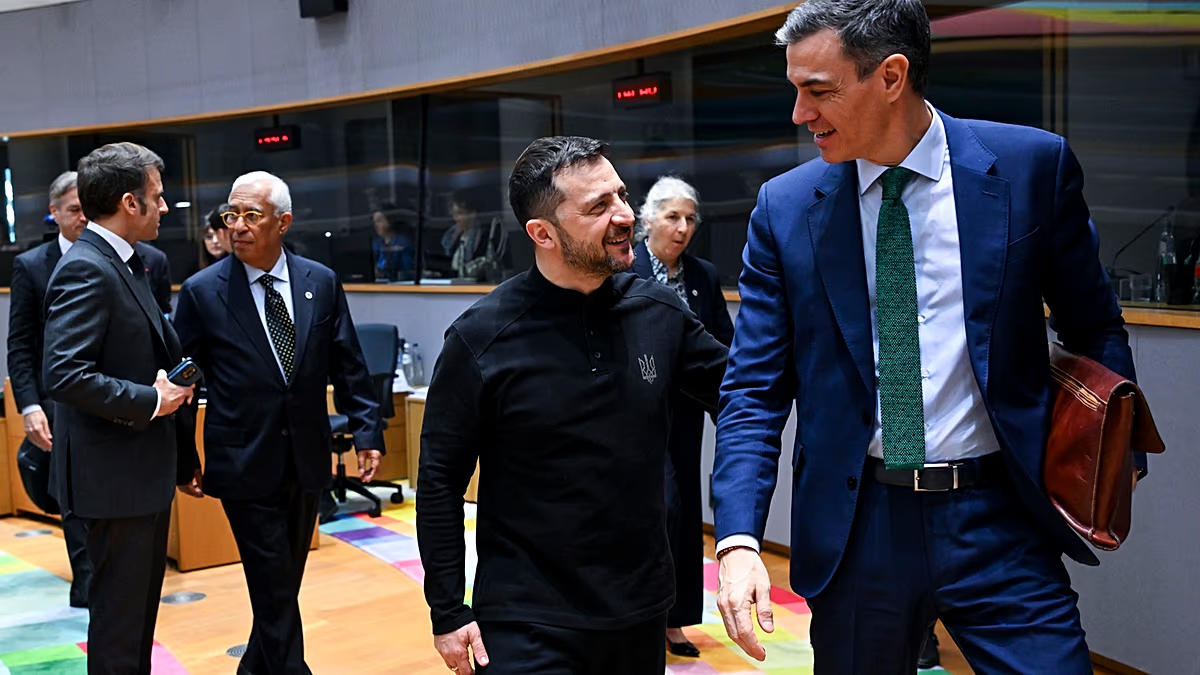
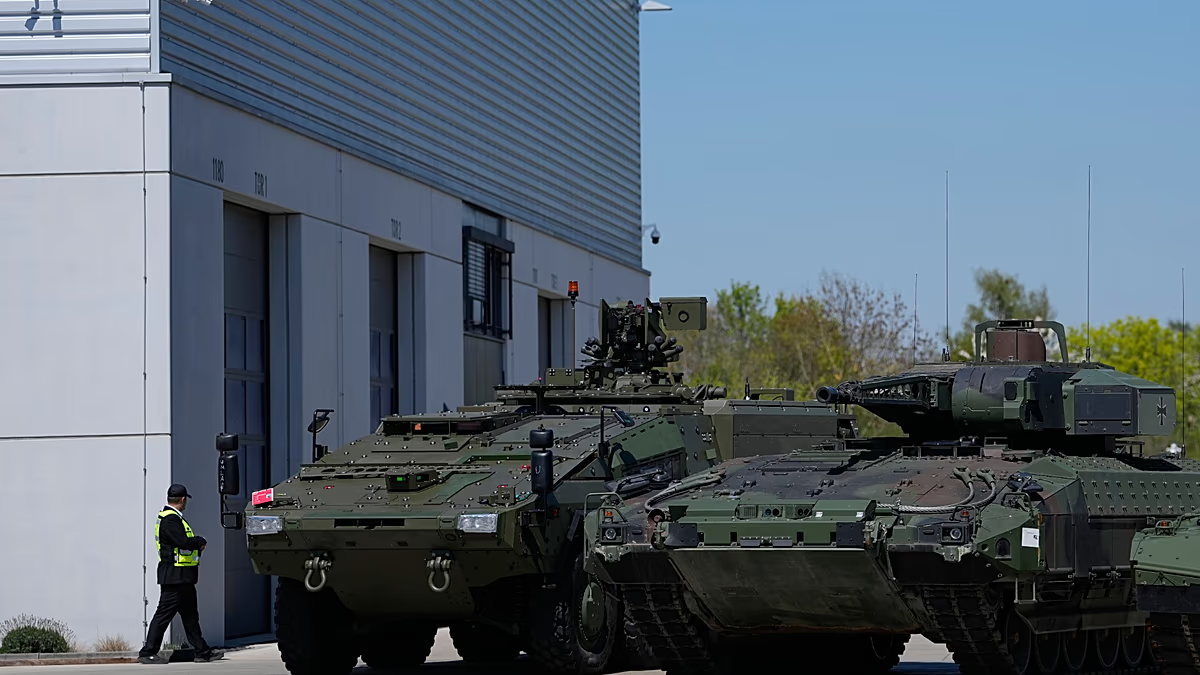
Simultaneously, the war in Ukraine continues to demand Europe’s unwavering attention and support. From Berlin, correspondent Laura Fleischmann reports on President Volodymyr Zelenskyy’s urgent meetings with Western defence ministers. His mission is clear: to shore up tangible military assistance and solidify long-term security commitments as Ukrainian forces face severe challenges on the battlefield. This diplomatic push is a stark reminder that European security is inextricably linked to Ukraine’s ability to defend itself. The discussions go beyond immediate ammunition shortages to encompass air defence systems, advanced fighter jets, and the broader strategic architecture for Ukraine’s future within the European family. Each meeting is a test of the West’s resolve, balancing urgent battlefield needs against the logistical and political complexities of sustained, large-scale military aid.
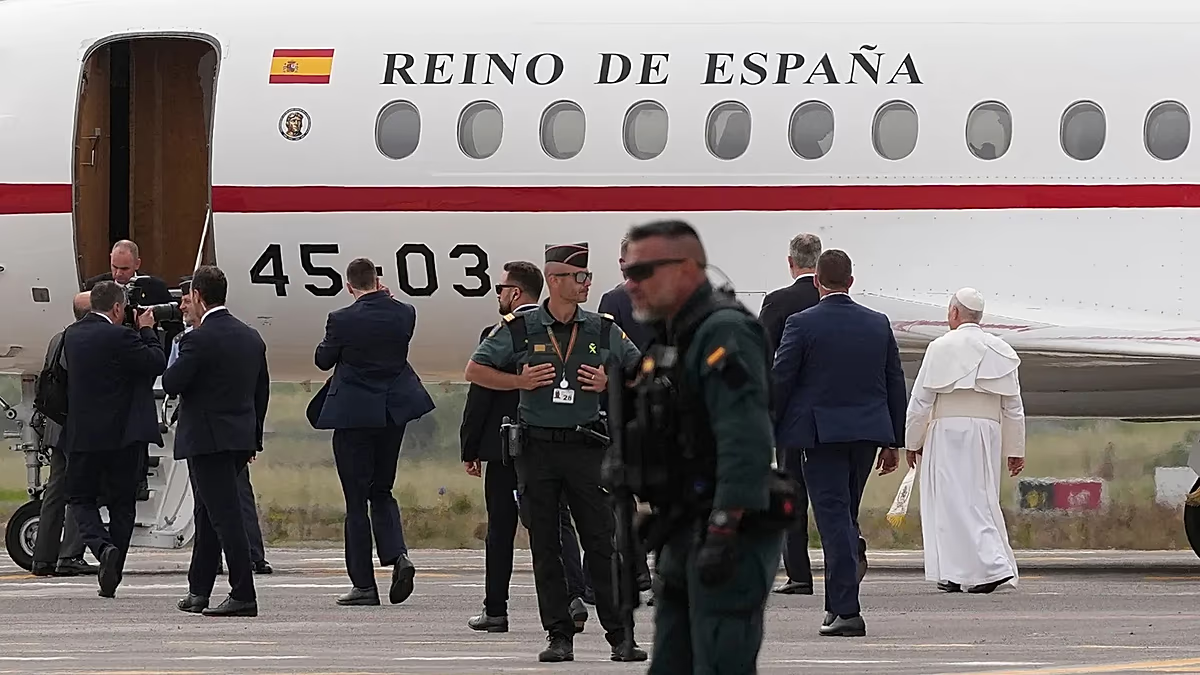
Amid these external pressures, Europe is also navigating significant internal political currents. In Spain, a controversy surrounding the business dealings of Prime Minister Pedro Sánchez’s wife, Begoña Gómez, has ignited a fierce political and media storm. As explained by Jakub Janas, the situation escalated when a Madrid court opened a preliminary inquiry into allegations of corruption and influence peddling—a move based on a complaint by a far-right group. Sánchez’s dramatic response, pausing his public duties to consider resignation before ultimately reaffirming his leadership, underscores the intensely personalized and polarized nature of modern politics. The episode is more than a domestic scandal; it reflects deeper tensions within Spanish society and the challenging environment leaders face where judicial processes, media narratives, and political opposition intersect in highly charged ways.
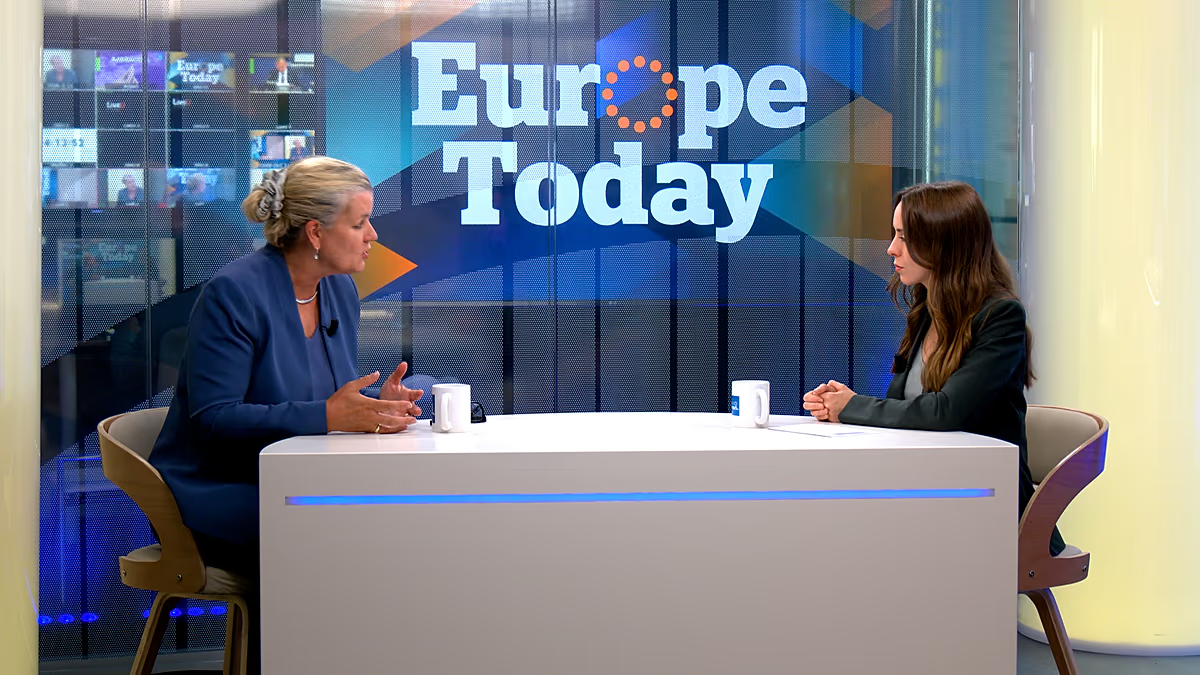
To dissect these multifaceted stories, Europe Today brings together authoritative voices offering depth beyond the headlines. In a segment focusing on cultural policy and global influence, we hear from Rima Abdul Malak, the former French Culture Minister, who provides insight into how nations project soft power in turbulent times. On matters of Middle Eastern diplomacy and U.S. foreign policy, the perspective of Elliott Abrams, former U.S. envoy on Iran and Venezuela, adds critical context to the Washington talks. Furthermore, to understand the dire economic realities fueling instability in Lebanon, the analysis of Amer Bisat, the Lebanese Economy Minister, is indispensable. His commentary sheds light on the desperate conditions within a country on the financial brink, where state collapse is not an abstraction but a daily reality for its citizens, forming the volatile backdrop against which any ceasefire must hold.
Recognizing that our audience engages with news across multiple platforms and on their own schedules, Europe Today is designed to be accessible wherever you are. You can join our chief anchor, Méabh Mc Mahon, and EU editor, Maria Tadeo, for a comprehensive live broadcast each weekday. This new format is crafted to not only present the day’s pivotal events but to provide the crucial analysis needed to understand how these stories are shaping the European Union and the wider world. For those who cannot catch the live show, the conversation continues through our dedicated newsletter and podcast, ensuring you stay informed with the same level of expert insight and clarity during your commute, workout, or morning routine.
Ultimately, our mission is to make sense of the interconnected threads of diplomacy, conflict, and politics that define this era. From the negotiation rooms in Washington and Berlin to the political arena in Madrid and the struggling economy of Beirut, these stories are not isolated. They are the components of a broader narrative about the resilience of international order, the endurance of democratic institutions under pressure, and the daily lives of millions affected by decisions made in distant capitals. We invite you to be part of this essential dialogue, equipped with information that is not just reported, but thoughtfully explained and humanized, connecting the dots across our continent and beyond.