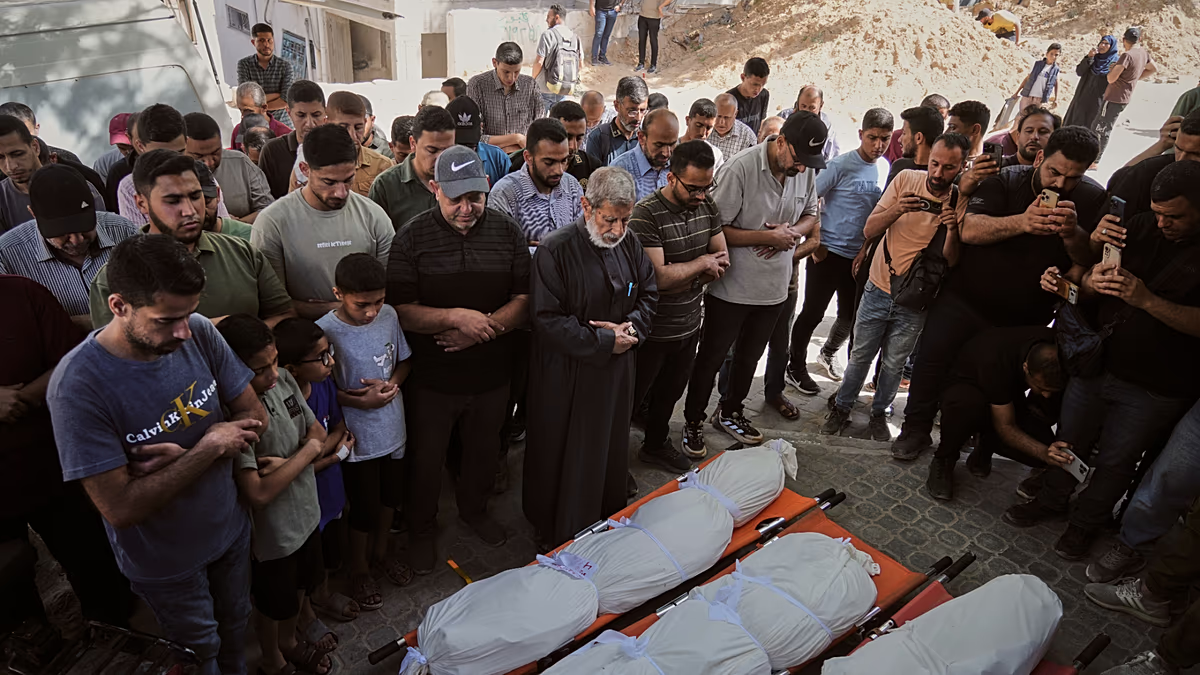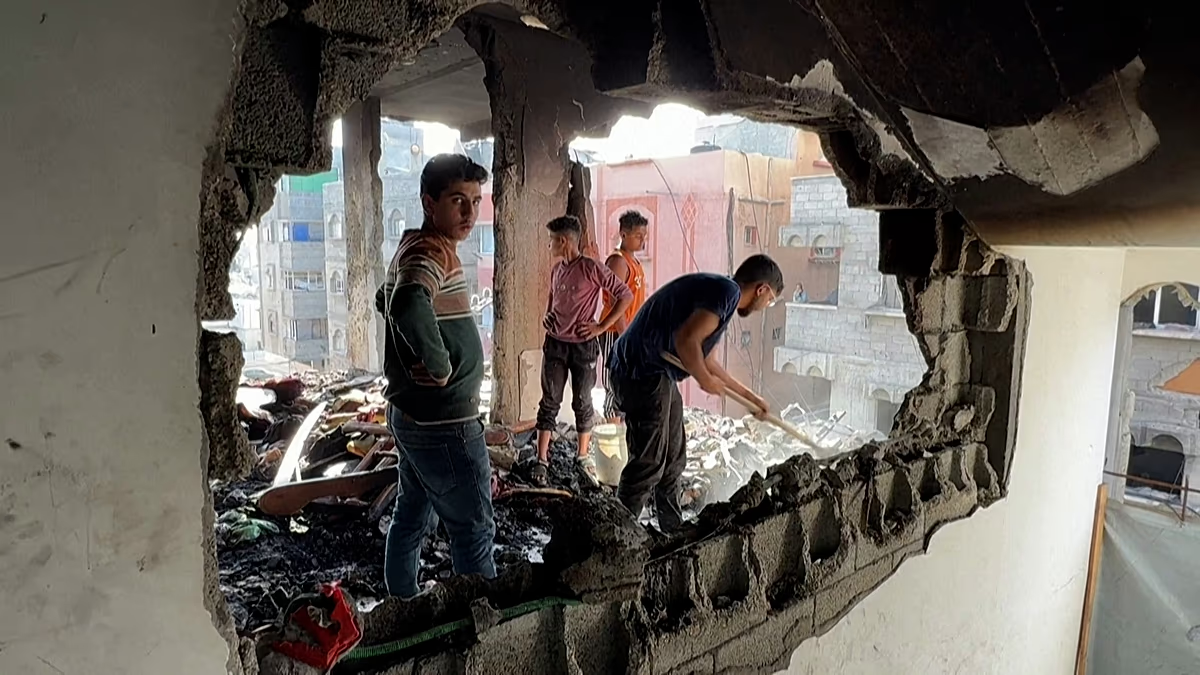



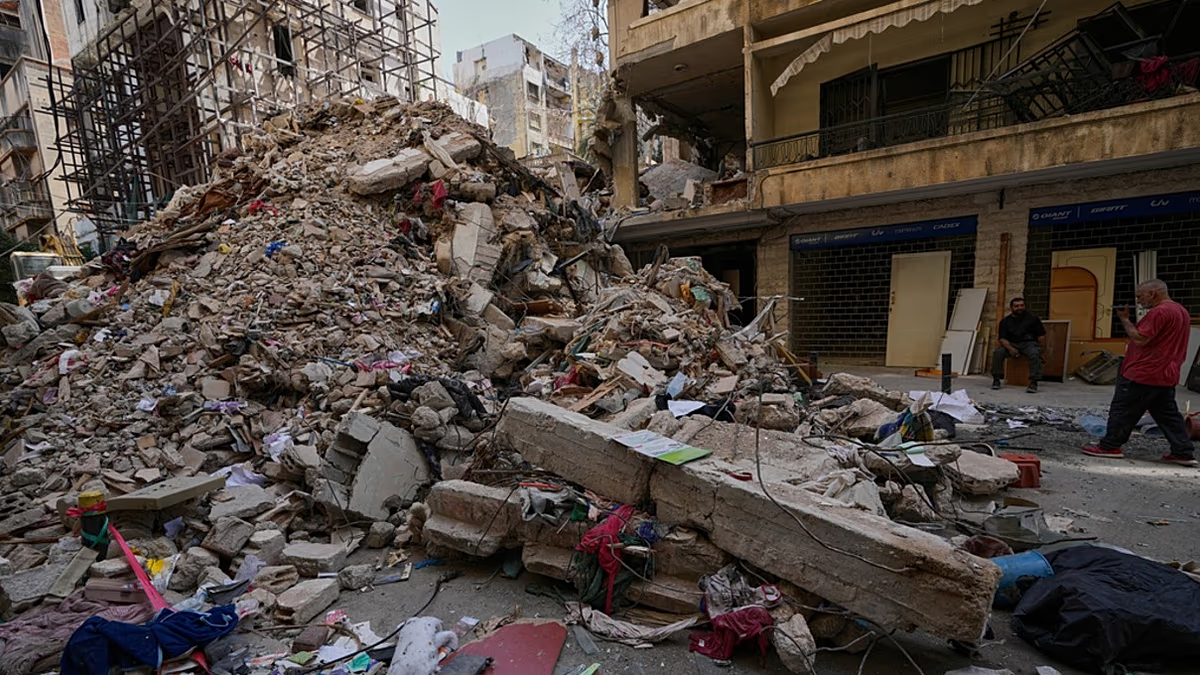
In a move that offered a fragile hope to a region battered by weeks of conflict, U.S. President Donald Trump announced a 10-day ceasefire between Israel and Lebanon, set to begin on a Friday afternoon. This development, brokered by intense American diplomacy, aimed to pause a devastating cycle of violence that had seen Israeli military operations targeting the Iran-backed Hezbollah group within Lebanese territory. While not a formal agreement with the Lebanese state itself, the announcement sparked immediate, visceral reactions on the ground in Beirut, where residents flooded into the streets, firing celebratory gunshots into the night air at the stroke of the truce. President Trump framed the breakthrough as a product of “excellent conversations” with both Israeli Prime Minister Benjamin Netanyahu and Lebanese President Michel Aoun, presenting it as a critical first step toward a broader peace between the two nations, which have technically been at war for decades.
However, the jubilation in Beirut’s streets was immediately tempered by stark political and military realities on the ground. While displaced families cautiously began moving toward their homes in southern Lebanon and Beirut’s southern suburbs, officials urgently warned against a full return, aware of the ceasefire’s profound fragility. The core of this instability lay in the contradictory positions of the key actors. Prime Minister Netanyahu, while agreeing to the ceasefire to “advance” peace efforts, was unequivocal: Israeli troops occupying a swath of southern Lebanon as a “security zone” would not withdraw. He explicitly stated this buffer would extend ten kilometres into Lebanese territory, declaring, “That is where we are, and we are not leaving.” For Hezbollah, which had not been a formal party to the U.S.-brokered deal, this Israeli stance was a red line, with the group asserting that occupation inherently granted Lebanon the right to resist, a clear signal that fighting could re-erupt at any moment.
The precise terms of the arrangement, as relayed by the U.S. State Department under Secretary Marco Rubio, who mediated the talks, contained a critical ambiguity that further clouded the prospect for a lasting calm. The agreement stipulated that Israel “will not carry out any offensive military operations against Lebanese targets,” which included civilian and state infrastructure. Yet, in a clause that echoed past failed ceasefires, it firmly reserved Israel’s right to defend itself “at any time, against planned, imminent, or ongoing attacks.” This wording, effectively granting Israel the sole authority to define what constituted an attack or a defensive action, suggested a continuation of the tense status quo that had followed previous wars. Hezbollah was quick to respond, stating it would retaliate against any Israeli strike, setting the stage for a potential rapid collapse of the truce based on a single incident or perceived provocation.
The diplomatic path to this moment was as significant as the ceasefire itself, marking the first direct talks between Israeli and Lebanese ambassadors in Washington in decades—a channel long opposed by Hezbollah. This dialogue, followed by a flurry of calls from President Trump and Secretary Rubio, represented a careful dance. Lebanon had insisted on a ceasefire as a precondition for further negotiations, while also reiterating a long-standing vow to address the disarmament of Hezbollah, a promise fraught with internal political danger given the group’s entrenched power. Seizing the momentum, President Trump extended invitations to both Prime Minister Netanyahu and President Aoun to meet at the White House for what he heralded as “the first meaningful talks” between the countries since 1983, expressing optimistic belief that peace could happen “quickly.”
This historical reference to 1983 underscored the deep and painful complexity of Israeli-Lebanese relations. That year, the two countries signed an agreement that promised mutual recognition and an Israeli withdrawal. Its collapse during Lebanon’s brutal civil war, and its formal rescission a year later, served as a sobering reminder of how easily diplomatic achievements can unravel. Meanwhile, a broader geopolitical undercurrent was at play. According to a Hezbollah official, the Lebanon ceasefire was indirectly a product of parallel negotiations between the United States and Iran, with Tehran insisting that Lebanon be included in its own ceasefire framework. Pakistan was cited as a key mediator in these efforts, which were also reportedly aiming to arrange a second round of U.S.-Iran talks, illustrating how the Lebanon-Israel front is deeply enmeshed in wider regional power struggles.
Thus, the ten-day ceasefire emerged not as a simple peace, but as a highly complex and precarious intermission. It was a product of overlapping yet often conflicting agendas: U.S. diplomatic ambition, Israeli security demands, Lebanese sovereign pride, Hezbollah’s militant resistance ideology, and Iranian strategic interests. For the weary civilians who dared to hope as they looked toward their homes, the truce offered a brief respite from fear. For the leaders involved, it was a tense holding pattern—a thin diplomatic window to test whether a path toward a more stable disengagement existed, or whether the entrenched positions on occupation, resistance, and self-defense would inevitably pull the region back into the familiar torment of violence once the clock ran out. The guns had fallen silent, but the fundamental disagreements roared on, leaving the future of the borderlands hanging in a fragile, uncertain balance.