



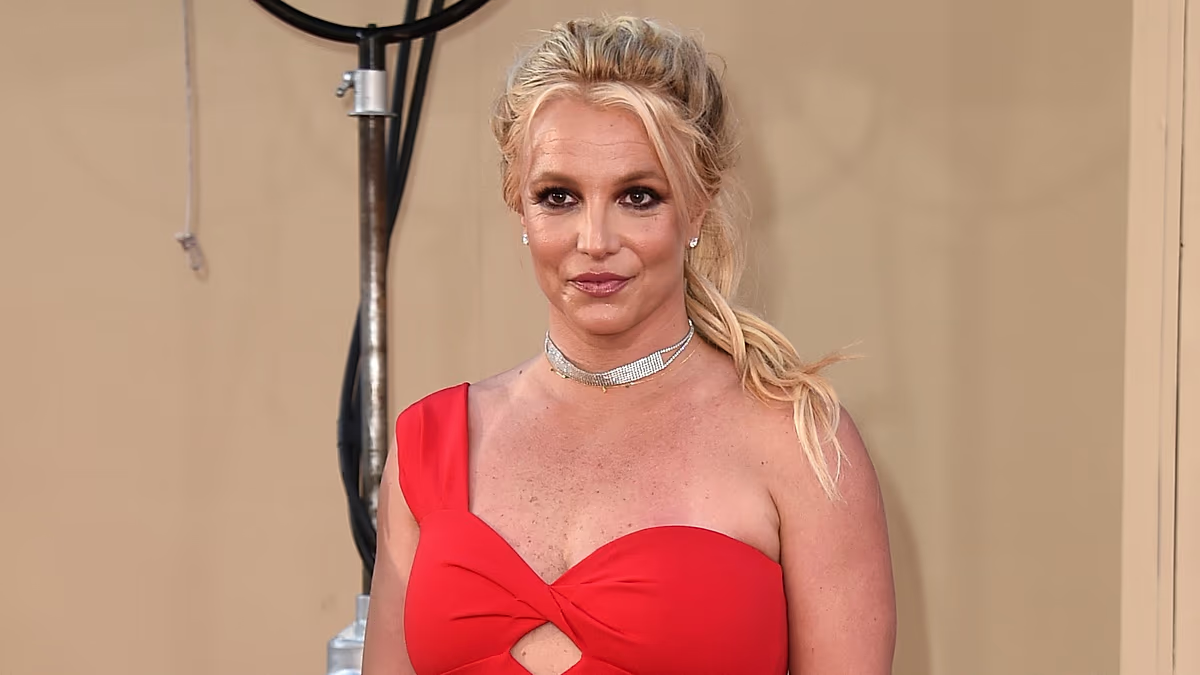
In a move that has drawn both concern and support from the public, pop icon Britney Spears has made the personal decision to enter a facility for substance abuse treatment. This development follows a deeply troubling incident just over a month prior, in which the singer was arrested on suspicion of driving under the influence of alcohol and drugs. After being processed and spending several hours in California’s Ventura County Main Jail, she was released. In the immediate aftermath, a representative from her team issued a stark statement, labeling her actions as “completely inexcusable” while expressing a fragile hope that this could serve as “the first step in long overdue change that needs to occur in Britney’s life.” The singer is scheduled to face the legal consequences of that arrest in Ventura County Superior Court on May 4th, a date that now carries the added context of her seeking help.
The journey to this point has been complex and emotionally charged. Spears herself briefly addressed the arrest in late March on social media, posting a video of herself dancing with her 19-year-old son, Jayden Federline. Her accompanying caption struck a note of gratitude and resilience, writing, “Thank you guys for all your support… spending time with family and friends is such a blessing. Stay kind !!!” This glimpse into her personal life served as a poignant reminder of the human being behind the headlines—a mother seeking connection and normalcy amidst turmoil. It highlighted the dual narrative that has followed Spears for decades: the global superstar under a microscope and the individual striving for private happiness and stability.
To understand the profound significance of this moment, one must look back at the seismic shift in Britney’s life just a few years ago. For nearly 14 years, she lived under a stringent court-ordered conservatorship, primarily managed by her father, which controlled virtually every aspect of her existence, from her finances to her personal choices. The #FreeBritney movement, fueled by dedicated fans and growing public scrutiny, culminated in 2021 with the dissolution of that legal arrangement. For the first time in her adult life, Britney Spears regained autonomy over her decisions and her destiny. This hard-won freedom, however, has not been a simple fairy-tale ending, but rather the beginning of a new and challenging chapter of self-determination, with all its attendant struggles and learning curves.
Since that liberation, Spears has taken significant steps to reshape her legacy and secure her future on her own terms. In 2023, she released the bombshell memoir “The Woman in Me,” a cathartic and bestselling account of her experiences under the conservatorship and in the blinding glare of fame. More recently, in February of 2026, she made a major business decision by selling the rights to her entire music catalog to the company Primary Wave. This move, while financial in nature, can also be seen as an effort to create distance from her past professional life and establish economic security independent of the relentless music industry treadmill. It is a testament to her enduring commercial value, built on a career that has seen her sell over 150 million records worldwide, cementing her status as one of the best-selling female artists in history.
Yet, despite these empowering actions, there remains a palpable void where her artistic career once thrived. Spears has not embarked on a concert tour in nearly eight years, and her last studio album, ‘Glory,’ was released back in 2016. For an artist whose identity was so powerfully forged on stage and in the recording studio, this prolonged hiatus from creating new music and performing live represents a significant loss, both for her and for her fans. The treatment facility is not just a response to a recent arrest; it exists within this broader context of a woman navigating life after a highly controlled existence, seeking to reconcile her monumental past with a peaceful and healthy present, all while the world continues to watch.
Ultimately, Britney Spears’ entry into treatment is a private health decision made public by the inescapable nature of her fame. It underscores a continuous and painful struggle for well-being that has played out across decades. Her story is a powerful, albeit heartbreaking, narrative about the cost of fame, the fragility of freedom, and the enduring human need for compassion and support. As she focuses on her health behind closed doors, the public response reflects a collective hope that this step leads to genuine healing. The path forward is hers to walk, but it is one that millions hope will lead to the peace and stability that has so often eluded the woman behind the iconic pop legend.