



Five years ago today, amid the profound grief that enveloped the nation and the world, a fleeting moment of connection between two brothers offered a glimmer of hope. On April 17, 2021, the Royal Family gathered at St George’s Chapel in Windsor Castle to bid farewell to Prince Philip, the Duke of Edinburgh. The service, scaled back due to the stringent Covid-19 restrictions in place at the time, was an intimate affair, marked by military precision and personal touches that reflected the late Duke’s character. For Prince William and Prince Harry, the estranged brothers seated facing each other in the historic chapel, it was a moment of shared sorrow that momentarily transcended their well-documented rift. The world watched, searching for signs of reconciliation, and in the quiet moments after the ceremonial farewell, it seemed a fragile bridge had been tentatively extended.
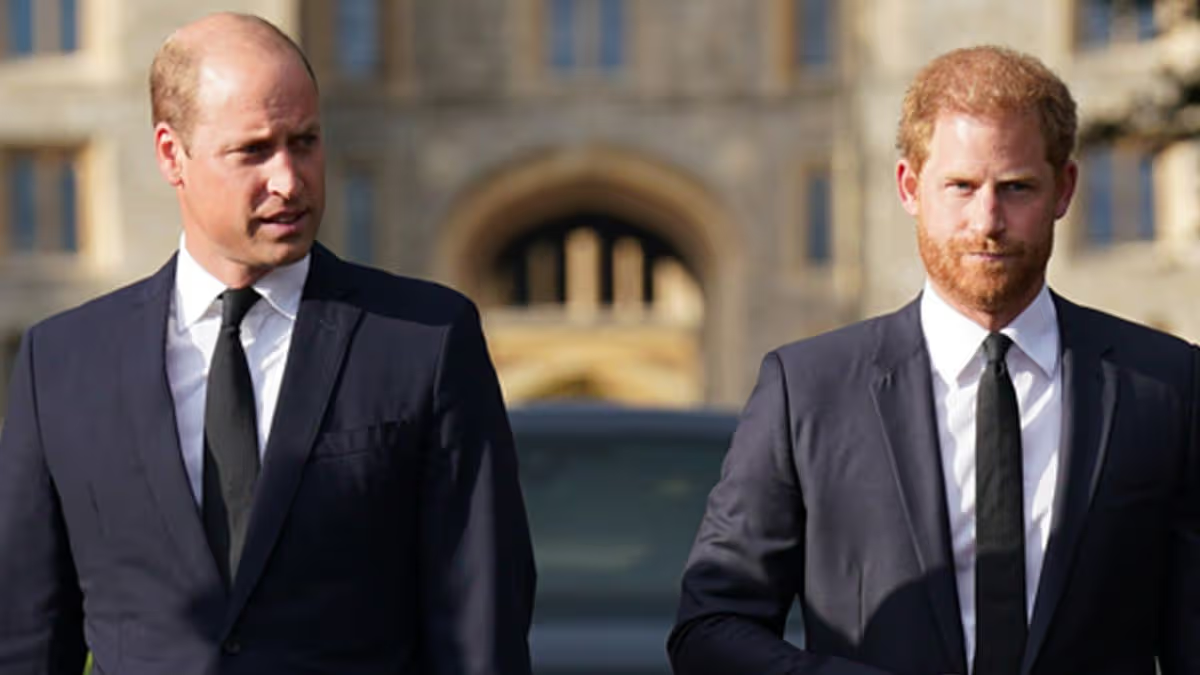
As the somber service concluded, the brothers were seen engaging in a brief conversation outside the chapel. Lip readers later provided insight into their exchange, suggesting a moment of unity in their appraisal of the day. Prince William, removing his face mask, was reported to have said, “Yes it was great, wasn’t it,” with Prince Harry appearing to respond, “It was as he wanted.” This simple agreement—that the dignified, no-fuss ceremony perfectly honoured their grandfather’s wishes—served as a common ground, a point of connection rooted in familial respect and loss. They later walked together up the hill towards Windsor Castle, with the Princess of Wales tactfully engaging others to allow them space. Body language experts noted the interaction appeared natural, devoid of the stiffness or avoidance that had characterised their public encounters for months, suggesting that shared grief had, for a moment, softened the edges of their discord.
This encounter held immense symbolic weight because it marked Prince Harry’s first return to the UK and reunion with his family since he and his wife, Meghan, the Duchess of Sussex, had stepped back from royal duties and relocated to North America. It came merely a month after their explosive televised interview with Oprah Winfrey, which had aired allegations of institutional neglect and painful personal conflicts, sending shockwaves through the monarchy. The air was thick with unaddressed tensions, making the potential for any meaningful interaction at the funeral seem remote. Yet, the shared experience of mourning a patriarch, coupled with the Queen’s own evident sorrow and her well-known desire for family unity, created a powerful, if temporary, catalyst for civility and a public display of togetherness.
The absence of Meghan Markle was a poignant subtext to the day. On her doctor’s advice due to her advanced pregnancy with their daughter, Lilibet, she remained at home in California. Reports indicated she watched the funeral via live stream, supporting her husband from afar while navigating her own grief. Commentators noted that for Meghan, too, this was the loss of a family member, a grandfather-in-law who had shown her personal kindness. Her absence underscored the physical and emotional distance that now defined the Sussexes’ relationship with the institution, making the sight of the two brothers walking side-by-side all the more resonant—a snapshot of a familial bond that persisted, however strained, beneath the layers of public strife.
In the immediate aftermath, royal observers and the public alike clung to the moment as a potential turning point. A royal source expressed cautious hope that the Duke’s passing and the Queen’s call for unity could be a catalyst for healing. Journalist Tom Bradby echoed a sentiment felt by many, noting that funerals are often a time for reconciliation and that the scene was one “a lot of people wanted to see, not least the family itself.” For a day, the overarching narrative shifted from one of conflict to one of shared humanity and loss. The brothers’ agreement about the perfection of the service for their grandfather was a small but significant acknowledgment of their shared history and values, a reminder of the bond that existed long before the rift.
Now, five years on, the poignant memory of that day at Windsor Castle endures as a bittersweet footnote in the ongoing story of the royal brothers’ relationship. The hopeful reconciliation that many glimpsed in the shadow of St George’s Chapel did not, in the years that followed, blossom into a renewed closeness. The chasm of differing lives, responsibilities, and public narratives has proven deep. Yet, the image of William and Harry in quiet conversation, united in their tribute to Prince Philip, remains a powerful testament to the complex layers of family dynamics—where love, rivalry, grief, and history are inextricably intertwined. It stands as a reminder that even in relationships defined by tension, there can exist moments of pure, unguarded understanding, forged in the shared experience of saying goodbye.