



The Accelerating Electric Shift: How European Incentives Are Powering a Cleaner Future
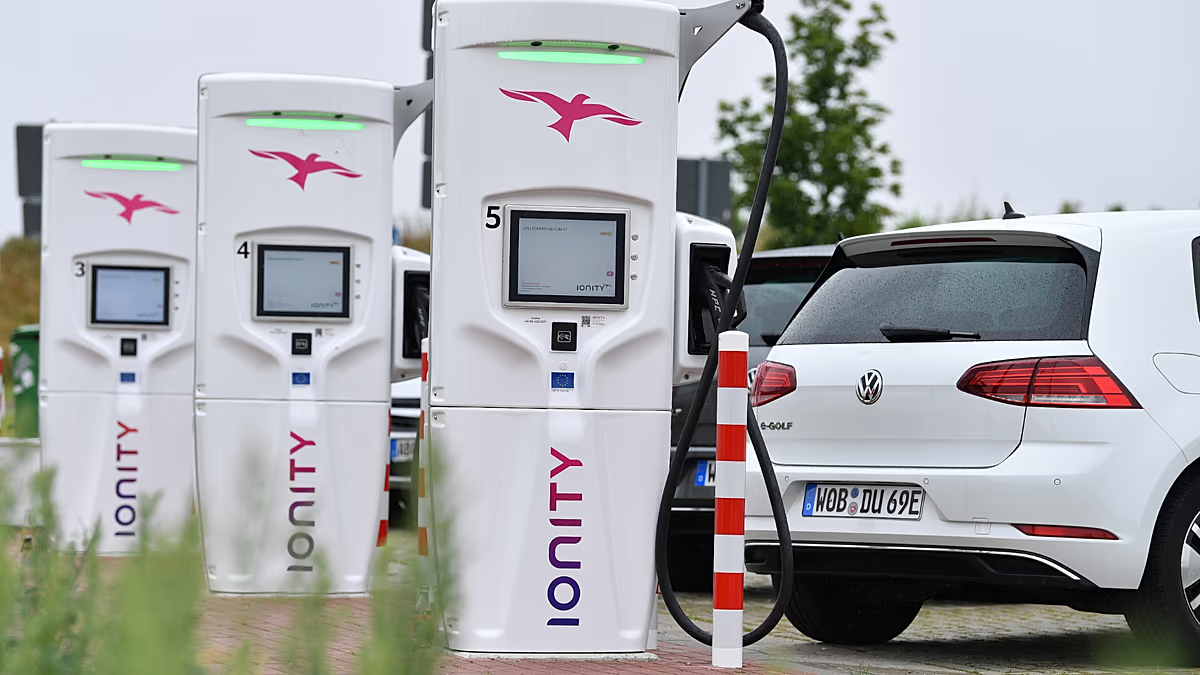
The transition to electric vehicles in Europe is no longer a distant ambition but an accelerating reality, driven forward by a potent combination of geopolitical necessity and strategic government policy. For years, European nations have gently nudged consumers toward EVs with various subsidies, but the recent energy market turmoil, exacerbated by the conflict involving Iran, has transformed this nudge into a decisive shove. This crisis has starkly underscored the vulnerability of relying on imported fossil fuels, making the shift to electrified transport not just an environmental imperative but a pressing matter of energy security and economic stability. Consequently, governments across the continent are now doubling down on financial incentives, recognizing them as the essential catalyst to reduce emissions, promote renewable energy integration, and ultimately insulate their economies from the volatility of the global oil market.
France stands as a prime example of this intensified commitment. In a significant move announced in April 2026, the French government revealed plans to nearly double its annual spending on electrification support, committing €10 billion per year through 2030. This ambitious strategy aims to ensure that two-thirds of all new cars sold by the end of the decade are electric. Beyond broad market targets, the French plan is notable for its social dimension, introducing a leasing programme for 100,000 EVs specifically designed for low-income drivers and those with long commutes. This holistic approach—combining infrastructure investment, consumer purchase incentives, and measures for equity—reflects a growing understanding that the EV transition must be inclusive to be successful. The early results of such policies are already visible in the market data; battery-electric car sales in the EU climbed to 18.8% of new registrations in early 2026, a steady increase from previous years, demonstrating a direct correlation between government action and consumer adoption.
The landscape of incentives across Europe is remarkably diverse, yet almost universally present. According to a comprehensive report by the European Automobile Manufacturers’ Association (ACEA), every EU member state except Latvia offers some form of tax benefit for EVs, either at the point of purchase or during ownership. These incentives generally fall into four categories: direct purchase grants, reductions or exemptions in acquisition taxes (like VAT or registration fees), ongoing ownership tax benefits (such as waived annual road tax), and subsidies for installing private home chargers. As an ACEA spokesperson emphasized, “Monetary and fiscal incentives are essential to driving the adoption of battery-electric vehicles (BEVs). When governments act, the results are immediate.” This immediate impact is a powerful testament to the role of policy in shaping consumer behavior and accelerating market transformation.
When it comes to putting money directly into a buyer’s pocket at the point of sale, several nations offer particularly strong support. Italy leads with grants of up to €11,000, with the final amount often tied to the consumer’s income and whether they are scrapping an old, polluting vehicle. Similarly, Cyprus offers up to €9,000, and even up to €20,000 for specific groups like large families or drivers with disabilities. Slovenia, Malta, Germany, and France all provide substantial purchase incentives ranging from approximately €5,700 to €8,000, often with similar income-based or scrappage conditions. These front-end subsidies are crucial for lowering the initial price barrier that remains one of the biggest hurdles for average consumers considering an electric car, making advanced clean technology accessible to a much broader segment of society.
Perhaps an even more compelling long-term financial advantage comes from tax exemptions during ownership. Here, Norway’s model, though not an EU member, remains the gold standard, offering full exemption from VAT and purchase tax—a policy that has helped it achieve a staggering 95.9% BEV market share. Within the EU, countries like Bulgaria, Cyprus, Portugal, Greece, and Hungary offer powerful combinations, such as zero registration tax and full exemption from annual road taxes. Other nations employ nuanced mixes: Germany provides a ten-year exemption from vehicle tax, Poland exempts EVs from excise duty, and Spain allows for significant income tax deductions and road tax reductions of up to 75%. These ongoing benefits address the total cost of ownership, providing lasting economic relief and reinforcing the EV’s value proposition year after year.
The overarching message from industry leaders and the market data is unequivocal: affordability is the non-negotiable foundation of this transition. As the ACEA spokesperson succinctly put it, “Affordability is the keystone of the transition: without it, even the best infrastructure and the widest range of models can’t sustain the mass market demand needed to reach climate neutrality.” Incentives do more than just lower a price tag; they build consumer confidence, create a stable market for manufacturers to invest in, and make the promise of clean mobility a tangible reality for millions. From France’s massive new investment to Poland’s programme that doubled registrations, the evidence is clear. As Europe navigates the dual challenges of climate change and energy security, these targeted financial supports are proving to be the essential drivers, quietly powering a profound and lasting revolution on the roads.