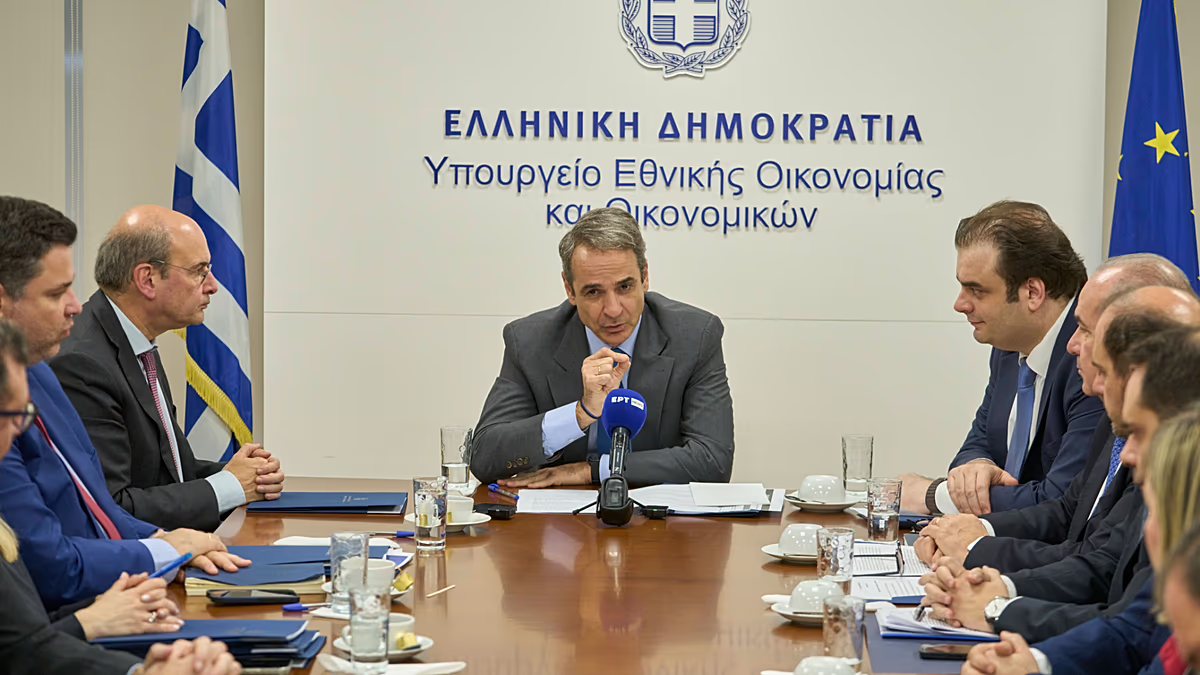



In a bid to address the acute financial pain felt by millions, Germany’s ruling coalition emerged from a weekend of intense, marathon negotiations with an emergency energy package. The centerpiece of this deal is a temporary but significant cut to the mineral oil tax, reducing the price of both diesel and petrol by approximately 17 cents per litre for a period of two months. The agreement, announced by Chancellor Friedrich Merz (CDU), Vice Chancellor and Finance Minister Lars Klingbeil (SPD), and other senior leaders, is framed as an immediate intervention. Merz acknowledged the “difficult situation” wrought by a confluence of economic and geopolitical pressures, while Klingbeil promised “real and noticeable relief.” The stated goal is to swiftly aid everyday car owners and, critically, businesses and employees who rely on driving for their livelihoods, with the state aiming to cushion the blow from soaring global energy markets.
The urgency of this political response is driven by a stark reality at the nation’s petrol stations. Fuel prices have breached the psychologically significant threshold of €2 per litre in many regions, a surge directly linked to the ongoing war in Iran and its disruption of global oil shipping through the vital Strait of Hormuz. With earlier measures—such as limiting petrol stations to one price change per day—proving ineffective, public frustration has reached a boiling point. This sentiment was powerfully echoed by regional leaders across the political spectrum, who demanded tangible results that citizens could feel “immediately and not in weeks or months.” The pressure from state-level minister presidents, including calls for a special summit with the Chancellor, underscored that this was a nationwide crisis demanding a concrete, fast-acting federal solution.
However, reaching this consensus was no simple feat, as it required navigating significant and very public tensions within the coalition itself. In the days leading up to the talks, Vice Chancellor Klingbeil had convened a separate crisis summit, using the platform to advocate for more aggressive interventions like a direct petrol price cap and a windfall tax on energy companies. This move was met with sharp, public criticism from Federal Economics Minister Katherina Reiche, whose absence from that meeting spoke volumes. Her dismissal of the SPD’s ideas as “expensive, ineffective and constitutionally questionable” exposed a deep rift, with media reports suggesting Chancellor Merz was deeply displeased by this open conflict. The discord was so severe that figures within Merz’s own CDU suggested Minister Reiche’s position had become untenable, highlighting the high-stakes political friction that preceded the eventual compromise.
The final package, therefore, represents a carefully brokered political middle ground. Beyond the headline tax cut, the coalition agreed on measures to “counter-finance” the relief and address perceived market failures. Firstly, antitrust laws are to be significantly strengthened, with SPD leader Bärbel Bas vowing to turn them into a “sharp sword” to combat price gouging at the pump. Secondly, a mechanism was created for employers to provide tax-free, one-off relief bonuses of up to €1,000 to their employees. Chancellor Merz was careful to frame the state’s role realistically, noting it cannot “offset every market movement,” and correctly identifying the root cause as the distant war. Yet, the combined approach—direct tax relief, enhanced market oversight, and a channel for employer-led aid—aims to provide a multi-fronted response to the crisis.
While the fuel tax cut dominated headlines, the marathon negotiations also served as a crucial forum for addressing other long-term fiscal challenges. The talks provided an opportunity to advance discussions on a major tax reform designed to benefit low and middle-income earners, slated for 2027, as well as complex reforms to the healthcare system and the broader federal budget. CSU leader Markus Söder praised the immediate fuel measure as “quick, powerful, unbureaucratic,” a necessary signal for the challenging months ahead. Chancellor Merz himself acknowledged that this agreement, while critical, is just one piece of a larger puzzle, with “many more agreements” still required to ensure the country’s economic stability and social cohesion in a prolonged period of uncertainty.
In conclusion, Germany’s emergency energy package is a product of acute crisis, intense political pressure, and fraught internal negotiation. It seeks to deliver immediate, palpable relief to consumers and businesses buckling under the weight of fuel prices driven by international conflict. The agreement temporarily lowers costs, attempts to ensure fairer market practices, and offers a pathway for supplemental wage support. Yet, the very public disagreements that preceded it reveal a governing coalition under strain, forced to balance urgent populist demands against fiscal prudence and constitutional guardrails. The success of these measures will be measured at the petrol pumps and in the public’s perception of whether their government can act decisively and unitedly in the face of global shocks that show no sign of abating.