

Paragraph 1
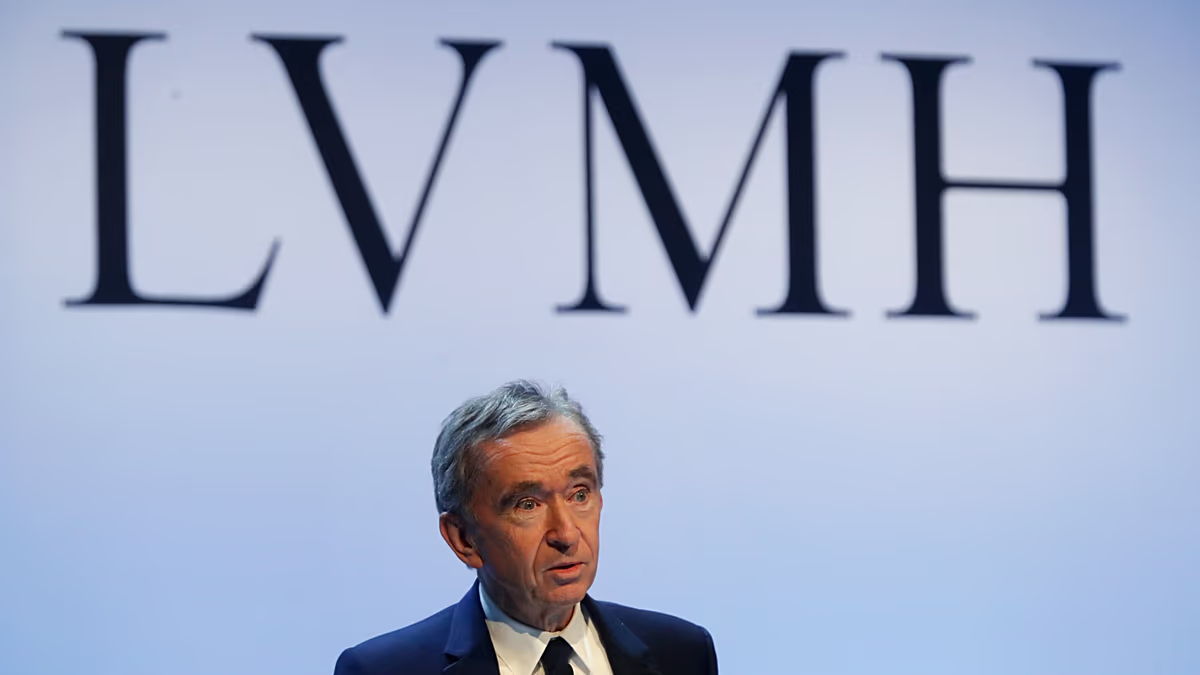
In the nuanced world of high-end commerce, where perception often outweighs pure numbers, even a titan like LVMH faces moments of recalibration. The luxury conglomerate’s first-quarter results for 2026, released in mid-April, painted a picture of a giant navigating a shifting landscape. The group reported organic revenue of approximately €19.1 billion, a modest increase of 1% compared to the same period last year. While this signifies growth, it fell just short of analysts’ expectations of 2%, prompting a slight dip in the company’s share price. This delicate performance underscores a fundamental truth: in an interconnected global economy, even the most prestigious brands are not insulated from the tremors of geopolitical instability and fluctuating consumer confidence.
Paragraph 2
The primary source of this turbulence was unmistakably the Middle East. The company explicitly cited the ongoing conflict involving Iran as the cause for a double-digit decline in sales within the region. This downturn alone acted as a significant drag, subtracting an estimated 1% from the group’s overall growth rate for the quarter. While spending in other key markets like the United States showed encouraging resilience, recoveries in Europe and Japan were not sufficiently robust to fully counterbalance the losses. The quarter thus became a study in contrasts, where strength in one hemisphere was muted by weakness in another, highlighting the fragile balance of global luxury retail.
Paragraph 3
A closer look at LVMH’s empire reveals a story of divergent fortunes across its legendary houses. The cornerstone of the group—its Fashion and Leather Goods division, home to icons like Louis Vuitton and Dior—experienced a 2% organic sales decline to about €9.2 billion. This was a softer performance than many had hoped for. Yet, within this segment, narratives of success persisted. Louis Vuitton maintained its foundational strength, Dior saw marked improvements, and the ultra-discreet luxury of Loro Piana surged with double-digit growth. This phenomenon reaffirms that a segment of the ultra-wealthy continues to seek status through understatement and craftsmanship, a trend often termed “quiet luxury.”
Paragraph 4
Elsewhere in the portfolio, more cheerful news emerged. The Wines and Spirits division, encompassing world-renowned champagne and cognac houses, enjoyed a 5% organic revenue increase. Strategic logistics, including timing shipments ahead of the Chinese New Year celebrations, aided this result alongside a stabilizing champagne market. Similarly, the Watches and Jewelry sector, powered by the ongoing renaissance of Tiffany & Co. and the enduring appeal of BVLGARI, posted a robust 7% growth. These results demonstrate that luxury in the form of celebratory indulgences and timeless personal adornment remains in healthy demand.
Paragraph 5
The financial community’s response to this mixed report has been measured and analytical. Institutions like Deutsche Bank have adjusted their models, slightly lowering LVMH’s price target while maintaining a “Buy” recommendation. They also tempered their full-year earnings forecast by 3%, acknowledging the pressures on margins and the fashion division’s performance. This analytical caution reflects a view that LVMH is entering a phase of consolidation rather than crisis, a period where meticulous management will be as crucial as creative brilliance.
Paragraph 6
Looking forward, the group’s strategy appears twofold: prudent stewardship and confident innovation. Management has emphasized a renewed focus on operational efficiency and cost control across all its territories, assuring that this discipline will not hamper long-term growth initiatives. Investors are simultaneously anticipating the second half of 2026, which promises fresh creative energy from brands like Dior under new artistic direction. Ultimately, the path ahead seems to hinge on both internal artistry and external peace. Analysts note that a resolution to tensions in the Middle East would be a powerful catalyst for recovery, suggesting that for this luxury leader, the future’s allure depends as much on the world’s stability as on the beauty of its next collection.