



Paragraph 1: A Regional Gathering for a Global Vision
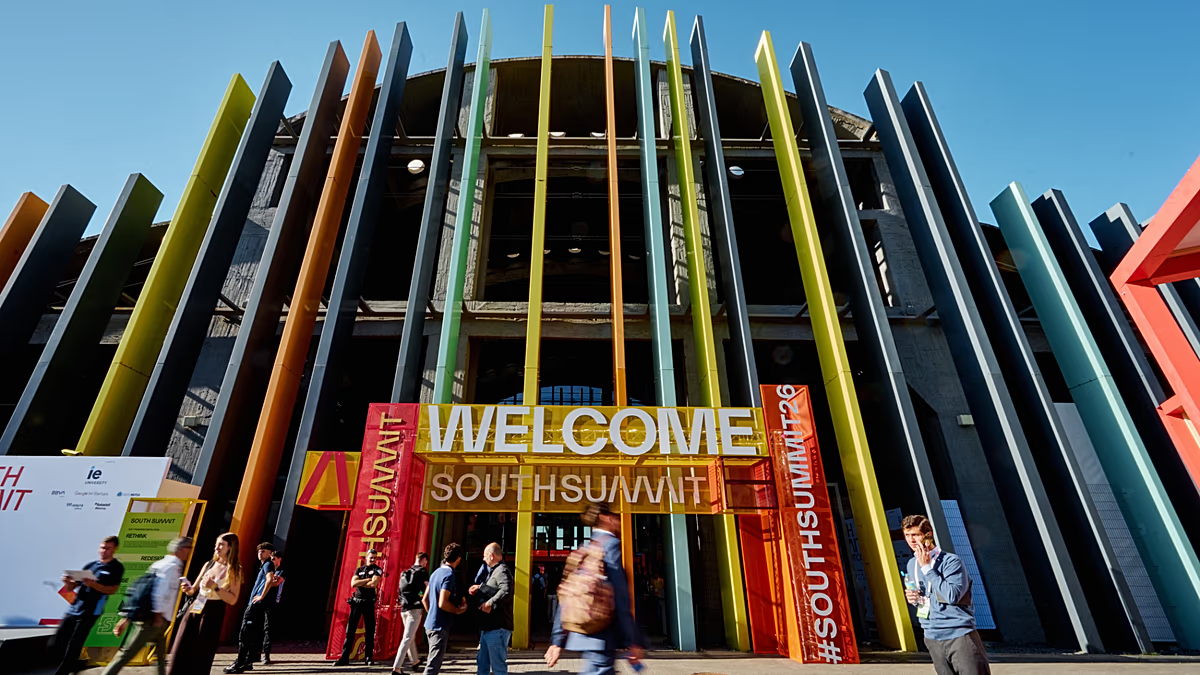
Far removed from the long-standing narrative of a competitive “space race,” a new chapter in cosmic exploration is being written in Central Eurasia. This week, more than 500 delegates from 32 nations convened in Uzbekistan for the fifth Central Eurasia Space Technology Conference (STC 2026). The gathering underscored a profound shift: space is no longer seen merely as a frontier for national prestige, but as a practical toolkit for regional cooperation. As the global space economy accelerates toward an estimated $1 trillion by 2030, countries across this region are aligning their ambitions. Their focus is on applying satellite technologies—Earth observation, communications, and geospatial data—to shared, terrestrial challenges that directly impact their citizens’ lives: securing food supplies, managing scarce water resources, monitoring environmental changes, and bridging digital divides.
Paragraph 2: National Ambitions Blossoming into Regional Infrastructure
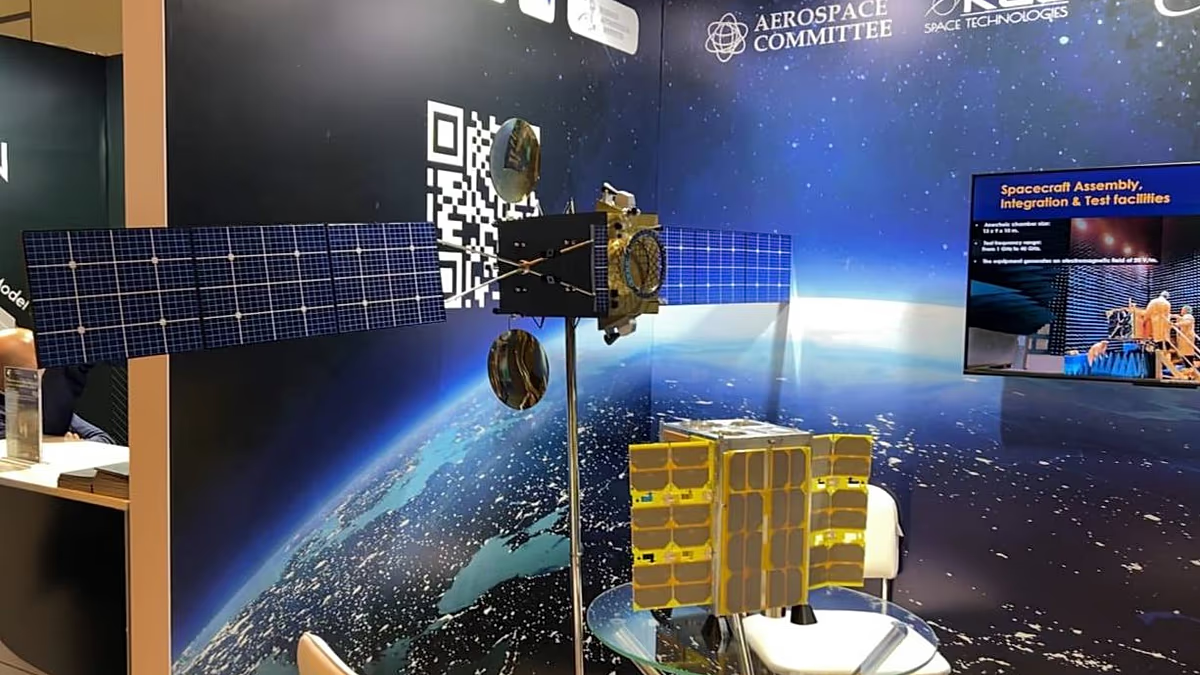
The conference served as a showcase for burgeoning national programs, revealing how individual ambitions are coalescing into potential regional infrastructure. Uzbekistan, through its agency UzCosmos, detailed its integration of satellite monitoring into agriculture, environmental protection, and geology. Having developed its space industry significantly over the past five years, the country now envisions hosting the prestigious International Astronautical Congress in 2028, launching its first astronaut, and building a national satellite constellation. Similarly, Kazakhstan is expanding its capabilities in Earth observation and communications, leveraging both its national institutions and the historic Baikonur Cosmodrome. Azerbaijan’s Azercosmos is strategically positioning itself as a regional hub for satellite connectivity, offering telecommunications services beyond its borders. Officials from across the region emphasized that true growth depends not just on launching satellites, but on weaving their data and services into the fabric of everyday sectors like farming, disaster response, and telecommunications.
Paragraph 3: The Crucial Foundation: Education and Capacity Building
Beyond hardware and launches, a unanimous theme emerged: the future of the region’s space sector is being built in classrooms and laboratories. Christian Feichtinger of the International Astronautical Federation lauded Uzbekistan’s progress, noting that hosting a major global congress would “create new partnerships, drive innovation and deepen integration into the global space ecosystem.” The human element was powerfully underscored by Turkey’s first astronaut, Alper Gezeravcı. After visiting local universities, he highlighted the inspiring focus on preparing young people. “These steps are essential if countries want to fully realise their potential in the space sector,” he noted. This commitment to education and long-term capacity building ensures that the region’s space journey is not a fleeting project, but a sustainable legacy for future generations of scientists, engineers, and innovators.
Paragraph 4: The Private Sector: Catalysts of Data and Innovation
The conference vividly illustrated that the modern space economy is no longer dominated solely by government agencies. A dynamic private sector is now a critical driver, providing the specialized data, infrastructure, and services that make space applications tangible. Companies like Planet Labs operate vast constellations of Earth-observation satellites, offering daily imagery that helps governments monitor crop health. Capella Space provides all-weather, day-and-night radar imagery, a vital tool for monitoring regardless of conditions. Hydrosat uses thermal imaging to detect water stress in crops—a technology of immense value for water-scarce regions like Central Asia. Meanwhile, Axiom Space is working to democratize access to space itself by developing commercial stations in low-Earth orbit. These companies represent the innovative edge translating orbital assets into actionable insights for farmers, water managers, and environmental planners.
Paragraph 5: Cooperation as the Central Orbit
The overarching narrative of STC 2026 was one of collaboration. Panels and bilateral meetings consistently focused on regional cooperation and commercial development as the preferred path forward. The spirit of the event was not about isolated national triumphs, but about interconnected progress. This is manifesting in concrete actions: joint projects between countries, shared data exchanges to monitor trans-border rivers or environmental disasters, and cross-border satellite services that enhance regional connectivity. Growth in the sector is increasingly measured not by the number of rockets launched, but by the effectiveness of its applications—improving communications for remote villages, providing early warning for droughts, or optimizing agricultural yields. Space is becoming a shared utility for the region.
Paragraph 6: A New Era for Central Eurasia: From Cosmos to Community
The conference in Uzbekistan ultimately marked a significant milestone for Central Eurasia. It provided a dedicated platform, as UzCosmos deputy director Muhiddin Ibragimov observed, where none existed before. The discussions there synthesized a clear vision: a future where the immense potential of space technology is harnessed pragmatically and cooperatively to improve lives and steward shared resources. By combining rising national programs, a focus on foundational education, the innovation of the private sector, and a steadfast commitment to regional partnership, Central Eurasia is carving out a distinct and influential role in the global space community. It is moving from viewing the cosmos as a distant arena of competition to treating it as a proximate tool for building a more resilient, connected, and sustainable community on Earth.