

A Renewed Partnership at a Critical Hour
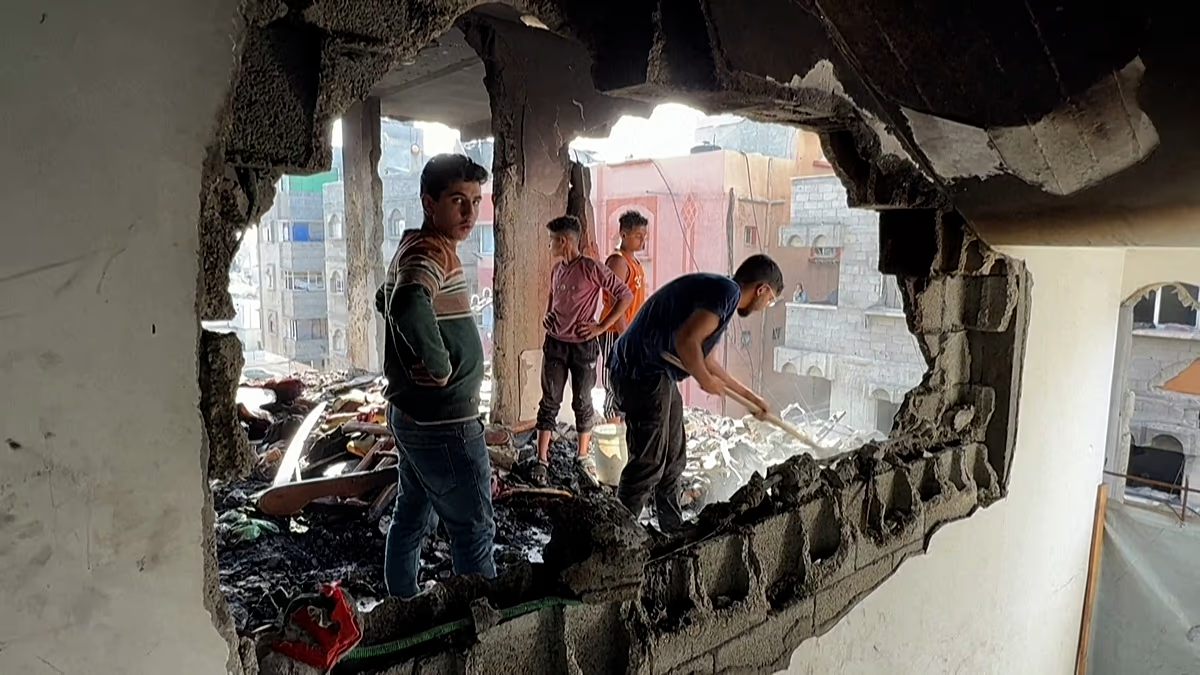
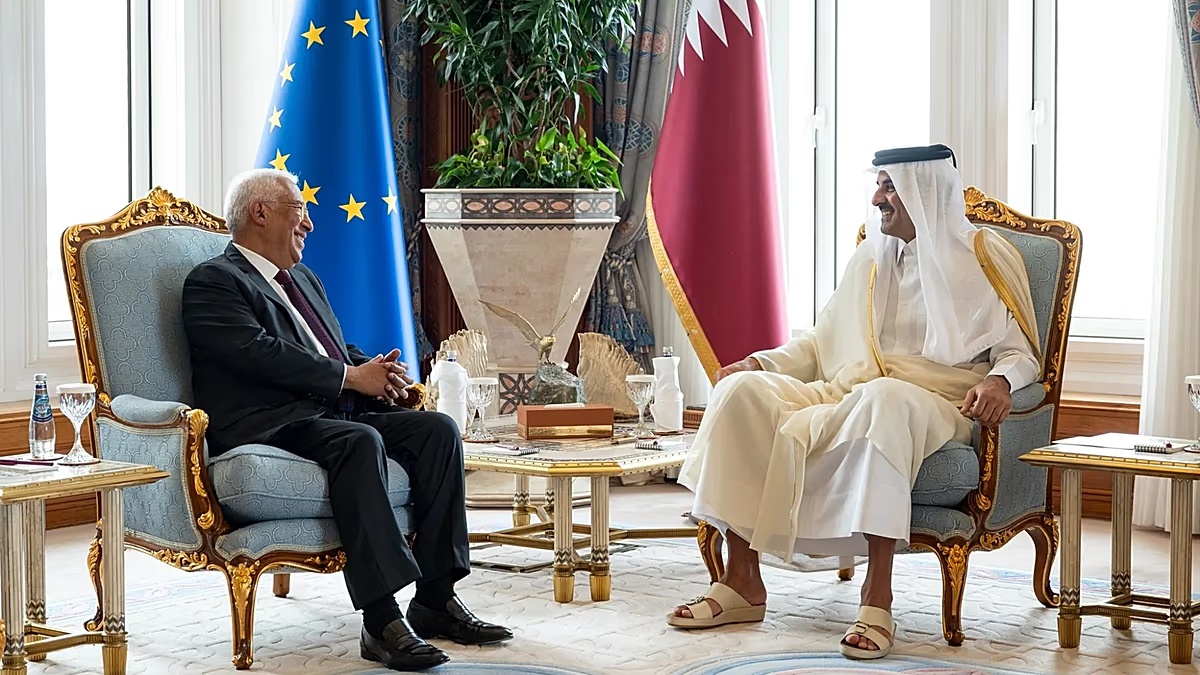
In the tense, sun-baked capitals of the Gulf, a message of solidarity and strategic realignment was delivered this week. European Council President Antonio Costa concluded a significant tour of Saudi Arabia, the United Arab Emirates, and Qatar, standing alongside regional leaders at what he termed “a critical moment.” The backdrop is one of acute regional fragility: a tentative ceasefire holds following Iran’s recent attacks, and the wider Middle East remains reshaped by conflict. Against this unstable canvas, Costa articulated a clear European vision: the era of distant or intermittent engagement is over. The European Union is now committed to forging a “deeper and stronger” bond with the Gulf Cooperation Council (GCC) states, moving beyond rhetoric to become what he called a “reliable and predictable partner.” This tour was not merely a diplomatic courtesy; it was the opening of an energised chapter, born from shared crisis and a mutual recognition that geopolitical storms necessitate sturdier alliances.
The Cement of Crisis: From Security to Citizenship
The urgency of this new chapter is rooted in concrete actions, not just words. Gulf leaders, particularly from the UAE and Qatar, openly acknowledged the EU’s tangible role during the recent hostilities. As one Qatari official poignantly noted, “this is the time when you know who your friends are.” This sentiment refers directly to Europe’s political and military response, which included the deployment of European fighter jets and other defence capabilities to help shield Gulf states from aerial attacks. This security solidarity forms a powerful foundation for trust. Furthermore, Costa pointedly thanked Gulf nations for their care and protection of the hundreds of thousands of European citizens living and working in the region—a human dimension that strengthens the societal bonds between the two regions. This reciprocal dynamic of protection, spanning both state security and individual safety, has created a unique momentum that both sides are eager to harness.
Blueprint for the Future: Trade, Summits, and Concrete Deliverables
Recognising this momentum, President Costa outlined a practical roadmap for the partnership’s future. The economic cornerstone will be advanced trade agreements, with negotiations actively underway with some GCC nations and strategic partnerships developing with others. To institutionalise this upgraded dialogue, Costa announced that a second EU-GCC summit will be convened in the region before year’s end. This forum is tasked with a specific, action-oriented goal: to “identify, build and have concrete deliverables.” The emphasis is on moving from general declarations of friendship to measurable projects and agreements. Whether in energy, technology, investment, or security cooperation, the intent is to build a partnership with visible outcomes. “More than ever, it’s very important that we achieve this,” Costa stressed, signalling that the EU’s long-term strategic orientation is now firmly pointed towards a more integrated and substantive collaboration with its Gulf partners.
Twin Imperatives: Ceasefire and Navigation
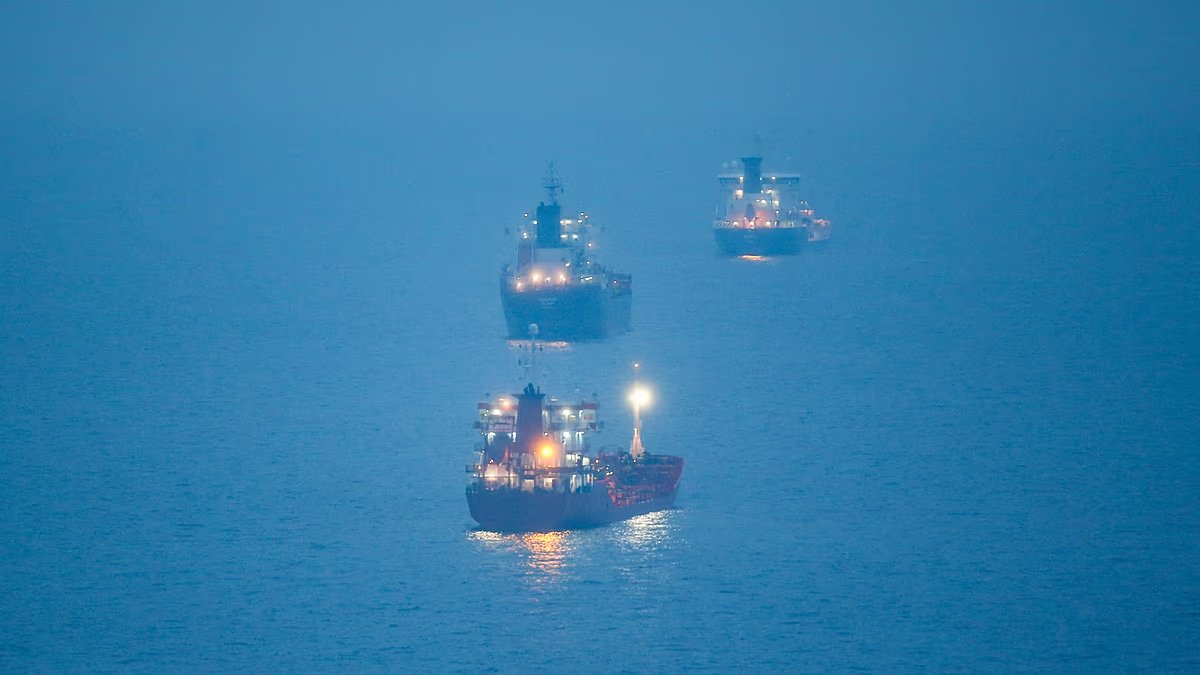
The immediate crises at hand provided the core agenda for Costa’s discussions. He framed the EU’s support around two urgent priorities vital for regional and global stability. The first is the imperative to transform the fragile current ceasefire into a “stable and lasting” one, which alone can pave a credible path toward sustainable peace. Costa urged all parties to leverage the momentum from recent diplomatic efforts, acknowledging that without this foundation, all other progress remains precarious. His second, equally critical priority is the restoration of safe and open maritime routes, specifically in the chokepoint of the Strait of Hormuz and the vital artery of the Red Sea. He warned that these waterways are “vital arteries for the global economy,” and their disruption has already inflicted disastrous worldwide consequences on supply chains and trade—a toll that will only worsen daily. Here, Europe is committing not just words but operational support, endorsing the international coalition led by France and the United Kingdom to guarantee safe passage for shipping.
Navigating Complex Threats and Acknowledging Key Mediators
In diagnosing the threats to these objectives, Costa presented a comprehensive EU perspective. The challenges are multifaceted, extending from Iran’s nuclear and ballistic missile programs to its support for proxy groups that destabilise neighbouring states, coupled with the aggressive disruption of international sea lanes. The interconnected nature of these threats demands a coordinated response. Importantly, Costa reserved specific praise for Qatar’s diplomatic role, hailing it as an “honest broker for peace and stability,” a reputation cemented during the Gaza war and ongoing ceasefire efforts. The EU explicitly relies on Doha’s continued mediation. This acknowledgment reflects a mature EU approach that values and leverages the unique diplomatic capacities within the GCC itself. Discussions with Qatar’s Emir also underscored the broader economic pillars of the relationship, focusing on energy market stability, trade, and investment as part of a long-term strategic partnership.
A Plea for Order and Sovereignty
Costa’s tour also connected the Gulf’s stability to the fragile situation in Lebanon. He commended Lebanese leadership for taking steps against Hezbollah’s military activities, which he described as a threat to Lebanon’s own sovereignty and regional security. The EU pledged continued support to empower the Lebanese state, framing the disarmament of such groups as the only sustainable solution for the country’s future. He called for the continuation of Israel-Lebanon talks, ultimately “for the sake of the people and for the prospect of peace.” Concluding his mission, Costa framed the entire endeavour within a larger philosophical struggle. “In these challenging times we need to uphold the international rules-based order,” he stated, “because the alternative is the chaos.” He linked the turmoil witnessed in Ukraine to that in the Gulf, arguing that a failure to defend shared principles of sovereignty, security, and open passage leads everywhere to destruction. His visit, following intense shuttle diplomacy by EU envoys, marks a decisive step in Europe’s endeavour to ensure its voice and partnership are integral to shaping the Gulf’s future—and, by extension, safeguarding global stability.