



Of course. Here is a humanized and expanded summary of the provided weather forecast, structured into six paragraphs.
As we navigate the latter half of April, the UK’s weather is presenting a classic tale of seasonal indecision, offering a bit of everything in its extended forecast. The Met Office’s latest outlook for the period spanning April 21st to the 30th paints a picture that begins with a welcome dose of springtime serenity before hinting at a surprising, if brief, return to wintry conditions. This isn’t the uniform grey drizzle often associated with British weather, but rather a story of distinct regional divides and atmospheric shifts, reminding us that the transition from winter to spring is rarely a straight line.
The week is expected to start on a largely pleasant note, thanks to a shield of high pressure settling to the north of the country. For many, this will translate to dry days graced with sunny spells, a chance to finally enjoy the outdoors without a constant companion of rainclouds. While central and eastern areas might see a few fleeting, scattered showers, the overall feeling, particularly further west, will be quite warm when the sun makes an appearance. However, a classic British quirk will persist along parts of the east coast, where a stubborn onshore breeze may keep temperatures noticeably chillier and usher in patches of low cloud—a reminder that local geography always writes its own subplot in the national forecast.
This stable opening act, however, is not set to last. Forecasters signal that by the weekend, around April 25th, the weather pattern is likely to become more unsettled. The confidence in the precise details at this range is admittedly low, a common caveat in longer-range forecasting, but several scenarios are on the table. The most striking possibility involves a shift in wind direction, pulling colder air down from the Arctic on a northerly flow. This change would mark a dramatic departure from the preceding mildness and introduce the potential for “wintry showers.”
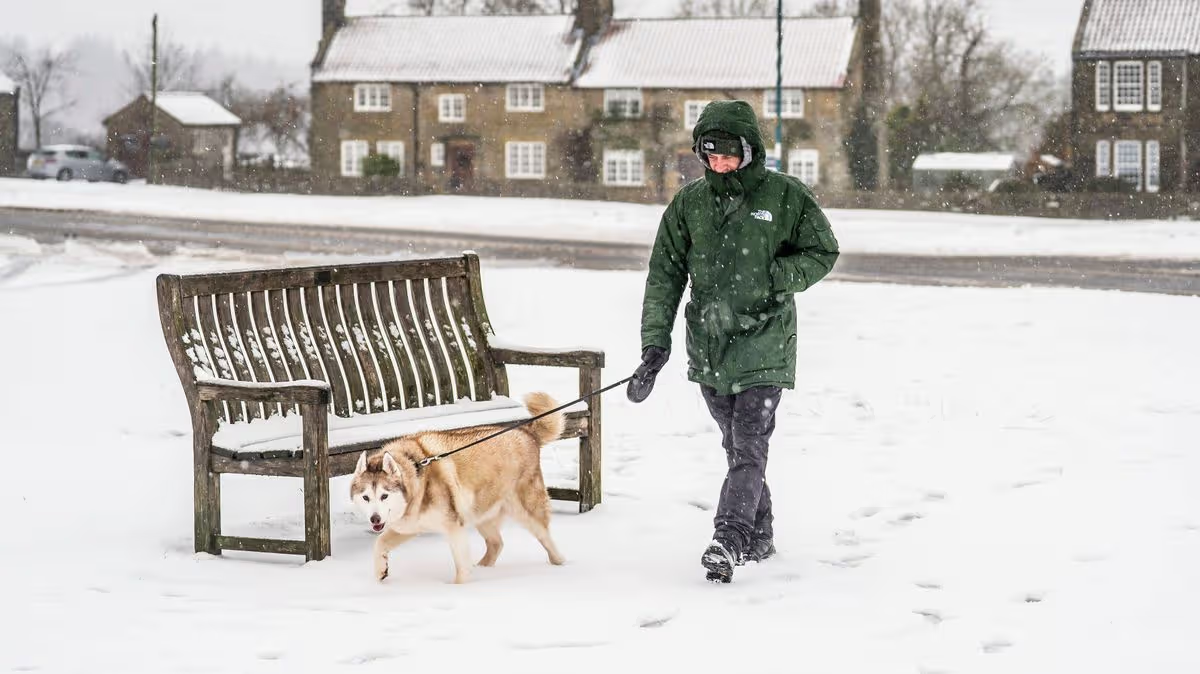
Should this colder scenario unfold, the impacts would be felt most acutely in specific regions. The Met Office highlights northern and eastern coasts as particularly susceptible to these wintry showers—a mix of rain, hail, and sleet. More notably, the forecast explicitly raises the possibility of snow accumulating over the Scottish mountains, a sight more typical of the deep winter months than late April. It’s a prospect that underscores how elevation and latitude can create microclimates vastly different from the conditions experienced just a few dozen miles away. This wintry interlude, however, is not projected to be a prolonged affair, likely lasting no more than a few days if it materializes at all.
This narrative of a potential late-season chill is echoed by other forecasters, adding weight to the possibility. The BBC’s outlook for the week similarly suggests a fine, warm start under high pressure, potentially warmer than average, before a shift around midweek. They too note the risk of a north-westerly airflow bringing cooler conditions and bands of rain, with a specific mention of “wintry showers over the Highlands” in the latter half of the week. This consensus between major forecasting bodies highlights that the models are indeed pointing toward a period of cooler, more volatile weather trying to muscle in after a benign start.
Ultimately, the forecast for the end of April encapsulates the dynamic and often unpredictable nature of British spring weather. It’s a period where you might need sunscreen and a winter coat in the same week, where mountain peaks wear a fresh dusting of snow while valleys below enjoy spring blossoms. The key takeaway is one of transition and regional variation: enjoy the promised sunshine and warmth where it appears, but stay aware that the atmosphere hasn’t quite settled into its summer rhythm. As the month draws to a close, the battle between the lingering chill of winter and the strengthening sun of spring continues to play out across our skies.