



The British dining scene has lost one of its most distinctive and raucous voices. After 17 years of serving up famously messy burgers in atmospheres of deliberate, gritty decadence, the London-based chain MEATliquor has officially entered administration. This move, confirmed by a notice in The Gazette, delivers a significant blow not just to its legions of devoted fans, but serves as a stark symbol of the immense and escalating pressures facing the UK’s restaurant industry. The chain’s operator, Meatalier, has been forced into this position by a perfect storm of rising operational costs, with soaring energy prices cited as a particularly acute burden. This administration follows a series of retrenchments last month, which saw the closure of five of its eight remaining London locations, leaving just a trio of outposts—two MEATliquor branches in Oxford Circus and East Dulwich, and its sister sports bar, BLOODsports in Covent Garden—to carry the flame, for now.
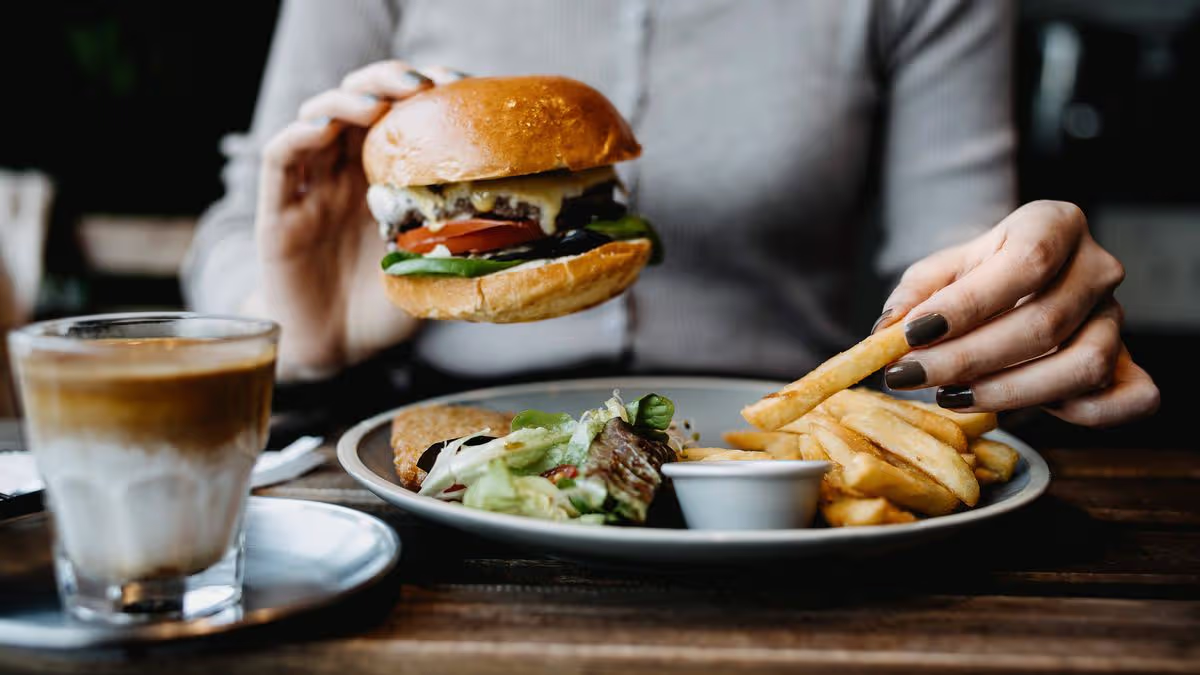
The story of MEATliquor is a classic tale of London culinary ascendancy. It began not in a polished restaurant, but with the legendary MEATwagon, a greasy burger van run by founders Yianni Papoutsis and Scott Collins in 2009. Their offering was a deliberate, glorious rebellion against the sanitized dining trends of the time: colossal, sloppy burgers, drippy fries, and potent cocktails, served with a side of loud rock music and irreverent attitude. This ethos translated spectacularly to its first permanent site in 2011, near Oxford Street, which captured the imagination of a city hungry for authenticity and bold flavor. At its peak, the brand boasted 13 branches, including 12 across the UK and even an international outpost in Singapore, growing from a cult phenomenon into a cornerstone of the capital’s casual dining landscape.
Founder Scott Collins had been sounding the alarm for some time, offering a candid diagnosis of the ailments afflicting not just his business, but the sector at large. He recently outlined a brutal list of challenges: “On top of VAT, rates, beef and energy costs, we’ve now got a new war creating uncertainty and more Tube strikes to deal with.” His statement highlighted the multifaceted crisis facing hospitality—a relentless pincer movement of fixed costs like business rates and VAT, volatile supply prices for key ingredients like beef, and the unpredictable external shocks of geopolitics and transport disruption. Collins framed MEATliquor’s pre-emptive restructuring as an attempt to “get ahead of things before we’re forced to,” a stark admission that for many restaurants, simply weathering the storm is no longer a viable strategy.
The administration of MEATliquor is far from an isolated incident; it is a prominent casualty in a wider economic pattern squeezing businesses both large and small. This is vividly illustrated by the simultaneous plight of London-based Cargiant, once one of Britain’s busiest used car supermarkets, which is also preparing to shut its doors for good. The parallel is telling: a major retailer, sitting on a 50-acre site estimated to be worth £100 million, has likewise been forced to close after owners failed to secure a viable future or find a buyer. These concurrent collapses, in vastly different sectors, point to a common underlying strain of high operational costs, difficult post-pandemic recoveries, and shifting consumer behaviors that are making large-scale physical retail and hospitality increasingly precarious ventures.
For its fans, MEATliquor’s decline represents more than just another restaurant closure. It signifies the potential erosion of a certain kind of cultural vibrancy in British cities. The chain was never just about food; it was about experience—a deliberately dark, loud, and unapologetic escape. Its signature aesthetic of neon signs, graffiti-style murals, and throbbing music created a uniquely immersive environment that defined a era of London dining. The loss of such venues diminishes the diverse character of the high street, often leaving behind a more homogenized and cautious commercial landscape. The spaces it occupied, much like the vast lot housing Cargiant, now enter a period of uncertain future, their fate subject to the pressures of redevelopment and a changing urban economy.
Ultimately, the story of MEATliquor’s rise and fall encapsulates a broader narrative about the fragility of success in the modern economy. It is a cautionary tale of how a business born from passion and counter-culture cool can scale up, capture the zeitgeist, and still find itself vulnerable to macroeconomic forces beyond its control. Its journey from a single burger van to a multinational chain and back to a diminished presence underscores the relentless challenges of rent, rates, supply chains, and energy that now define the battle for survival on the UK’s high streets. While its three remaining sites fight on under administration, the chain’s contraction serves as a sobering reminder of the pressures suffocating the hospitality industry and the very real cost of losing the vibrant, independent-spirited businesses that give a city its soul.