



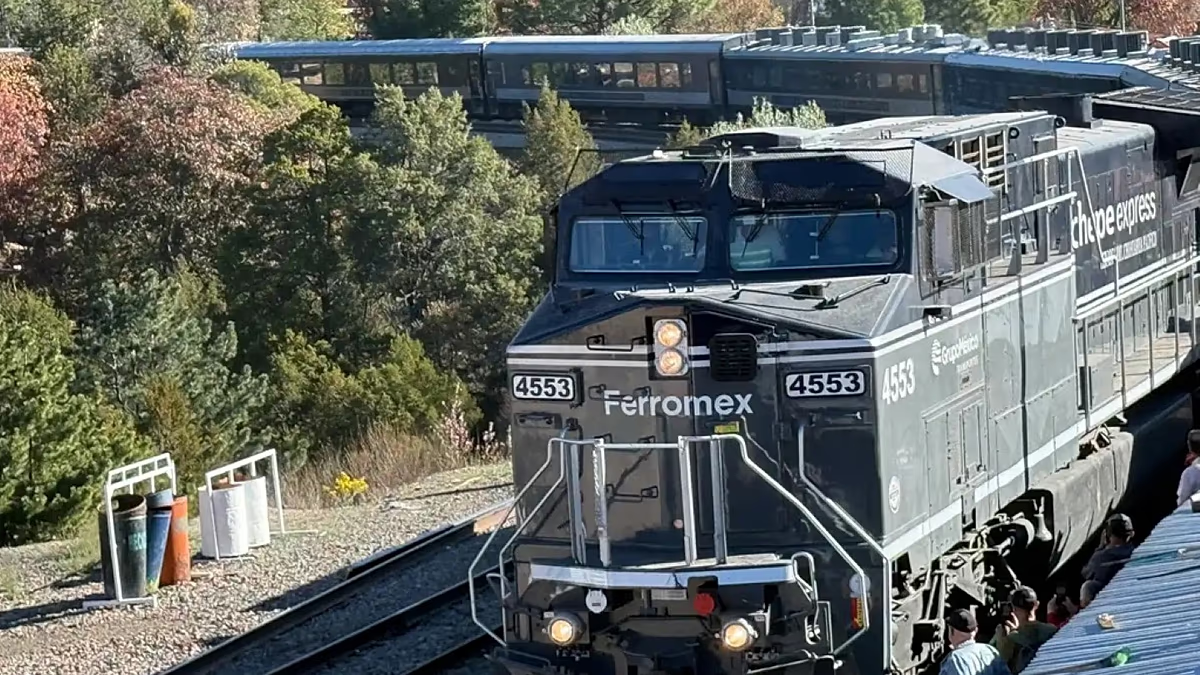
Of all the ways to experience the vast and varied landscapes of Chihuahua, Mexico’s largest state, few are as immersive or astonishing as a journey aboard the Chepe Express. This isn’t merely a mode of transport; it is a moving theatre where the drama of northern Mexico unfolds outside your window. Over the course of its 350-kilometer, roughly ten-hour route, the train performs a grand geological symphony, carrying passengers from the cool, pine-scented highlands of the Sierra Madre Occidental at nearly 2,400 meters above sea level, down to the warm, sun-baked valleys near the Pacific coast at just 25 meters. Connecting the mountain town of Creel with the coastal city of Los Mochis, the train stitches together worlds that feel continents apart, offering a lesson in geographical wonder that is both profound and accessible.
The heart of this journey, both literally and figuratively, is the Copper Canyon region. A stop at Divisadero provides a breathtaking interlude, a natural balcony over a canyon system so vast it dwarfs the famous Grand Canyon. Here, the scale is humbling: an intricate network of up to six canyons carved over millennia. But this is more than a passive viewpoint. It has evolved into a hub for the adventurous spirit, home to the Barrancas del Cobre Park. For those seeking a rush of adrenaline, the park offers everything from the world’s second-longest zip line to vertigo-inducing cable cars and challenging via ferrata routes. Nearby, in Creel, the adventure continues across landscapes that feel plucked from a dream, like the Valley of the Monks, where quad bikes navigate between towering, monk-like rock sentinels shaped by endless wind and water.
Yet, the true soul of this rugged Sierra is not found in the rock itself, but in the people who have called it home for centuries: the Rarámuri, known to many as the Tarahumara. Their enduring presence is the cultural bedrock of the journey. Renowned for their incredible long-distance running prowess and a deeply spiritual connection to the land, the Rarámuri maintain a traditional, often self-sufficient lifestyle in scattered communities. Their lives are a testament to resilience, a fact embodied by individuals like Azucena, who, with her family, takes turns living in a cave dug into the mountainside, preserving a way of life passed down from generations. Throughout the trip, their vibrant, colourful skirts become flashes of cultural continuity against the stark landscape, whether they are guiding hikers like young Felicitas along secret trails or offering beautifully woven baskets at train stops—authentic souvenirs carrying the memory of skilled hands.
This seamless blend of natural grandeur and living culture creates an experience that leaves a deep impression on all who travel the rails. Passengers from around the globe, like Katya from Germany or Laura and Uri from Spain, consistently remark on the unforgettable contrasts—scenes shifting from alpine forests to subtropical valleys to arid deserts in a matter of hours, a cinematic spectacle unmatched in Europe. As Mauricio Navarro, the train’s assistant manager, notes, this dramatic change in altitude and ecosystem is what sets the Chepe Express apart. It is a journey deeply connected to what he calls “the real Mexico,” offering not just a view, but an understanding. Spanish photographer Ignacio Izquierdo, returning for a second time, affirms that the train is essential for knowing the authentic, layered heart of the country.
The marvel of the journey is also a feat of human ingenuity. The Chepe Express navigates this challenging terrain by passing through 86 tunnels and crossing 37 bridges, including one soaring 105 meters high. Within the carriages, the experience is one of refined comfort, a stark and pleasant contrast to the wilds outside. With classes ranging from tourist to first, the train caters to various preferences, culminating in luxury offerings like panoramic observation cars with bars and a stunning 360-degree dining dome where the landscape becomes part of every meal. Many travelers choose to extend their adventure by stopping at El Fuerte, a designated “Pueblo Mágico” brimming with colonial history and charm, before the final arrival in Los Mochis, the gateway to the Pacific coast.
In the end, the Chepe Express transcends the definition of a train ride. It is a pilgrimage through profound diversity—of earth, climate, culture, and spirit. It is a narrative journey that climbs mountains, delves into canyons, and traverses the stories of people whose traditions remain steadfast against the tide of time. From the adrenaline peaks of Divisadero to the quiet dignity of the Rarámuri, from engineering triumphs to culinary delights under a glass dome, the journey offers a complete, resonant portrait of a region. It proves that the most memorable voyages are those that move not only through space but through the very essence of a place, leaving passengers with a renewed sense of connection to the magnificent tapestry of northern Mexico.