

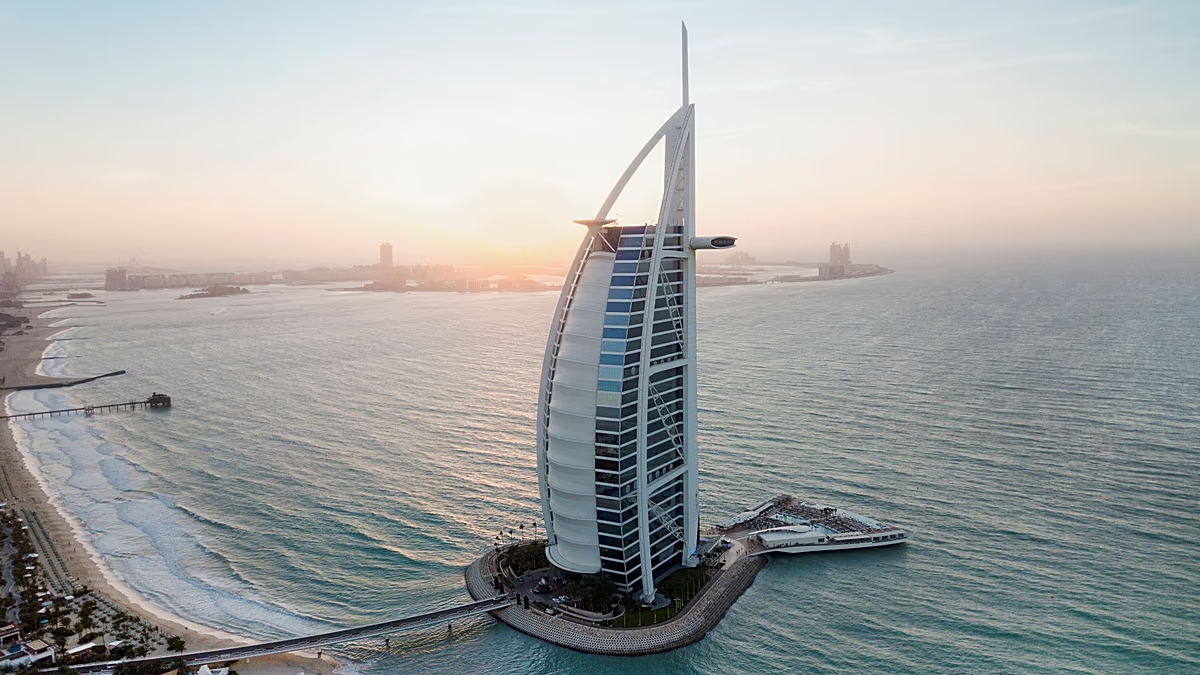
For over a quarter of a century, the sail-shaped silhouette of the Burj Al Arab has been the undisputed symbol of Dubai’s audacious leap onto the world stage. More than just a hotel, it is a global icon, its image reproduced endlessly on souvenirs and postcards, standing as a proud precursor to the even taller Burj Khalifa. Since its debut in 1999, it transformed a modest coastline into a beacon of ultra-luxury and architectural daring, a solitary marvel in what was then a relatively low-rise city. Now, in a historic move, this legendary property is preparing for its first-ever full closure, embarking on an extensive 18-month restoration to ensure its legacy endures for decades to come.
The scale of this refurbishment matches the hotel’s original grandeur. Jumeirah, the Dubai-based group that owns the hotel, has entrusted the monumental task to acclaimed interior architect Tristan Auer, whose portfolio includes legendary Parisian establishments like Hôtel de Crillon. His mission is not to reinvent, but to meticulously preserve and enhance what CEO Thomas B. Meier calls “a work of art.” The building’s staggering interiors—adorned with tens of thousands of Swarovski crystals, vast quantities of precious Statuario marble, and nearly 1,800 square meters of 24-carat gold leaf—will be treated with the care of conservators. This project marks a pivotal new chapter, aiming to solidify the Burj Al Arab’s status as the crown jewel in Jumeirah’s collection of iconic landmark addresses.
The timing of this announcement follows a startling event that underscored the hotel’s prominence on the global stage. In early March, debris from an intercepted drone caused minor damage to its facade, a stark reminder that even this bastion of luxury is not entirely insulated from wider regional events. Yet, this incident only highlights its symbolic weight; the Burj Al Arab is not just a building but a canvas upon which Dubai’s narrative is written, reflecting both its aspirations and its realities. The restoration will now also address this damage, reaffirming the commitment to maintaining its pristine, otherworldly presence on the Jumeirah coastline.
To understand why this restoration is so significant, one must appreciate why the Burj Al Arab became so famous. Upon its opening, it single-handedly redefined luxury hospitality. Its impact was so profound that an awestruck journalist famously suggested it deserved a “seven-star” rating, a myth that has clung to its reputation ever since. Its fame stems from a flawless fusion of staggering architecture and unparalleled, highly personalized service. Each of its 198 duplex suites is assigned a dedicated butler, and guests can traverse the city in a chauffeured Rolls-Royce from the hotel’s fleet. Within its walls lie some of Dubai’s most celebrated culinary experiences, from the Michelin-starred sky-high restaurant Al Muntaha to the awe-inspiring Al Mahara, where diners are surrounded by a mesmerizing floor-to-ceiling aquarium.
Beyond its daily opulence, the Burj Al Arab has consistently captured the world’s imagination through breathtaking spectacles staged on its vertigo-inducing helipad, 210 meters above the ground. This tiny platform has been the scene of legendary stunts: tennis legends Roger Federer and Andre Agassi batted balls over the precipice in 2005, Formula 1 driver David Coulthard performed dizzying donuts in 2013, and just last year, pilot Luke Czepiela executed a daredevil aircraft landing on its mere 27-meter diameter. These moments transcend marketing; they cement the hotel’s identity as a stage for the impossible, a place where fantasy and engineering collide against the backdrop of the Arabian Gulf.
As the Burj Al Arab prepares for its temporary hiatus, it does so not from a position of fading glory, but from one of confident evolution. In a city now crowded with architectural wonders like the Museum of the Future and the Dubai Frame, the original “Sail of Dubai” maintains a unique emotional hold. This restoration is a promise—a commitment to preserving the heritage of a property that first taught the world to associate Dubai with visionary ambition and limitless luxury. When its doors reopen, the iconic sail will gleam anew, carefully preserved yet refreshed, ready to write its next extraordinary chapter in the story of a constantly evolving city.