


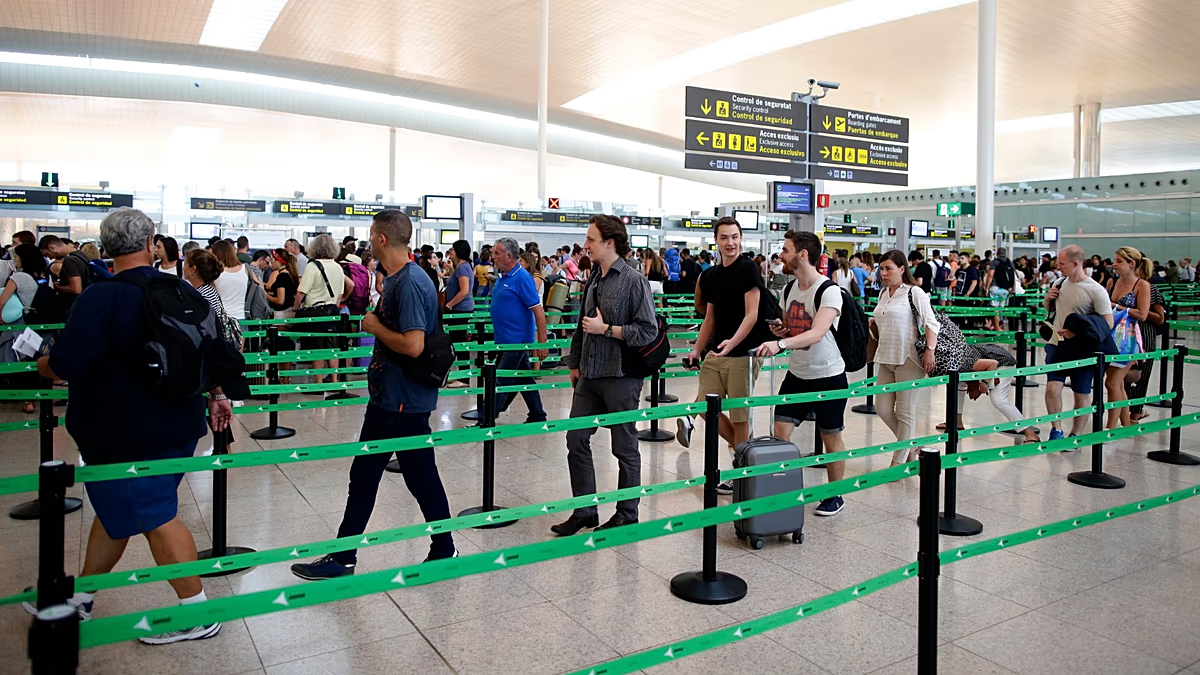
The European Union’s ambitious new border control system, the Entry/Exit System (EES), has stumbled dramatically at the starting line, transforming airport terminals into scenes of frustration and missed connections. After multiple delays, the system went fully live across 29 Schengen Area countries on Friday, April 10th, 2026, marking a significant technological shift in how non-EU visitors are processed. Designed to replace the old manual passport stamps, the EES digitally records entries, exits, and any refusals, while also collecting biometric data like fingerprints and facial images from travellers on short stays. The goal is a more secure and efficient external border. However, the reality of its first operational weekend was one of severe disruption, with queues snaking for up to three hours, flights departing with empty seats, and industry groups declaring a state of “chaos” that went far beyond mere teething problems.
The scale of the disruption was severe and immediate. Industry bodies ACI EUROPE, representing airports, and Airlines for Europe (A4E), had warned for weeks about potential operational challenges, and their fears were swiftly confirmed. In a joint statement, they reported that the first day was “marked by passenger disruptions, delays and missed flights.” A4E followed with even stronger criticism, dismissing the three-hour waits as not a simple glitch but a “systemic failure.” They pointed out the profound frustration for both travellers and airlines: carriers work meticulously to maintain punctuality, only to see their efforts undone by border control delays entirely outside their control. The groups issued an urgent plea to the European Commission and national governments, calling for “immediate additional flexibility” in how the system is operated to prevent the situation from becoming the new normal for European travel.
The human cost of this systemic failure was starkly illustrated by individual stories of travel plans in tatters. One of the most telling incidents occurred at Milan’s Linate Airport, where an Easyjet flight to Manchester, UK, became a symbol of the weekend’s chaos. Of the 156 passengers booked on the flight, only 34 managed to navigate the exhaustive border queues in time. The remaining 122 were left stranded on the ground, forced to watch their plane depart without them. The financial and emotional toll was significant; one stranded family, desperate to get home, spent over £1,600 on last-minute tickets for a convoluted journey via Luxembourg, arriving a full day late. In response to such scenes, Easyjet labelled the border delays “unacceptable,” publicly urging authorities to utilize all available flexibilities to ease the burden on travellers, while apologizing for the immense inconvenience suffered by their customers.
Faced with the operational meltdown, the airline industry is advocating for a drastic pause. A4E has argued that the current situation cannot persist, especially with the crucial summer travel season on the horizon. They assert that while airlines support the EES’s security objectives, these “must not mean persistent and recurring travel disruptions.” Their proposed solution is clear and urgent: a temporary suspension of the system. They have called on the European Commission to allow for the “full and partial suspension of EES until the end of summer, where necessary.” This request underscores a belief that the infrastructure and processes are simply not ready for prime time and that forcing them through the peak travel period would be disastrous for the continent’s aviation sector and its international reputation for connectivity.
The core of the problem lies in the transition from a relatively quick passport stamp to a more involved biometric registration process. While the latter is more secure, it takes considerably longer per passenger. Even with advance warnings for travellers to arrive extra early, the processing capacity at many airport borders appears to have been overwhelmed. The call for “flexibility” from industry groups likely refers to measures such as temporarily reverting to manual checks during peak periods, increasing staffing levels dramatically, or fast-tracking certain passenger categories to prevent bottlenecks. The incident highlights a significant gap between the policy’s design and its practical, on-the-ground implementation, raising questions about whether sufficient resources and contingency planning were allocated for this monumental change in border management.
As the dust settles on a chaotic weekend, the European Commission and member states face a critical test. The Entry/Exit System represents a long-planned cornerstone of the EU’s digital border strategy, but its credibility has been damaged at the outset. The coming days and weeks will determine whether this was a painful but short-lived transition phase or the symptom of a deeper flaw. Authorities must now balance the imperative of border security with the practical necessity of keeping people moving. The travel industry and millions of passengers will be watching closely to see if lessons are learned swiftly, and if the promised “smart borders” can become efficient rather than obstructive. The success of this high-tech system now depends on low-tech solutions: better planning, more staff, and pragmatic adjustments to ensure that the gates to Europe remain open without imposing hours of waiting as a new entry requirement.