




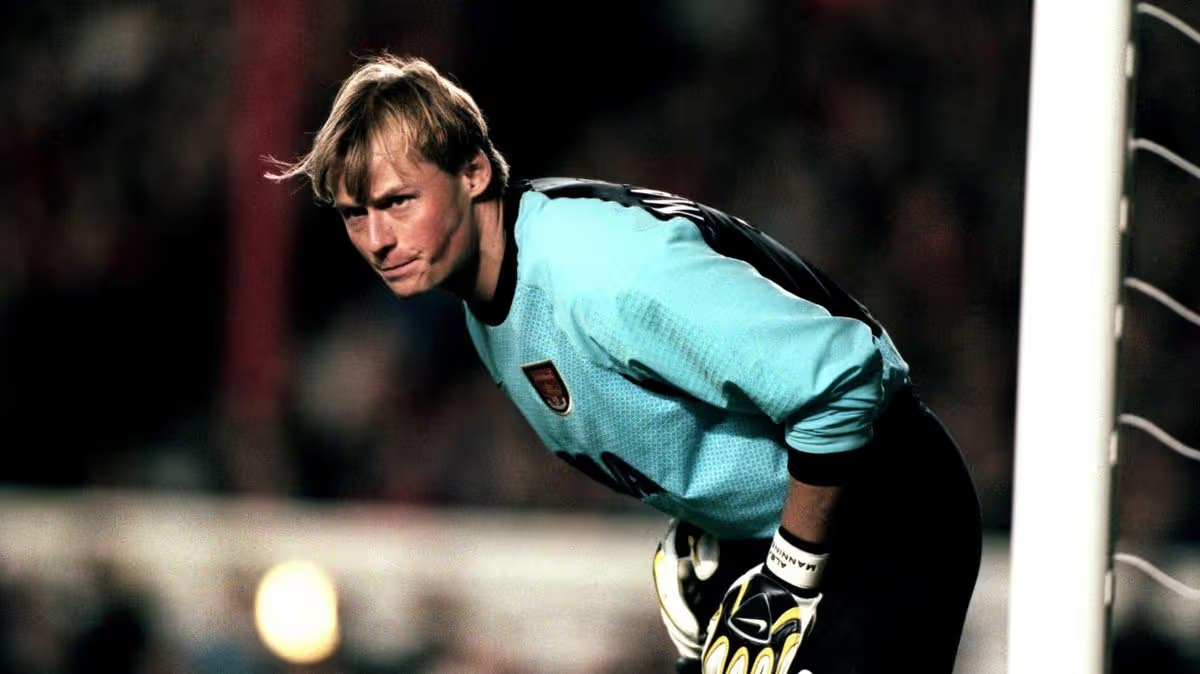
The football world is united in profound grief following the tragic death of former Arsenal and Liverpool goalkeeper Alex Manninger. The Austrian Football Association confirmed the devastating news that the 48-year-old lost his life after his car was involved in a collision with a train in his hometown of Salzburg. This sudden and shocking event has sent waves of sorrow across the sport, cutting short the life of a man remembered not just for his career between the posts, but as a dedicated professional and a beloved figure. The Austrian FA’s statement captured the collective sense of loss, noting that “football loses a special person,” and extended its deepest condolences to his family and friends, a sentiment echoed universally.
Alex Manninger’s name is perhaps most indelibly linked with Arsenal, where he enjoyed a significant and successful period between 1997 and 2001. Making 64 appearances for the Gunners, he served as a highly capable understudy to the legendary David Seaman and played a crucial role in the historic 1997-98 double-winning campaign, including a notable run of six consecutive clean sheets. The club’s heartfelt tribute expressed how “shocked and deeply saddened” everyone at Arsenal was by his tragic passing. For fans of that era, Manninger represented a reliable and talented figure, part of the fabric of a golden period, and his contribution to the club’s history is remembered with great respect and affection.
His career was a testament to longevity and a wandering football spirit, spanning over two decades and including prestigious clubs across Europe. After his time in North London, he featured for clubs in Italy, Spain, and Germany, including Juventus and Fiorentina, before returning to his roots with Red Bull Salzburg. He concluded his playing days in the Premier League with Liverpool in the 2016-17 season, brought in as an experienced deputy. While he did not make a competitive appearance, Liverpool FC paid tribute to his professionalism during his year at Anfield. This varied journey painted the picture of a respected journeyman, whose experience and knowledge were valued in dressing rooms from Turin to Augsburg.
Beyond his club career, Manninger was a stalwart for his national team, earning 33 caps for Austria and representing his country with pride. Austrian Football Association Sporting Director Peter Schöttel honored him as “an outstanding ambassador for Austrian football,” whose professionalism and composure set standards for aspiring goalkeepers. His legacy in his homeland is one of inspiration and reliability. The tributes from Austrian clubs, including RB Salzburg and SV Austria Salzburg, underscored the deep local sorrow, mourning the loss of one of their own in the most tragic of circumstances.
The outpouring of respect following the news highlights the high regard in which Manninger was held throughout the football community. Rival clubs like Manchester United and Tottenham Hotspur set aside competition to offer sincere condolences to his family and loved ones. This collective mourning transcends club allegiances, revealing the tight-knit fabric of the football family in moments of profound loss. It is a poignant reminder that, above the rivalry and passion of the sport, there lies a fundamental shared humanity and compassion for those who have been part of its story.
Alex Manninger’s passing at just 48 years old is a heartbreaking reminder of life’s fragility. He is remembered not as a distant sports star, but as a son of Salzburg, a dedicated teammate, a national servant, and a family man. The memories he leaves are those of a skilled goalkeeper who reached the pinnacle of the English game, a resilient professional who adapted to leagues across Europe, and, according to all who knew him, a kind and special person. As the football world comes to terms with this tragedy, the thoughts of millions are with his family and friends. His story, tragically cut short, will be remembered with respect and sorrow. Rest in peace, Alex.