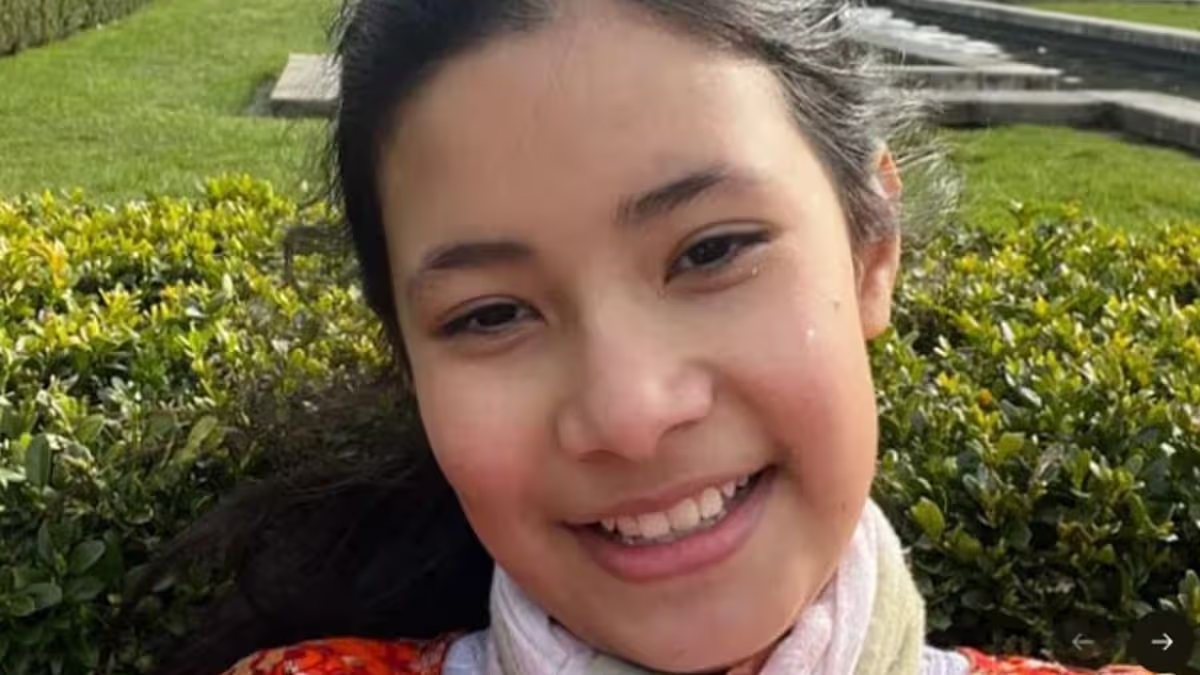

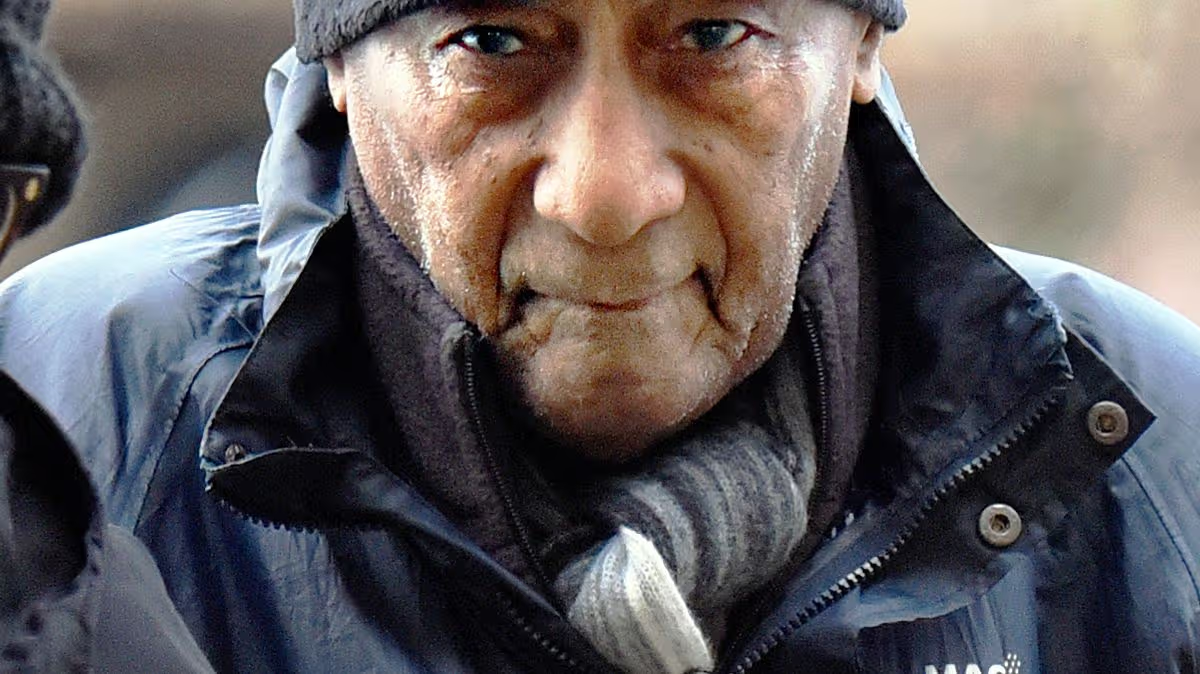



The tragic and brutal death of five-week-old Darcy-Leigh Jefferson represents a profound and devastating failure of the most fundamental human duty: the protection of a helpless child by her parents. In a case that has rightfully shocked the conscience of the public, her father, Sean Jefferson, has been sentenced to life imprisonment with a minimum term of 22 years for her murder. Her mother, Amy Clark, received a seven-year prison sentence for causing or allowing her daughter’s death. The details that emerged during the nearly two-month trial at Stafford Crown Court paint a harrowing picture of repeated violence and profound neglect, set against a backdrop of substance abuse and domestic strife. Darcy-Leigh, born five weeks premature, endured a short life marked not by the care and tenderness she deserved, but by unimaginable suffering, culminating in a catastrophic brain injury on Mother’s Day, 27 March 2022, from which she died two days later.
The sheer scale of violence inflicted upon this infant is almost incomprehensible. Medical evidence presented to the court revealed that by the time of her fatal collapse at the family home in Burntwood, Staffordshire, Darcy-Leigh had sustained a total of 47 rib fractures. Her tiny body also bore injuries to her head and legs, the result of what prosecutors described as repeated physical assaults involving violent shaking or her head being slammed against a surface. This was not a single, tragic loss of control, but a pattern of brutal abuse. While Sean Jefferson was directly convicted of the murder and of two counts of causing grievous bodily harm with intent, Amy Clark’s role, as determined by the court, was one of catastrophic omission. Judge Mrs Justice Brunner noted that Clark, immersed in a chaotic life of alcohol and cocaine abuse which continued through pregnancy and after birth, had failed in her duty to protect her daughter from the risk Jefferson posed, a failure exacerbated by her intoxication.
The dynamics between the parents, revealed through text messages and trial testimony, expose an environment utterly unfit for a newborn. In the lead-up to the tragedy, Clark had messaged Jefferson expressing her exhaustion and his failure to support her. His chilling response was to threaten to “put you 6ft underground” if she harmed the baby through drinking. This exchange highlights a relationship marred by hostility and a shared abdication of responsibility. Both parents were using drugs throughout Darcy-Leigh’s brief life, and neither chose to give evidence in their own defence. Their silence in court stands in stark contrast to the compelling case built by the Crown Prosecution Service, which used witness testimony, phone records, and definitive medical evidence to hold them accountable. As Paul Reid from the CPS stated, Darcy-Leigh was a “defenceless baby who was betrayed by the two people in the world who should have loved and cared for her the most.”
In her sentencing remarks, Judge Mrs Justice Brunner articulated the profound loss inflicted by this crime. She told Jefferson that he had deprived Darcy-Leigh of a long life filled with love and the pleasure of being known by her family, including her brother. To Clark, the judge underscored how her substance abuse blinded her to the danger her partner posed. The police investigation lead, Detective Chief Inspector Ian Fitzgerald, branded their actions an “appalling betrayal of parental responsibility,” a sentiment that resonates deeply. While Jefferson faces decades behind bars, the judge and investigators acknowledged that no prison sentence could ever truly reflect the cruelty inflicted or repair the devastation left in the wake of Darcy-Leigh’s death.
This case inevitably raises urgent questions about the wider safety net meant to protect vulnerable children. In the wake of the convictions, Staffordshire County Council confirmed that a review would be published, with Councillor Nick Lakin, responsible for children’s services, issuing a stark apology. He acknowledged that while changes have been made since Darcy-Leigh’s death, “more could and should have been done by those who had the opportunity to intervene.” This admission of a systemic “failure” to take decisive action points to missed opportunities that might have altered the course of events. The NSPCC echoed the critical need for any identified lessons to be acted upon swiftly to prevent future, similar tragedies. Every child’s death in such circumstances is a searing indictment, demanding rigorous scrutiny of how agencies identify and support at-risk infants.
Ultimately, the story of Darcy-Leigh Jefferson is one of unbearable sorrow and a stolen future. It is a grim reminder of the darkest potential of human failing, where addiction, violence, and neglect converge with fatal consequences. Her name joins a sadly familiar roster of children failed by those closest to them and, at times, by the systems designed to keep them safe. The pursuit of justice through the courts has concluded, but the work of learning from this tragedy to better shield other children is an ongoing and solemn obligation. Her memory must serve as a relentless catalyst for vigilance, intervention, and the unwavering prioritization of a child’s right to safety above all else.