


The recent ceasefire between the US and Iran, while a crucial diplomatic step, offers only a fleeting moment of relief for Europe’s strained energy landscape. The dramatic fall in oil prices following the announcement cannot erase the profound and lasting shockwaves sent through global markets by the conflict and the effective closure of the Strait of Hormuz. Described by the International Energy Agency as the largest oil supply disruption in history, the strikes on Gulf facilities have inflicted damage that will resonate for years, particularly in natural gas markets. For Europe, the paradox is acute: while only a small fraction of its oil and gas imports transit directly through the Strait, the bloc remains intensely vulnerable to the global price surges triggered by such a seismic event. As EU Energy Commissioner Dan Jørgensen starkly noted, a return to normal is not foreseeable even with peace, underscoring that the ceasefire is a beginning, not an end, to the continent’s energy crisis.
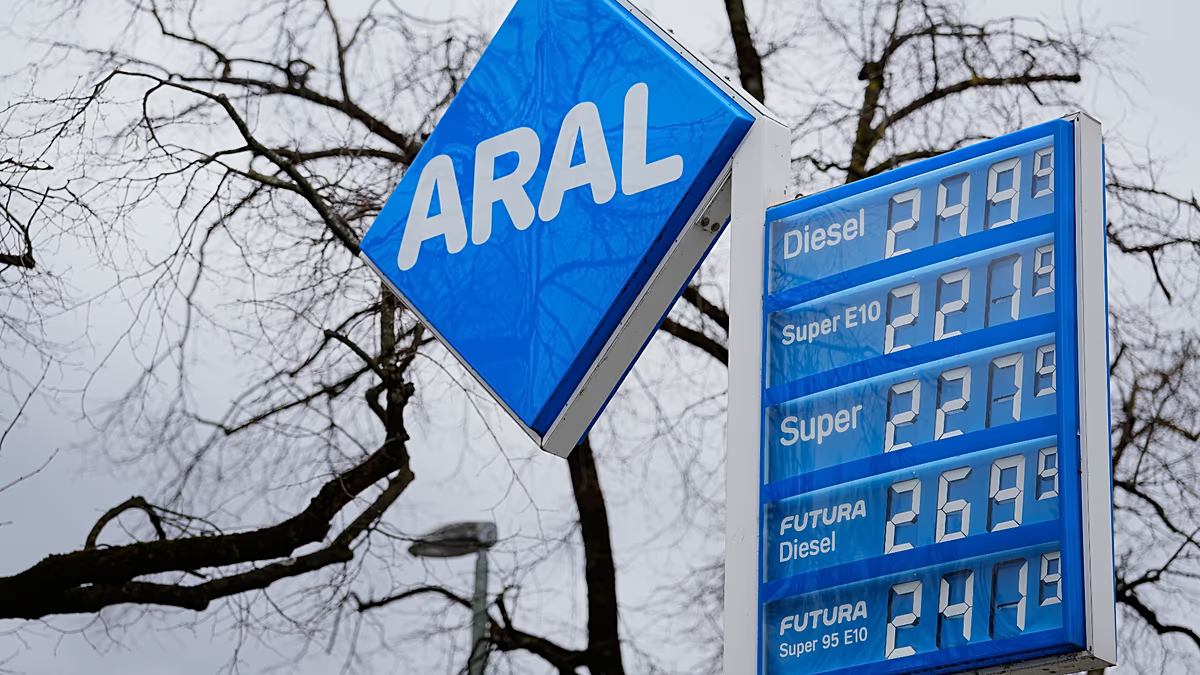
The mechanics of how global turmoil translates to European hardship are complex but unforgiving. The EU imports the vast majority of its oil, meaning the international benchmark price of Brent crude directly dictates its costs. Prices skyrocketed from the pre-war range of $72-73 per barrel to nearly $120 at their peak, only partially retreating after the ceasefire. The pain extends to electricity bills, as in many European countries power prices are set by the most expensive source of generation—often gas. Wholesale gas prices in Europe have followed a similarly volatile trajectory. While government interventions and fixed contracts can temporarily cushion consumers, the underlying pressure is immense. A weaker euro exacerbates the issue, as oil is traded in dollars, making imports more expensive. This pervasive pressure has prompted several EU nations to call for taxes on excess energy profits, a testament to the severe strain on both economies and households.
Merely reopening the Strait of Hormuz will not swiftly deflate these elevated prices. The disruption has been both physical and psychological, creating a potent mix of actual supply loss and a steep “risk premium” driven by fear and uncertainty. Critical shipping lanes have been paralyzed, with war-risk insurance premiums for vessels quadrupling and tanker freight rates hitting record levels. These costs are baked into the final price of every barrel. Furthermore, the IEA estimates that Gulf oil production was cut by at least 10 million barrels per day—a staggering 10% of global demand. Energy expert Andrei Covatariu emphasizes that this is not a “psychologically driven market” alone; there is substantial real damage to infrastructure and logistics networks that cannot be instantly undone. The ceasefire may calm nerves, but it does not repair pipelines or immediately restore confidence among shipowners and insurers.
Nowhere is the long-term impact more certain than in the natural gas market, where Europe’s predicament is particularly precarious. The conflict has struck at the heart of global Liquefied Natural Gas (LNG) supply, with production halts and blocked shipments through the Strait. A devastating blow was dealt to Qatar’s massive Ras Laffan LNG plant, with QatarEnergy declaring force majeure and warning that full recovery could take up to five years. Given that Europe sources about 8% of its LNG from Qatar and relies on LNG for roughly 40% of its total gas supply, this represents a structural reduction in available global supply. As ICIS specialist Ethan Tillcock explains, even with open waterways, Europe will face reduced physical availability from a key supplier. This sets the stage for intense competition with Asian buyers for remaining cargoes, creating a persistent upward pressure on prices that strategic reserves and short-term measures cannot fully offset.
Looking beyond the immediate ceasefire toward a potential peace deal, the path to lower energy bills for European consumers remains long and fraught. Markets reacted to the ceasefire with a sharp drop in benchmark prices, yet Brent crude remains significantly more expensive than it was before the conflict began. For gas, analysts like Covatariu suggest a new, higher price floor is likely, potentially above €40 per megawatt-hour, as Europe must compete to refill its storage facilities. The durability of any peace is paramount; a fragile deal that leaves underlying tensions unresolved will keep risk premiums embedded in prices. The physical repair of over 40 damaged energy assets across the Gulf region will be a matter of months and years, not weeks, maintaining tight supply conditions. Furthermore, the return of Iranian oil to the market, while a potential source of additional volume, hinges entirely on the specifics and stability of a final agreement.
In conclusion, while the ceasefire is a welcome de-escalation, Europe’s energy crisis has entered a new, more entrenched phase. The events of the past weeks have exposed and exacerbated deep fragilities in the continent’s energy system, particularly its dependence on volatile global LNG markets and its susceptibility to geopolitical shocks far from its borders. The immediate price spike may recede, but the structural damage to infrastructure and the lingering climate of uncertainty promise to keep prices elevated above historical norms for the foreseeable future. The coming months will be a critical test of Europe’s resilience, requiring careful management of storage, continued diversification of supplies, and a sober recognition that geopolitical instability now carries a direct and substantial cost to every consumer and business. The sigh of relief must wait for sustained peace, proven security of transit, and a long, complex period of physical and market recovery.