



Of all the challenges faced when traveling, the final leg of a journey can often be the most daunting. After the fatigue of a long flight, navigating unfamiliar public transport systems in a foreign country is a recipe for stress. This last-mile problem leads many travelers to automatically opt for a taxi or a rideshare, solutions that are convenient but invariably expensive and environmentally taxing. However, a quieter revolution in travel integration is offering a smoother, more sustainable, and often more economical alternative: the combined air-rail ticket. By merging flight and train bookings into a single, protected itinerary, several leading European airlines are transforming this troublesome final stretch into a seamless continuation of your journey.
The core value of these combined tickets lies in their simplicity and security. Passengers can book their entire trip from their original departure point to their ultimate city-center destination in one transaction. This eliminates the guesswork and last-minute scramble upon arrival. More importantly, these integrated bookings typically come with a connection guarantee. If a flight delay causes you to miss your scheduled train, the airline is obligated to rebook you on the next available service, ensuring you won’t be stranded or left to bear additional costs. While the practicalities vary by carrier, from Air France to Austrian Airlines, this fundamental peace of mind is a universal benefit.
Major airlines across Europe have developed sophisticated partnerships with national rail networks. Air France offers “Train + Air” tickets for destinations across France, where passengers simply enter a train station as their final destination during booking. For journeys involving Brussels, their “Air&Rail” service even includes first-class TGV travel and station baggage check-in. Italy’s ITA Airways, using AccesRail technology, provides one of the most expansive networks, allowing travel from a small Italian town to a UK city on a single ticket. Austrian Airlines’ AIRail program seamlessly connects Vienna Airport to cities like Salzburg and Innsbruck, with the train journey appearing on your itinerary under an Austrian Airlines flight number, sometimes even including a snack voucher and frequent flyer miles.
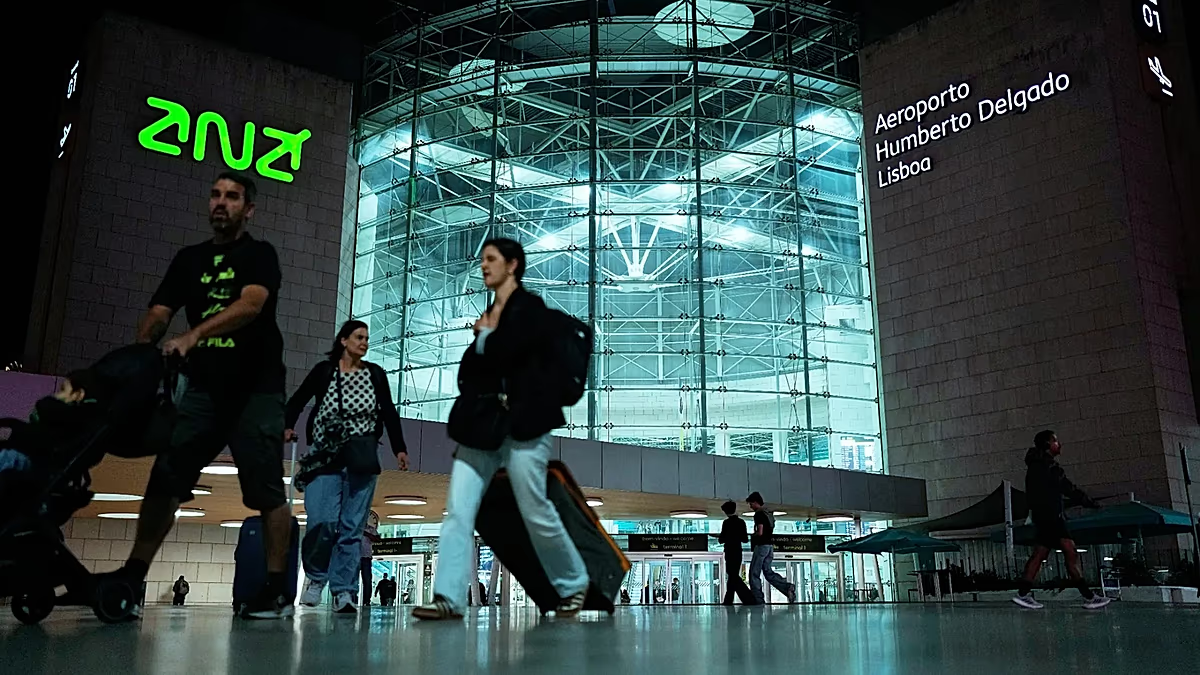
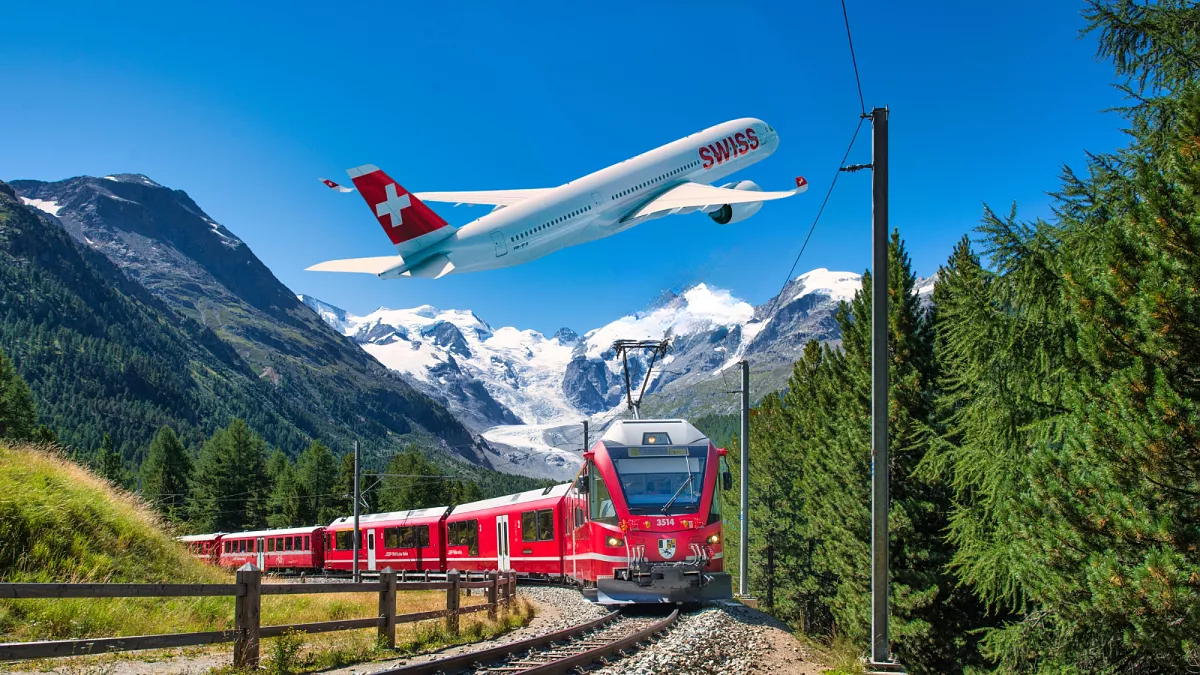
The offerings are tailored to each airline’s hub. TAP Portugal leverages partnerships to connect passengers from Lisbon to major cities across eight European countries. Lufthansa’s Rail&Fly service is exceptionally flexible, providing access to over 5,600 stations in Germany and permitting travel a full day before or after your flight. SWISS integrates its Air Rail tickets directly into its booking system for a single-check-in experience to Swiss destinations, including alpine gems like Grindelwald. KLM, a pioneer in this field, has offered high-speed rail connections from Amsterdam to Brussels for over two decades, recently enhancing the service with a dedicated lounge for air-rail customers at Brussels-Midi station.
Beyond convenience, the advantages of choosing rail for your final transfer are compelling. Financially, these combined tickets often lock in the train portion at a fixed, attractive rate, especially compared to last-minute taxi fares. Environmentally, the impact is profound. Train travel, particularly on electric networks, generates significantly fewer grams of CO₂ per passenger-kilometer than short-haul flights. Opting for a train for a 500-kilometer connection can reduce your journey’s carbon emissions by 70 to 90 percent, making it a powerfully conscious choice.
While the integrated air-rail ticket presents a transformative option, it’s important to acknowledge its current limitations. The primary consideration is luggage; most schemes require passengers to collect and transfer their own bags between the plane and train, which can be a hassle. Furthermore, the selection of rail routes and operators presented during booking might be narrower than if booked independently. However, for the vast majority of travelers, the benefits outweigh these drawbacks. The assurance of a guaranteed connection, the saved cost and time in planning, and the substantial reduction in environmental impact coalesce into an offer that is not just a logistical fix, but a genuinely smarter and more civilized way to travel. As these programs expand and refine, they represent a significant step towards a more connected, sustainable, and stress-free future for global travel.