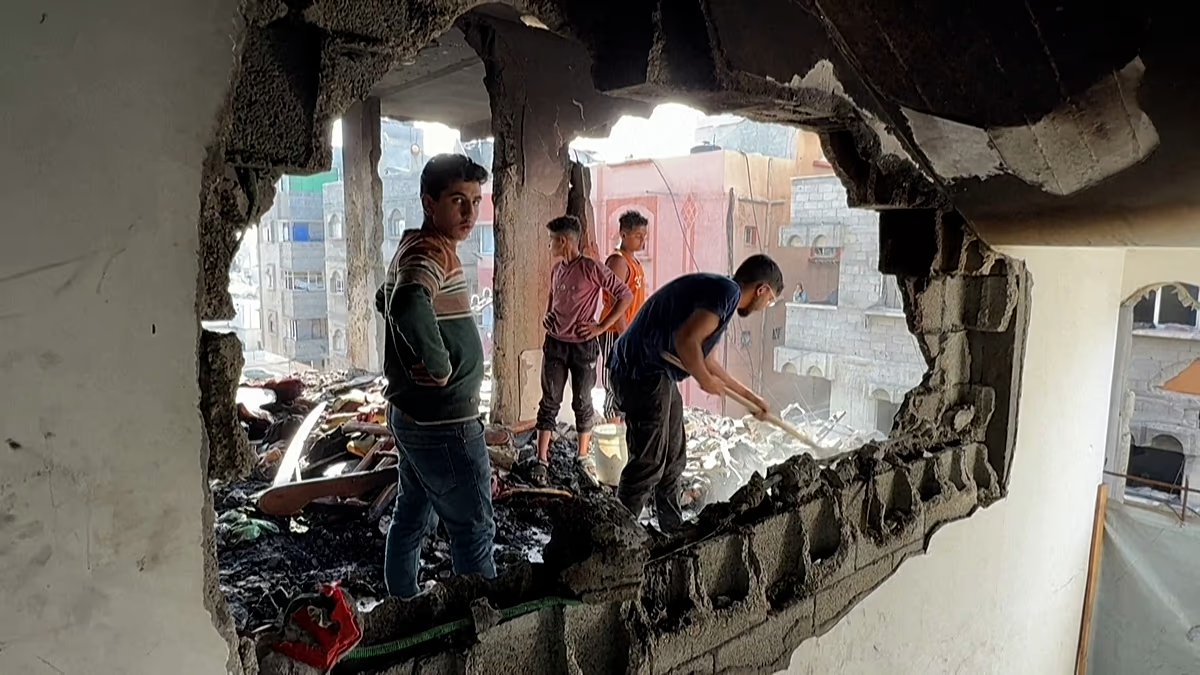




The early morning calm in the city of Sloviansk was shattered on April 15th by a massive explosion. Ukrainian authorities reported that Russian forces struck the city center around 5:00 AM local time using a FAB-1500, a devastating guided aerial bomb containing over 1,500 kilograms of high explosives. The target was not a military installation, but the heart of a civilian community. The impact demolished a children’s sports facility and an office building, while the blast wave inflicted severe damage on at least 39 apartment blocks and 15 nearby vehicles. Amidst the shattered glass and debris, one casualty was confirmed: a 57-year-old man injured and subsequently transferred to a clinic in Dnipro for treatment. This strike served as a stark reminder of the relentless and indiscriminate pressure exerted on Ukraine’s urban populations living in towns and cities perilously close to the ever-shifting frontline.
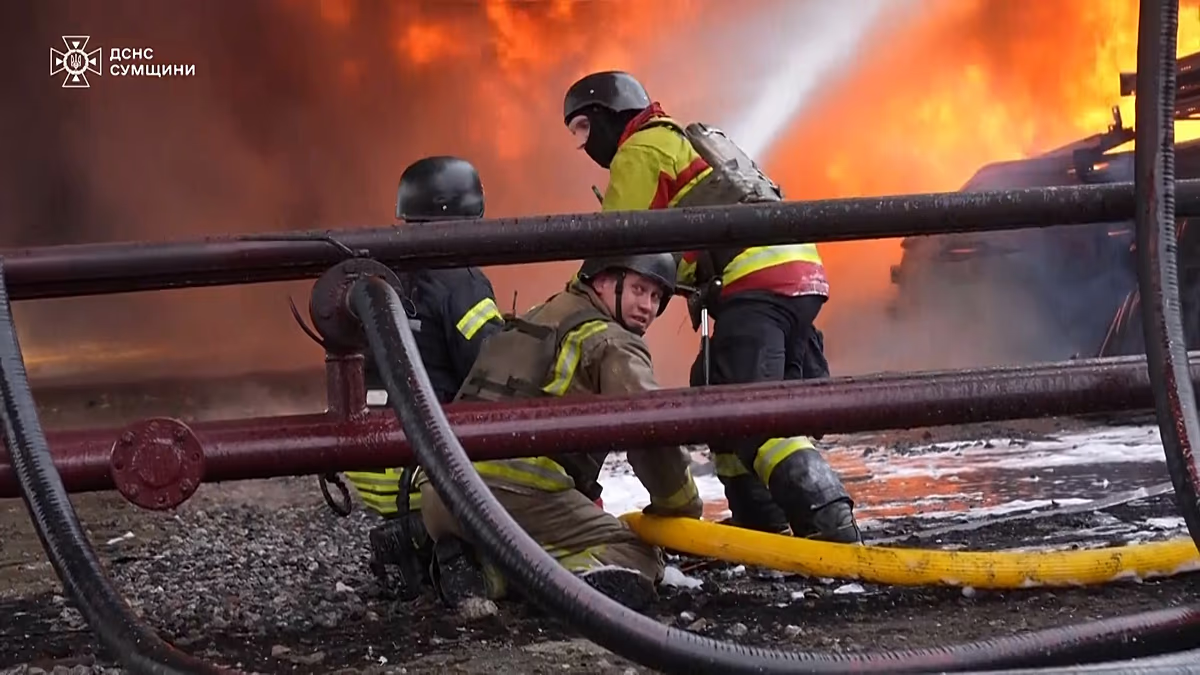
Simultaneously, in northeastern Ukraine, the city of Sumy endured a harrowing series of attacks targeting its industrial zone. Throughout the day on April 15th, drones struck multiple times, igniting major fires at key industrial facilities. In a particularly dangerous escalation, emergency services reported that the site was attacked again even as firefighters courageously worked to contain the initial blazes. Over a span of several hours, at least three separate strikes were recorded, deliberately hindering rescue and containment efforts. Despite the repeated bombardments, which risked both lives and the spread of hazardous materials, crews managed to bring the fires under control and ultimately extinguish them. While, at that stage, no casualties were confirmed in Sumy, the psychological toll and the scale of economic damage remained severe, with officials continuing to assess the full impact on the region’s critical infrastructure.
These assaults on Sloviansk and Sumy were not isolated incidents, but part of a broader pattern of sustained aggression across a vast and entrenched battlefield. The attacks unfolded against the backdrop of intense Russian pressure along nearly the entirety of Ukraine’s 1,000-kilometre land frontier, stretching from Kharkiv in the northeast to Kherson in the south. Ukrainian military officials reported more than 100 separate clashes in the 24 hours preceding these strikes, with some of the most intense combat concentrated around the battered cities of Bakhmut and Avdiivka in the Donetsk region. This constant, grinding warfare along the frontline creates a state of perpetual strain, demanding immense resources and human sacrifice to hold positions against numerically superior forces.
Complementing the ground offensives, Moscow has maintained a relentless strategic campaign of long-range drone and missile strikes aimed at Ukraine’s cities and critical energy infrastructure. This dual-front assault—tactical pushes on the ground and strategic bombardment from the air—forces Kyiv to make impossible choices. Already strained air defence systems, comprising costly and finite interceptor missiles, are stretched thin to protect both frontline areas and major population centers deep inside the country. Similarly, emergency services, from firefighters to medical teams, are mobilized across multiple regions simultaneously, responding to the immediate aftermath of bombings like that in Sloviansk while also being on high alert for the next attack. This tactic seeks to degrade Ukraine’s resilience by exhausting both its defensive capabilities and its civilian morale.
Even as Ukraine defends against these onslaughts, it continues to project force beyond its borders in an effort to disrupt Russian military logistics and command. Ukrainian strikes on oil refineries, military airfields, and assembly points within Russia and the occupied territories represent a calculated strategy to diminish the Kremlin’s long-term war-making capacity. These operations aim to force Russia to divert air defence systems to protect its own territory, potentially easing pressure on Ukrainian cities, and to choke the fuel and supplies feeding the frontline assaults. This aspect of the conflict illustrates its escalating and interconnected nature, where battles on the ground are directly influenced by strikes hundreds of kilometres away.
The human cost of this brutal, multi-domain war is etched into scenes like the ruined children’s sports complex in Sloviansk and the smoldering industrial plants of Sumy. Each large-scale bomb and each drone attack underscores a grim reality: civilian areas remain in the crosshairs, and the definition of the “frontline” has blurred into a nationwide zone of vulnerability. The injured man in Sloviansk is one of countless individuals caught in a conflict that shows no sign of abating, where a single morning can bring catastrophe far from the trenches. As Ukraine balances a desperate, bloody defence against tactical assaults with the necessity of striking back at strategic targets, its people endure a daily trial of resilience, their lives perpetually interrupted by sirens, explosions, and the arduous task of rebuilding what was just destroyed.