



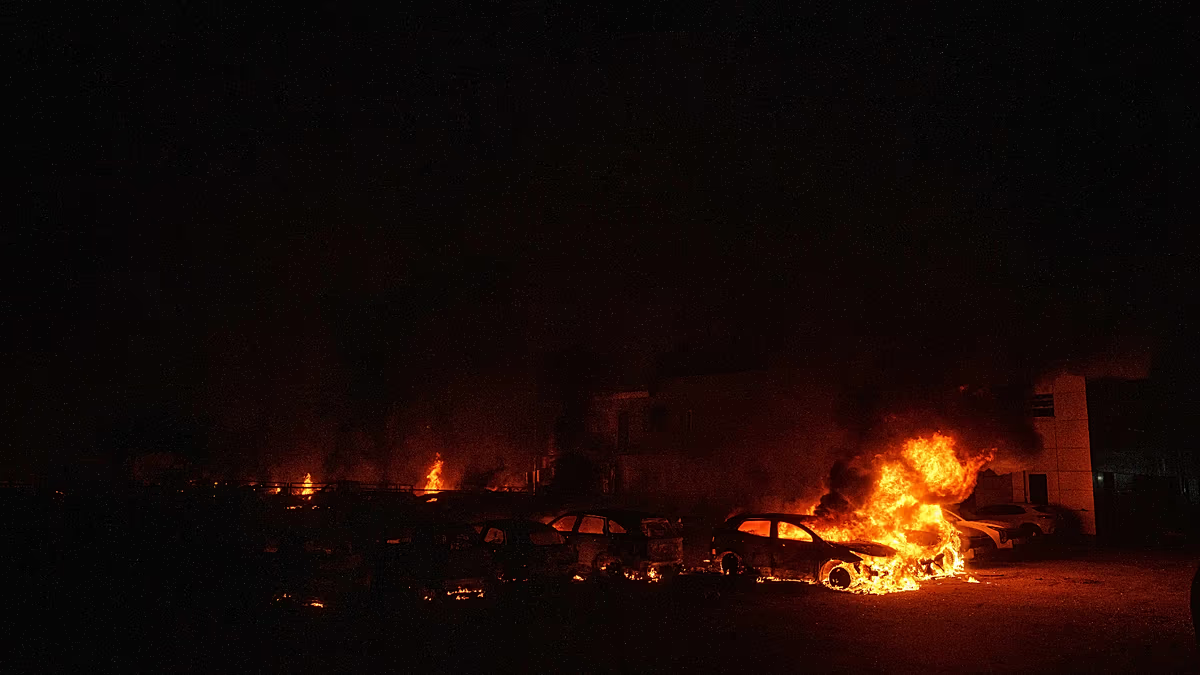
The conflict between Ukraine and Russia escalated sharply over the weekend, marked by a dramatic exchange of long-range drone attacks that struck deep into each other’s territory. In a significant shift, Ukrainian forces demonstrated their growing capacity to project power, successfully targeting two major oil refineries in Russia’s Samara Oblast, hundreds of kilometers from the front lines. In the early hours of Saturday, drones struck the Novokuybyshevsk refinery, igniting a large fire visible on social media and startling local residents with powerful blasts. This facility is a crucial piece of Russia’s wartime energy apparatus, processing millions of tonnes of crude annually into over twenty commercial products, many of which directly support military operations. Just hours later, a second wave hit the Syzran refinery, with footage showing flames erupting near a critical storage tank farm holding both raw crude and refined fuel ready for distribution. These strikes represent a strategic effort to disrupt the logistical and financial backbone of the Russian war machine, targeting the refined fuel that powers its tanks, aircraft, and trucks.
The Syzran refinery is particularly vital as it feeds into Russia’s domestic market, its river logistics network, and key export pipelines that terminate at the Black Sea port of Novorossiysk. In a separate but coordinated action, a drone also struck an industrial facility in Tikhoretsk, Krasnodar Krai, sparking a fire so intense it required over 200 firefighters to contain. These attacks underscore a calculated Ukrainian strategy to leverage asymmetrical warfare, using relatively inexpensive drones to inflict costly damage on high-value Russian infrastructure. The goal is twofold: to strain Russia’s military logistics and to constrict the flow of petrodollars that finance its invasion. While the physical damage varies, the cumulative psychological and economic impact of such persistent strikes on refineries across Russia challenges the Kremlin’s narrative of domestic security and imposes a steady toll on its war economy.
Concurrently, Russia launched one of its largest drone bombardments of the war against Ukraine, firing a staggering 219 drones from the evening of April 17th. Ukrainian air defenses mounted a heroic and largely successful effort, destroying or jamming 190 of the incoming threats, which included Shahed loitering munitions. A complex array of aircraft, missile units, electronic warfare systems, and mobile fire groups were deployed across the country’s north, south, and east in this relentless defensive battle. Despite these efforts, 28 drones managed to hit their targets at 17 different locations, with debris from downed UAVs causing additional damage at nine more sites. The scale of the attack—with some drones still reported airborne by morning—highlights the brutal, war-of-attrition nature of the current phase, where both sides seek to exhaust the other’s air defenses, energy infrastructure, and civilian morale through massed aerial assaults.
Amidst this intense military exchange, a significant and politically charged development unfolded in Washington. The administration of U.S. President Donald Trump issued a month-long sanctions waiver, allowing the sale of Russian oil and petroleum products already loaded onto vessels at sea. This decision, announced by the Treasury Department on Friday, extended an earlier measure that had expired on April 11th. It came just two days after Treasury Secretary Scott Bessent had indicated that the waiver would not be renewed, adding a layer of confusion to the policy. The stated aim of both the original and extended waivers has been to mitigate global supply shocks and prevent a surge in energy prices, a concern amplified by the ongoing U.S.-Israeli tensions with Iran. This move illustrates the complex and often contradictory pressures of geopolitics, where national economic interests can conflict with strategic goals of isolating an adversary.
The juxtaposition of these events—Ukraine striking Russian refineries to weaken its war effort, and the U.S. temporarily allowing the sale of Russian oil—creates a stark paradox. On one hand, Ukrainian forces are risking lives and resources to degrade Russia’s ability to produce and export the fuel that funds its aggression. On the other hand, the flow of that same commodity into global markets is being subtly facilitated to stabilize volatile energy prices, a priority for the U.S. administration. This tension underscores the messy reality of modern economic warfare, where sanctions are rarely absolute and are often tempered by pragmatic considerations of global market stability and domestic political concerns, especially in an election year.
In conclusion, the weekend’s events depict a conflict intensifying on multiple, interconnected fronts. Ukraine’s audacious strikes on Russian soil signal a new phase of proactive defense, aiming to bring the economic consequences of the war home to the Russian populace and government. Russia’s massive drone barrage represents its continued strategy of overwhelming Ukrainian defenses and terrorizing civilian populations. Meanwhile, the nuanced sanctions policy from Washington reveals the enduring challenges of enacting a fully cohesive international response. The war is no longer confined to the trenches of Donbas; it is being waged in the oil fields of Samara, the skies over Kyiv, and the corridors of global finance, with each action and counteraction weaving a more complex and entrenched web of confrontation.