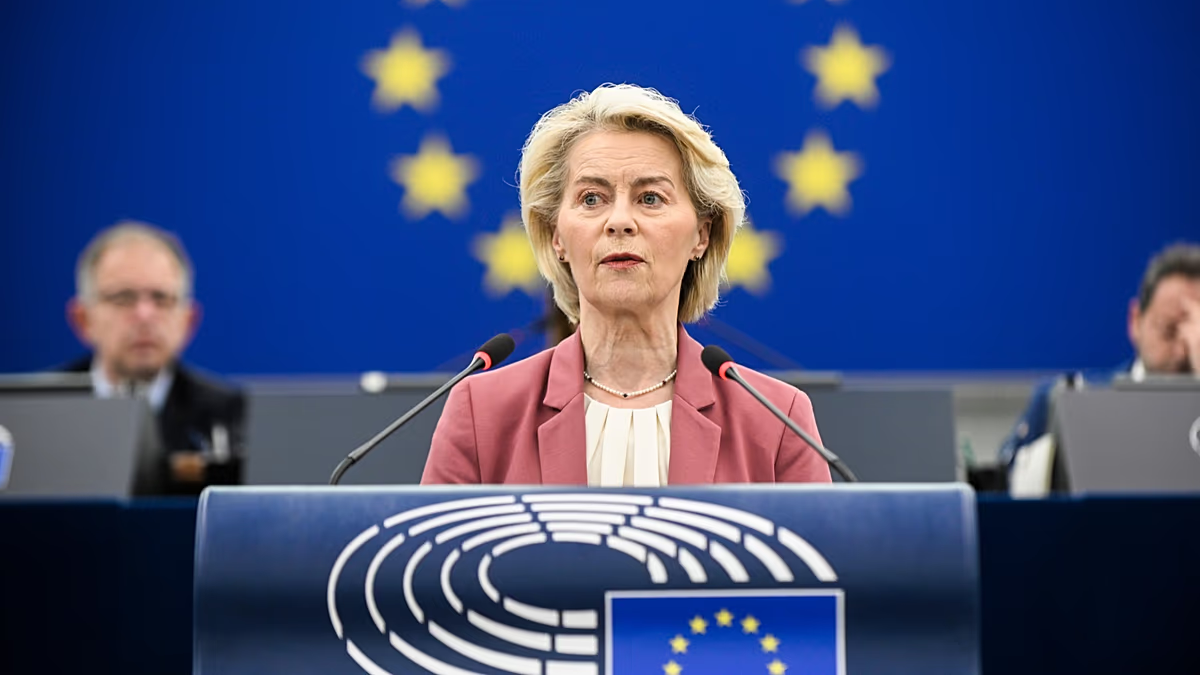



The European Commission has moved to quell mounting fears of an impending jet fuel crisis within the EU, striking a cautiously optimistic tone that stands in stark contrast to urgent warnings from global energy and aviation bodies. This divergence of views centers on the severe geopolitical disruption caused by the ongoing war in Iran and the consequent closure of the Strait of Hormuz, a critical maritime chokepoint for approximately one-fifth of the world’s seaborne crude oil. While the Commission’s spokesperson, Anna-Kaisa Itkonen, acknowledged a “tight” market, she explicitly dismissed the notion of current shortages, stating that based on weekly consultations with an oil coordination group, “there are currently no fuel shortages” in the bloc. This official stance aims to project stability but is delivered against a backdrop of skyrocketing prices and industry alarm.
The urgency of the situation was underscored by Fatih Birol, Executive Director of the International Energy Agency (IEA), who warned that European jet fuel supplies might only last for roughly another six weeks. He painted a stark picture of potential travel disruption, stating, “flights from city A to city B might be cancelled as a result of a lack of jet fuel.” The IEA had previously identified jet fuel as the refined product most vulnerable to the Strait’s closure, predicting acute shortages could materialize in April and May. These concerns are not abstract; jet fuel prices have surged by 95% since late February, directly increasing operational costs for airlines and threatening the financial stability and scheduling integrity of the entire European aviation sector.
The aviation industry itself is sounding a deafening alarm, challenging the Commission’s calm assessment. In a pointed letter dated April 9th, Airports Council International (ACI) Europe urged immediate action, declaring that a jet fuel shortage represents an “imminent systemic risk.” Their analysis suggests that if the Strait of Hormuz does not reopen in a stable manner within three weeks, systemic shortages will become a harsh reality for the EU. This view is strongly echoed by the International Air Transport Association (IATA), whose Director General, Willie Walsh, estimated that flight cancellations in Europe due to fuel scarcity could begin by the end of May. Walsh called for authorities to prepare coordinated rationing plans and slot relief for airlines, highlighting that the industry is already adapting under duress, with carriers like KLM cancelling hundreds of flights and others pruning routes entirely.
In response to this pressure, the European Commission has adopted a dual-track approach of public reassurance paired with behind-the-scenes contingency planning. While publicly maintaining there is “no indication of systemic fuel shortages” that would cause widespread cancellations, officials concurrently admit they are “preparing for possible supply shortages” which “remain a concern.” Itkonen revealed that the EU is preparing to launch potential coordinated actions regarding jet fuels and can tap into emergency stockpiles. She sought to nuance the dire timelines, arguing, “it does not mean that we will be completely running out of jet fuel,” noting the global nature of the market and ongoing production. However, this reassurance is tempered by the bloc’s dependency, with 30% of its jet fuel consumption reliant on imports, a significant portion of which traditionally transits the Middle East.
The fundamental discrepancy between the Commission’s public stance and the industry’s panic stems from a difference in perspective and mandate. The Commission, as a regulatory and political body, is likely emphasizing current inventory levels and strategic reserves to prevent public panic and speculative market behavior. In contrast, airlines and airports operate on the front lines, dealing with immediate procurement challenges, soaring costs, and the complex logistics of scheduling aircraft and crews months in advance. They are witnessing the tangible contraction of supply and the exhausting of commercial buffers, forcing them to make costly operational cuts today based on projections for next month. The Commission’s focus is on systemic collapse, while the industry is already grappling with severe market dysfunction.
This escalating situation will reach a pivotal point on April 21st, when EU transport ministers convene for an emergency meeting, with jet fuel security at the top of the agenda. The meeting will force a crucial reconciliation between the official stance of cautious optimism and the urgent, data-driven warnings from the sector that keeps Europe connected. The outcome will determine whether the EU moves towards a formal, coordinated crisis response, including the possible release of strategic stocks and the implementation of rationing protocols, or continues to emphasize market mechanisms. The coming weeks will test the resilience of European energy logistics and the ability of policymakers to translate preparatory measures into effective action, all while millions of passengers await clarity on the fate of their summer travel plans.