

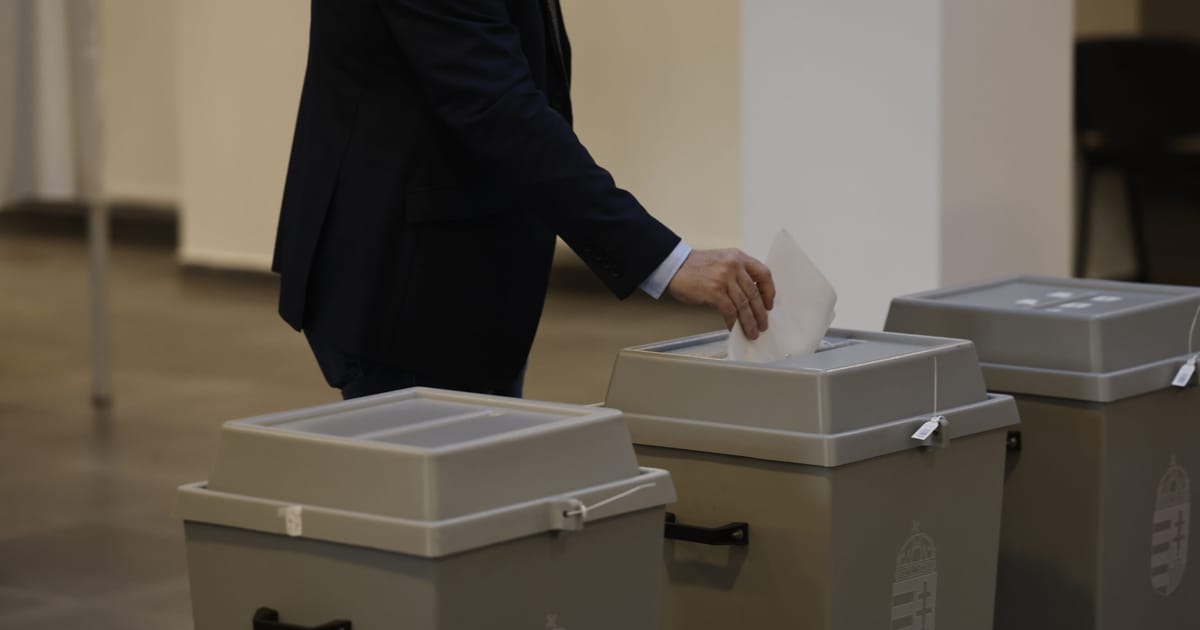
Polls are still open, but the atmosphere in Hungary is already crackling with tension before a single ballot has been officially counted. As citizens continue to cast their votes, the day is overshadowed by the knowledge that supporters of Prime Minister Viktor Orbán are actively preparing for a confrontation the moment stations close. A deep and mutual distrust permeates the process, with both government and opposition camps hurling preemptive accusations of electoral fraud. This pervasive suspicion has led experts to warn of an almost inevitable outcome: no matter which side emerges with more votes, the legitimacy of the result is likely to be fiercely challenged, potentially ending up in a protracted legal battle in the courts. This pre-election anxiety sets the stage for a day that is less about quiet civic duty and more about a high-stakes contest for narrative control.
Recognizing the potential for dispute, a significant international and domestic observer presence has descended upon Budapest. Hundreds of international monitors are on the ground, most notably from the Organization for Security and Cooperation in Europe (OSCE), a body renowned for its electoral assessments. However, the Hungarian government has preemptively dismissed the OSCE as politicized, signaling its reluctance to accept any critical findings. In a move that underscores the divided reality, Orbán’s camp has mobilized its own parallel monitoring groups. This includes a dozen EU lawmakers from the right-wing Patriots for Europe group and approximately one hundred observers tied to Orbán-aligned organizations. This dueling observer scenario creates a perfect environment for a “clash of narratives,” where the same event may be described as perfectly orderly by one side and fundamentally flawed by the other, further deepening the societal rift.
The allegations of misconduct are not merely theoretical or lodged from afar. A damning documentary by independent Hungarian journalists, titled “The Price of a Vote,” aired in late March and presented disturbing allegations of systematic abuse in rural communities. The film alleges widespread vote-buying and coercive pressure on voters to support Orbán’s Fidesz party. Eyewitness accounts featured in the documentary claim that party operatives offered direct cash payments in exchange for votes, a blatant subversion of democratic principles. These allegations paint a picture of an electoral playing field that is far from level, where economic vulnerability in certain regions can be exploited for political gain, undermining the very essence of a free and fair election.
These claims find specific, ground-level corroboration. Mihály Gér, a Green party local councilor in the village of Albertirsa, provided a tangible example, telling reporters that in his area, people had been offered sums as high as 30,000 forints (approximately 80 euros) to vote for Fidesz. From another angle, the fervor around electoral integrity is mirrored by unusual public gestures. Hungarian businessman György Wáberer took to social media on election day itself, offering a substantial bounty of 300,000 forints to anyone who could provide evidence of electoral fraud. This action, while perhaps well-intentioned, highlights the intense polarization and the widespread belief that the process is vulnerable to manipulation, encouraging a kind of vigilante scrutiny that adds another layer of volatility to an already charged environment.
In response to these grave concerns, the consortium of independent journalists behind “The Price of a Vote” has transitioned from filmmakers to active electoral guardians. They have organized a formidable citizen observer network of 2,400 people, deployed in over 100 locations across Hungary. Their mission is to meticulously document any instances of fraud or irregularity they witness. Embracing modern technology for transparency, they plan to livestream any alleged misconduct on a dedicated YouTube channel in real-time. This represents a significant grassroots effort to create an independent record of the day’s events, aiming to bypass the war of words and provide raw, unfiltered evidence that could hold power to account, regardless of the official outcome.
Thus, as Hungary awaits its results, the country finds itself at a dangerous crossroads, not just of political preference but of fundamental democratic trust. The election day is unfolding under the dark clouds of alleged vote-buying, pre-emptive accusations of fraud, and competing armies of observers ready to declare conflicting versions of reality. The extensive preparations for post-election conflict suggest that the closing of the ballot boxes is merely the end of the first act. The subsequent struggle over the legitimacy of the result—played out in the media, in the courts, and potentially in the streets—may prove to be more consequential than the vote count itself. The true test for Hungary will be whether its institutions and society can navigate this profound crisis of confidence without irreparable damage to the democratic fabric that binds the nation together.