



The Centennial Journey: Route 66 at 100
As it celebrates its 100th anniversary, Route 66 stands not merely as a faded line on a map, but as a living, breathing chronicle of American identity. Stretching nearly 3,940 kilometres from Chicago to Santa Monica, this legendary highway, christened the “Mother Road” by John Steinbeck, has evolved from a practical artery into a pilgrimage of nostalgia. It was born from the vision of Oklahoma businessman Cyrus Avery, who saw the future in automobiles and chose the catchy number “66,” believing its double digits would sear themselves into the public imagination. Today, while modern interstates offer speed, Route 66 offers a soulful alternative—a slower, more intentional voyage through the nation’s heart, lined with glowing neon, retro diners, and stories etched into every mile.
The journey begins in the Midwest, where the road’s history is served on a plate. In Springfield, Illinois, the Cozy Dog Drive In, with its secret-recipe fried hot dogs on a stick, embodies the ingenuity of early road food. Missouri presents the quirky Chain of Rocks Bridge, a once-abandoned crossing over the Mississippi now reserved for pedestrians, and the St. Robert Neon Park, a sanctuary for the vibrant, handcrafted signs that once beckoned travellers like folk-art sirens. Even Kansas’ brief stretch holds profound cultural weight: the Kan-O-Tex Service Station in Galena inspired Pixar’s Cars, its derelict boom truck becoming the beloved Tow Mater, echoing the real plight of towns bypassed by progress.
Moving into the Plains, Oklahoma reveals layers of the road’s complex social tapestry. The Threatt Filling Station near Luther served as a vital safe haven for Black motorists navigating the segregated dangers of the Jim Crow era, a resilient symbol of community. Nearby Sapulpa offers a different kind of resilience at the restored Tee Pee Drive-In Theater, a 1950s relic that survived natural disasters and neglect to reopen its paved pathways to film nostalgia. Here, Route 66 is not just a path of leisure but a testament to perseverance, both personal and communal, against the forces of time and change.
The open landscapes of Texas and New Mexico showcase the road’s artistic spirit and deep historical roots. Amarillo’ Cadillac Ranch—a surreal art installation of half-buried, spray-painted vintage cars—invites visitors to ponder transience while leaving their own mark. Adrian’s Midway Cafe, perched exactly at the route’s midpoint, offers sweet respite. In New Mexico, more than half the highway traverses sovereign Native American lands, tracing ancient tribal routes. Today, communities here are reclaiming their narratives, moving beyond stereotypical imagery to showcase authentic artistry, while Albuquerque’s longest intact urban stretch pulses with revived neon and a vibrant, still-evolving car culture.
The Arizona segment is soundtracked by America’s musical legacy. Winslow immortalized in the Eagles’ “Take It Easy,” is a place where strangers might share a guitar riff, continuing the tradition sparked by Bobby Troup’s iconic “(Get Your Kicks on) Route 66.” The one-time gold mining town of Oatman, with its Wild West ambience and free-roaming burros, clinging to an original, treacherous alignment, reminds travellers of the road’s raw, early character. This state underscores how Route 66 shaped—and was shaped by—the nation’s collective imagination, becoming a backdrop for stories, songs, and shared dreams.
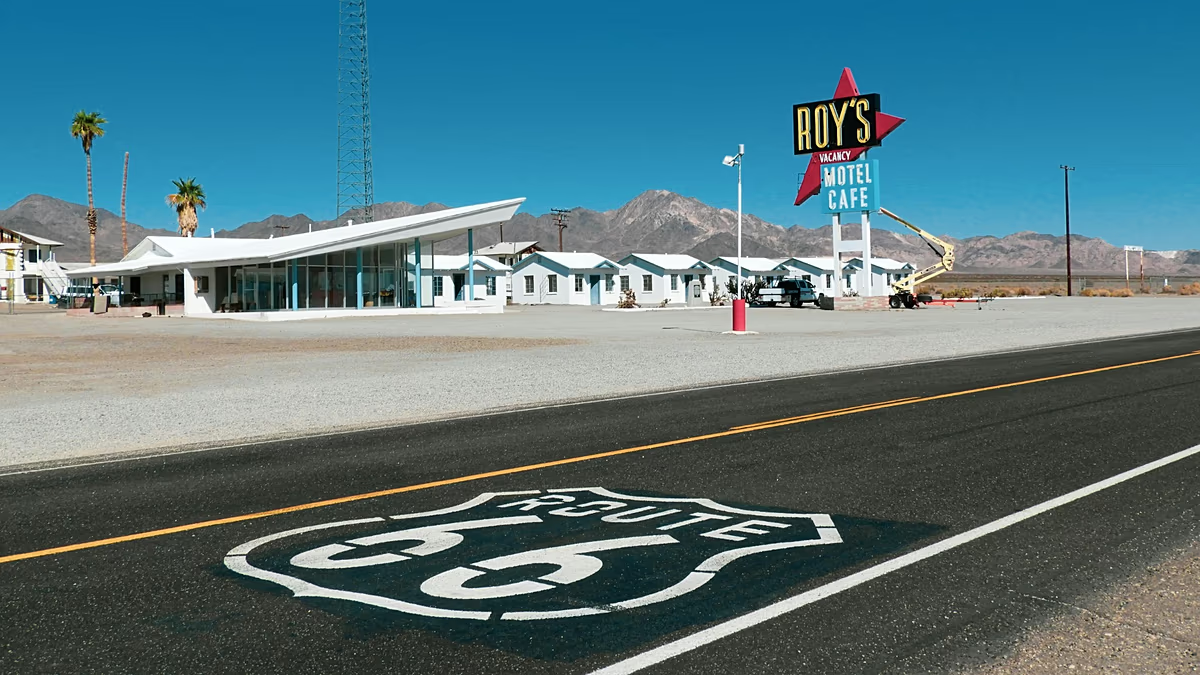
Finally, California delivers a contemplative desert solitude before a celebratory ocean finale. Roy’s Motel & Café in Amboy, with its iconic neon sign and wall of international currency, is a frozen moment of roadside allure. The Mojave Desert stretch, rough and undeveloped, offers a stark beauty reminiscent of the highway’s 1926 origins. This quiet introspection then bursts into the perpetual party at the Santa Monica Pier, the official end of the line. Here, the Pacific Ocean’s horizon mirrors the limitless possibilities the road has offered for a century. Route 66, in its centennial year, remains a powerful symbol—a decaying yet enduring ribbon connecting not just places, but the past to the present, inviting every traveller to find their own story within its long and winding tale.