



The familiar hum of a jet engine has long been synonymous with a rare and enforced disconnectivity—a temporary digital quiet. That reality is now changing at a rapid pace, and British Airways is at the forefront. In March, the airline launched its first aircraft equipped with Starlink satellite wifi, boasting download speeds exceeding 500 Mbps. This isn’t just an incremental upgrade; it’s a transformative leap, enabling seamless streaming, gaming, and high-definition video calls at 35,000 feet. BA hails this as a milestone in modernizing the passenger experience, with CEO Sean Doyle framing it as part of a wider investment to elevate every aspect of the journey. Crucially, the service is promised to be free for all passengers, democratizing high-speed access across cabin classes. This move, powered by Elon Musk’s sprawling satellite network, signals a definitive end to the era of limited, sluggish in-flight internet, pushing air travel into a new age of constant connectivity.
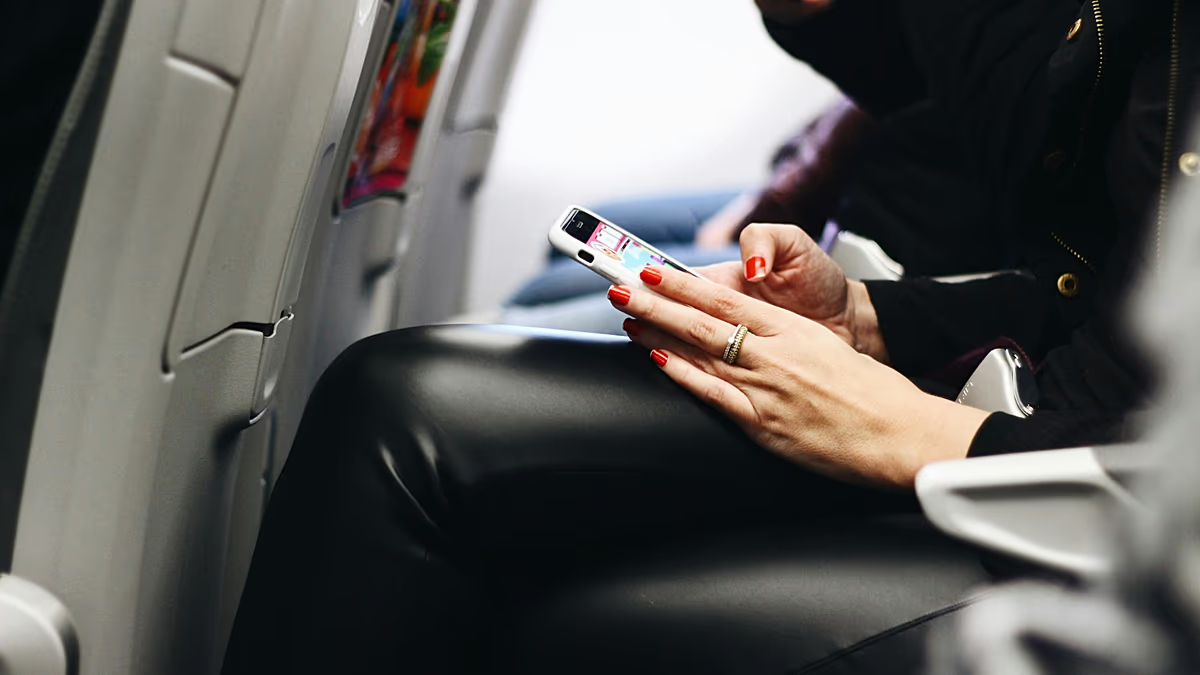
However, this technological leap forward comes with significant social baggage. The very feature that epitomizes this new connectivity—the ability to make phone calls—is proving deeply controversial. BA itself seems aware of the potential friction, issuing cautious guidance alongside its rollout. Passengers are advised to “please be considerate,” to keep voices low, and to use headphones if making calls. This preemptive diplomacy underscores a widespread anxiety. For many, an aircraft cabin is one of the last remaining public sanctuaries from the intrusion of other people’s loud, one-sided conversations. Travel commentator Sophie Dickinson of The Independent captured this sentiment perfectly, lamenting the potential loss of the “happy haven” provided by the airplane’s ambient hum. The concern is that the introduction of voice calls could shatter the fragile, communal peace of a shared cabin, replacing it with a cacophony of disruptive chatter.
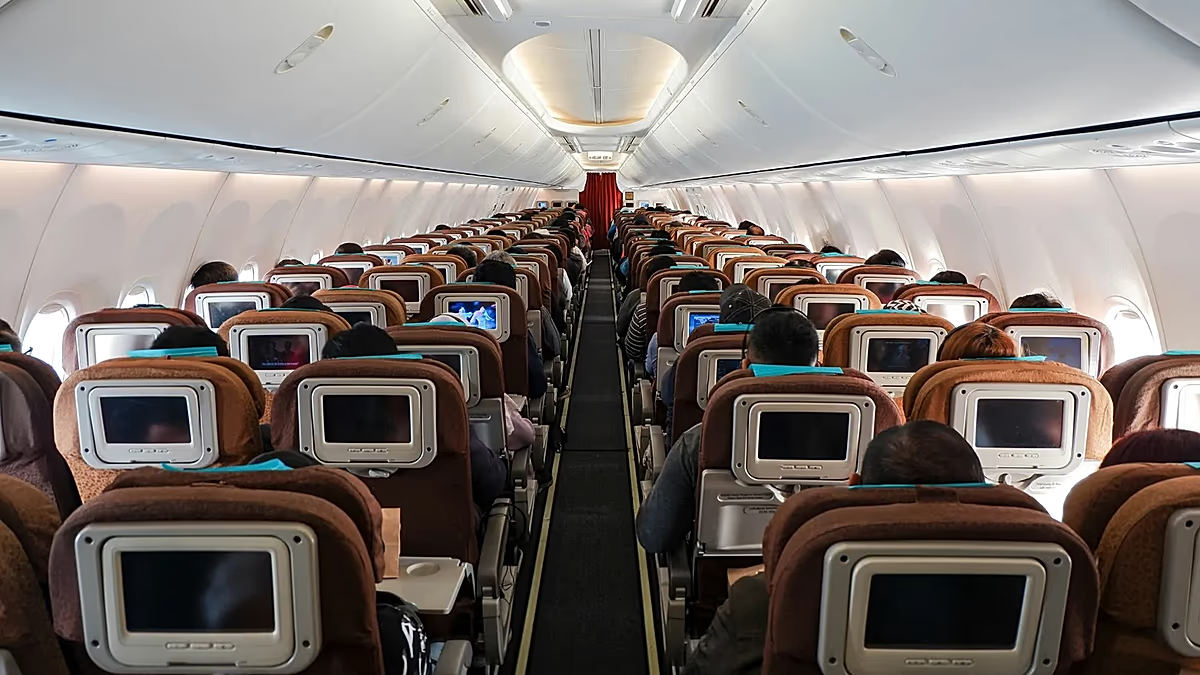
The debate naturally turns to potential solutions to preserve some onboard tranquility. Observers like travel expert Simon Calder have suggested that airlines might eventually need to introduce designated “quiet zones,” much like those found on some trains, to cater to passengers seeking a phone-free environment. This concept acknowledges that while some travelers may need or wish to conduct business or check in with family, others view the flight as essential downtime. The challenge for airlines will be to manage these conflicting expectations within the confined, pressurized space of an aircraft. It becomes a question of evolving etiquette and enforceable rules, not just technology. The goal is to balance the undeniable utility of in-flight calls with the preservation of a civilized and restful atmosphere, ensuring the cabin does not become an airborne open-plan office or a noisy café.
British Airways is not pioneering this path alone; it is part of a broader global shift. Airlines like Air France, Qatar Airways, and airBaltic have also partnered with Starlink, with similar fleet-wide rollout plans over the next two years. Tellingly, Air France’s policy mirrors BA’s cautious tone, encouraging “discrete” device usage to maintain a quiet environment. This European approach stands in stark contrast to the regulated landscape in the United States. There, a Federal Communications Commission ban prohibits cellular calls on domestic flights, a rule overwhelmingly supported by the American public. A U.S. Department of Transportation study found 96% of respondents favored maintaining the ban, citing fears of “air rage” and disrupted sleep, with only 2% opposed.
Yet, even in the U.S., a technical loophole exists. The ban applies to cellular networks, not to wifi-based calling services like WhatsApp or FaceTime. This means the infrastructure now being deployed by BA and others could technically enable calls on U.S. airlines as well, should they choose to permit it. The previous U.S. Secretary of Transportation emphasized the need for transparency, stating that consumers deserve clear information on an airline’s calling policy before they book. This highlights the next frontier in this issue: clear communication and passenger choice. The decision will ultimately rest with individual carriers, forcing them to weigh passenger demand against potential backlash and the complex social dynamics of their cabins.
In conclusion, the arrival of high-speed, free Starlink wifi on British Airways represents far more than a simple upgrade to in-flight entertainment. It is a catalyst for a fundamental renegotiation of the social contract of air travel. We are moving from an era of shared, disconnected silence into one of individual, constant connection. The promise is incredible convenience, productivity, and peace of mind for those who need to stay linked to the ground. The peril is the loss of a cherished, quiet collective space and the rise of new tensions at 500 miles per hour. The success of this connected future will not be measured in megabits per second, but in the ability of airlines and passengers alike to cultivate a new etiquette—one that harnesses the power of technology without sacrificing the civility and peace that make long-haul travel bearable. The cabin, it seems, is now a testing ground for the future of public life in an omniconnected world.